Serving Sanford, NC & nearby
(984) 290-6855
Sanford, NC

Is Your Sanford Garage Door Worth Fixing, or Is It Time to Replace It

Sanford homes mostly date 1955-1999. Here's how that housing stock and the area's cold winters decide whether your garage door is worth repairing or replacing.

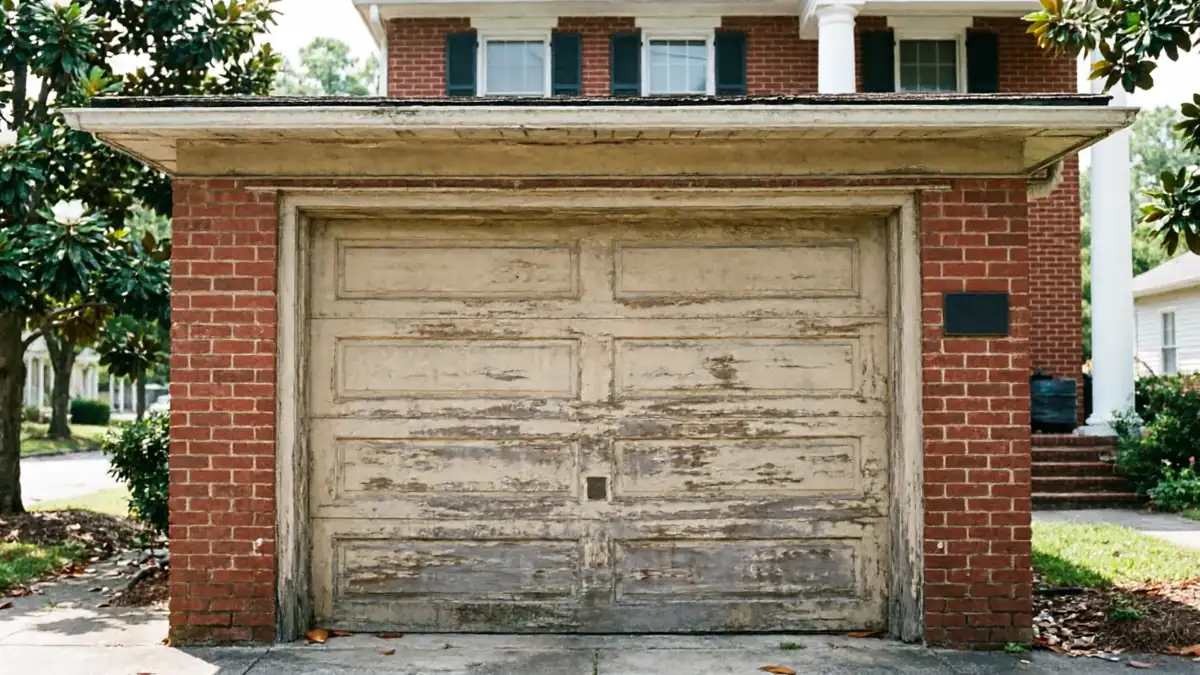
A peeling white garage door is set into a red brick garage.

How Local Conditions Play In

Most houses across the six areas we work in went up between 1955 and 1999, with the bulk of that stock dating from the 1980s and 90s. That matters more than people think. A door from that era is usually a single steel or wood-composite panel on hardware that was built to a lower standard than what ships today - thinner torsion springs, smaller rollers, tracks that were never meant to carry 25-plus years of expansion and contraction.

This part of North Carolina sits in a cold-moderate climate band. You get real temperature swings between winter and summer, not extreme heat and not extreme cold, but enough cycling that steel fatigues and wood swells and shrinks a little every year. On a door built in, say, 1985, that cycling has happened close to forty times. The spring that held up fine for two decades is not the same spring it was when the house was new. None of this is dramatic. It is just slow wear, and it shows up as a door that's noticeably harder to lift, a spring that looks stretched out of shape, or an opener straining on a cold morning.

Doing Nothing For Now

If your door is from that same 1955-1999 window and it's still opening and closing without grinding, binding, or sagging on one side, you don't need to act. A door that works is a door that works. Waiting isn't negligence - it's a reasonable call for a lot of owners in this area, especially with median household income here at $62,428, where a full door replacement is a real line item in a budget, not a casual upgrade.

The honest limitation here: we can't tell you from a phone call whether your specific door is fine or failing. A torsion spring with visible gaps between coils, or a panel with rust creeping along the bottom seam, is a different situation than a door that's just old and a little loud. If nothing is bent, cracked, or grinding, it's fair to keep using it and put money toward it when something actually breaks.

What Most People Get Wrong

  1. The mistake we see most with doors from the 1983-era median build year is treating a worn spring or a stiff track as a reason to replace the whole door

    Original hardware on a door that age can often be swapped out - spring, cables, rollers - while the panel itself, if it's steel and not rusted through, keeps going another decade or more.

  2. The opposite mistake also happens

    People keep sinking money into panel repairs on a door that's actually failed structurally, usually because it was built before current insulation and wind-load expectations. In a cold-moderate climate, an uninsulated original panel from the 80s or 90s loses a lot of heat through the garage into an attached house, and no amount of spring replacement fixes that. If the panel is warped, delaminating, or the seams don't line up anymore, that's a door problem, not a hardware problem, and no repair changes that.

The Problem

Across the 2,523 owner-occupied houses we see in this service area, the honest split is: hardware fails long before the door itself does. A spring, a cable, a roller - these are wear parts with a lifespan measured in cycles, and a door opening twice a day for thirty-plus years has put a lot of cycles on them. The door panel itself, especially steel, often outlasts two or three sets of springs.

So the real question isn't age, it's which part failed. A door that won't lift because of a broken spring on 1980s hardware is a repair, almost always. A door with a cracked or rotted bottom panel, warped track, or an opener fighting a door that's physically binding is closer to a replacement call. We'd rather tell you which one you've got before you spend money either way.
How it works

From “it’s stuck” to “it’s fixed”

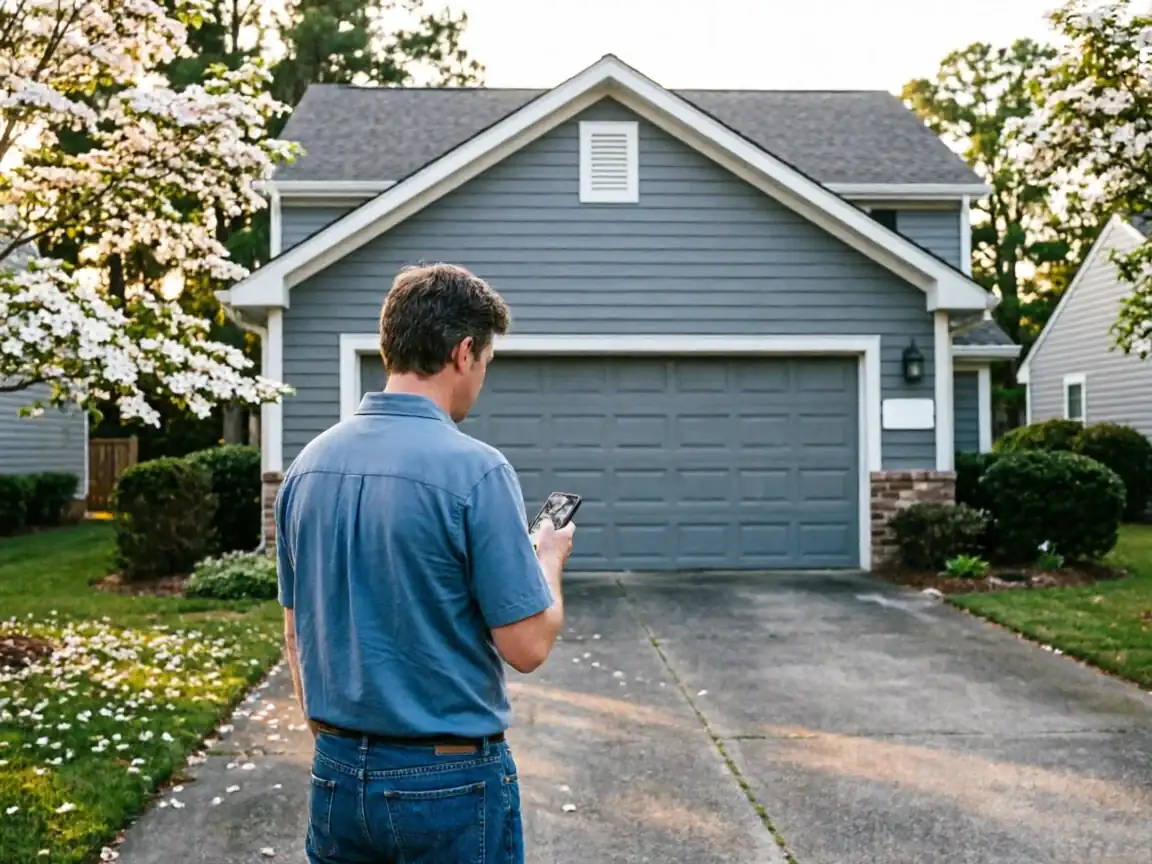
A man in a blue shirt stands in a driveway looking at his phone.

Tell us what’s wrong

Describe the symptom - won’t open, loud bang, opener runs but the door won’t move.

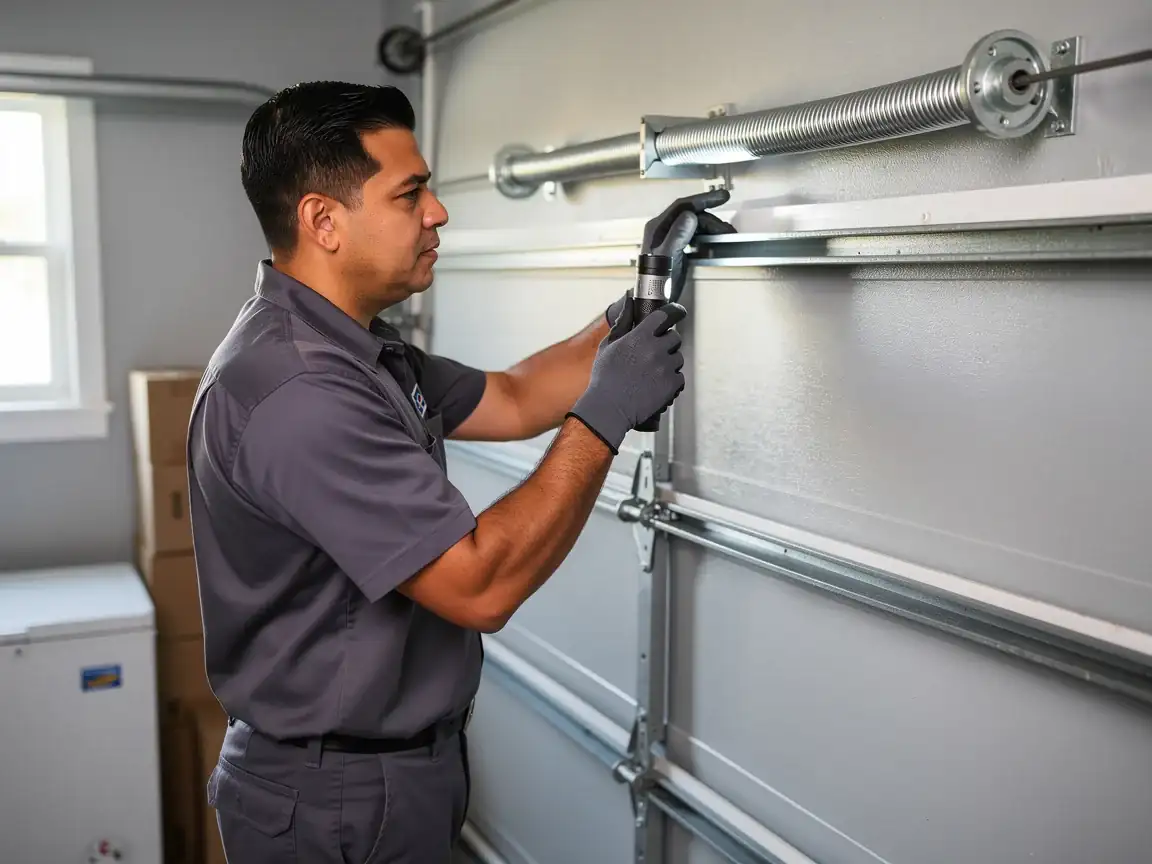
A technician holds a flashlight and works on a garage door torsion spring.

On-site diagnosis

A technician tests the door under power and by hand and finds what actually failed.

A technician in a black shirt talks to a man in a blue shirt.

Clear, up-front plan

You get the fix that’s needed and what drives the cost - before any work starts.

A technician operates a garage door opener with a remote control.

Repaired & tested

The repair is done, the door is set true and tested, and the work area left clean.

Not sure which repair your door needs in Sanford, NC? Describe what it’s doing - every job starts with a diagnosis.

6areas covered
How we work

What to expect

Diagnosis firstEvery visit starts by finding what actually failed - not a pre-written parts list.
The right part for the doorSprings and openers matched to the door’s weight and age, so the fix holds up.
Straight answersWhen a repair makes more sense than a replacement - or the reverse - you hear it plainly.
Clean, careful workTension released safely, hardware set true, the door tested under power before we leave.
What we do

Garage Door Services

Repair and installation work for Sanford homes and businesses.

A technician in a blue uniform is repairing a black garage door.

Garage Door Repair

Sanford Garage Door Pros fixes broken springs, worn rollers, and opener failures common in Sanford's 1955-1999 housing stock. Call for a same-day estimate.

Learn more
A technician works on a wood-look garage door in a garage.

Garage Door Installation

Replacing a garage door in Sanford, NC means matching hardware to houses built mostly between 1955 and 1999 and to our cold-moderate winters. Here's what that job actually involves.

Learn more
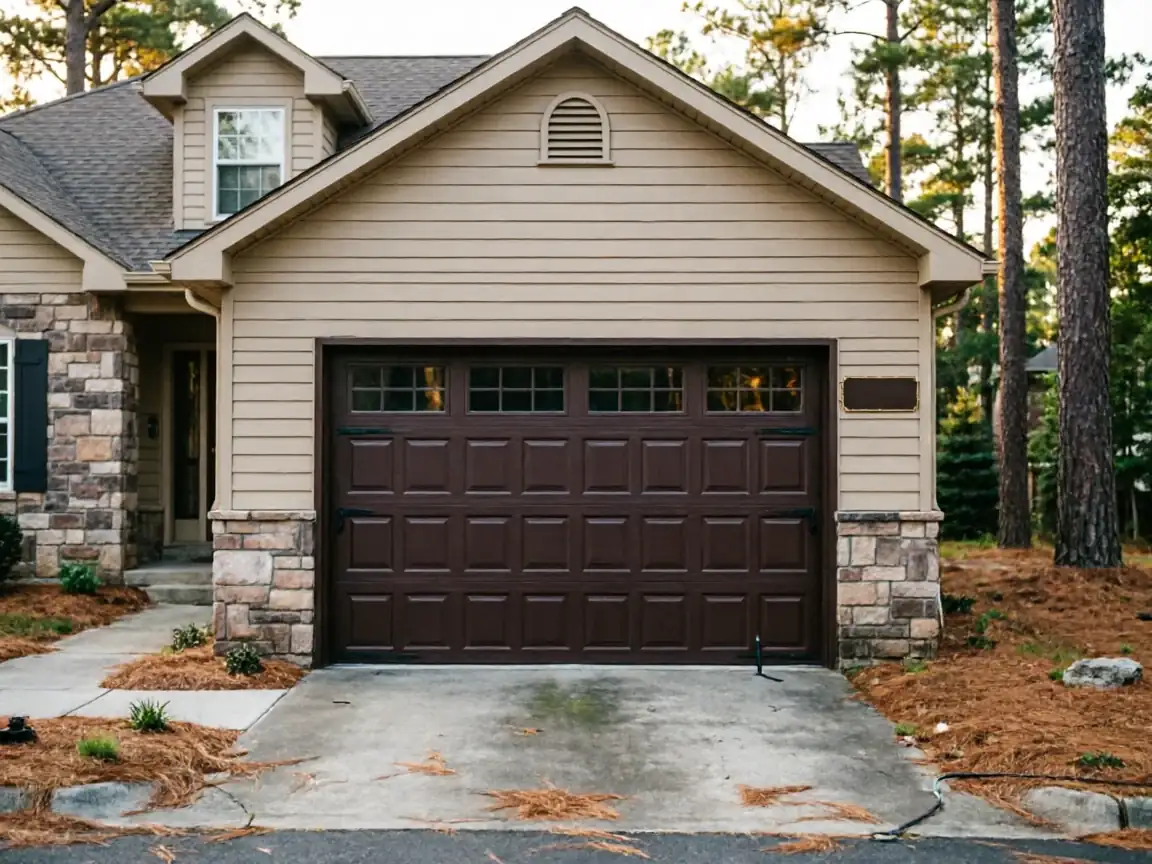
A brown garage door with windows is on a tan house with stone accents.

Garage Door Service

Garage door service for Sanford homes built mostly between 1955 and 1999. We work on the aging springs, openers, and tracks common to this area's housing stock.

Learn more
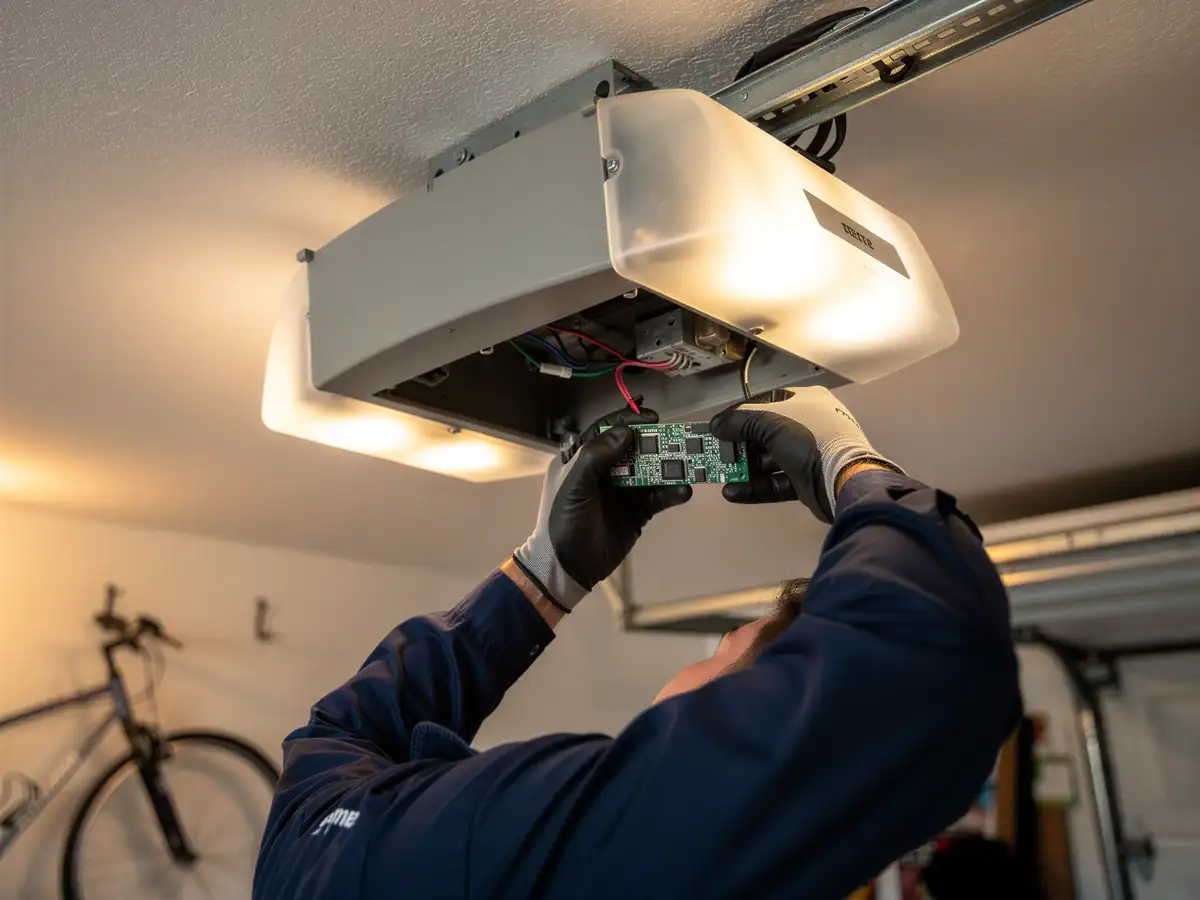
A technician in gloves holds a circuit board near an open garage door opener.

Opener Repair

Opener stopped working or won't close all the way? We fix garage door openers across Sanford's 1980s-era neighborhoods and the surrounding towns we cover.

Learn more
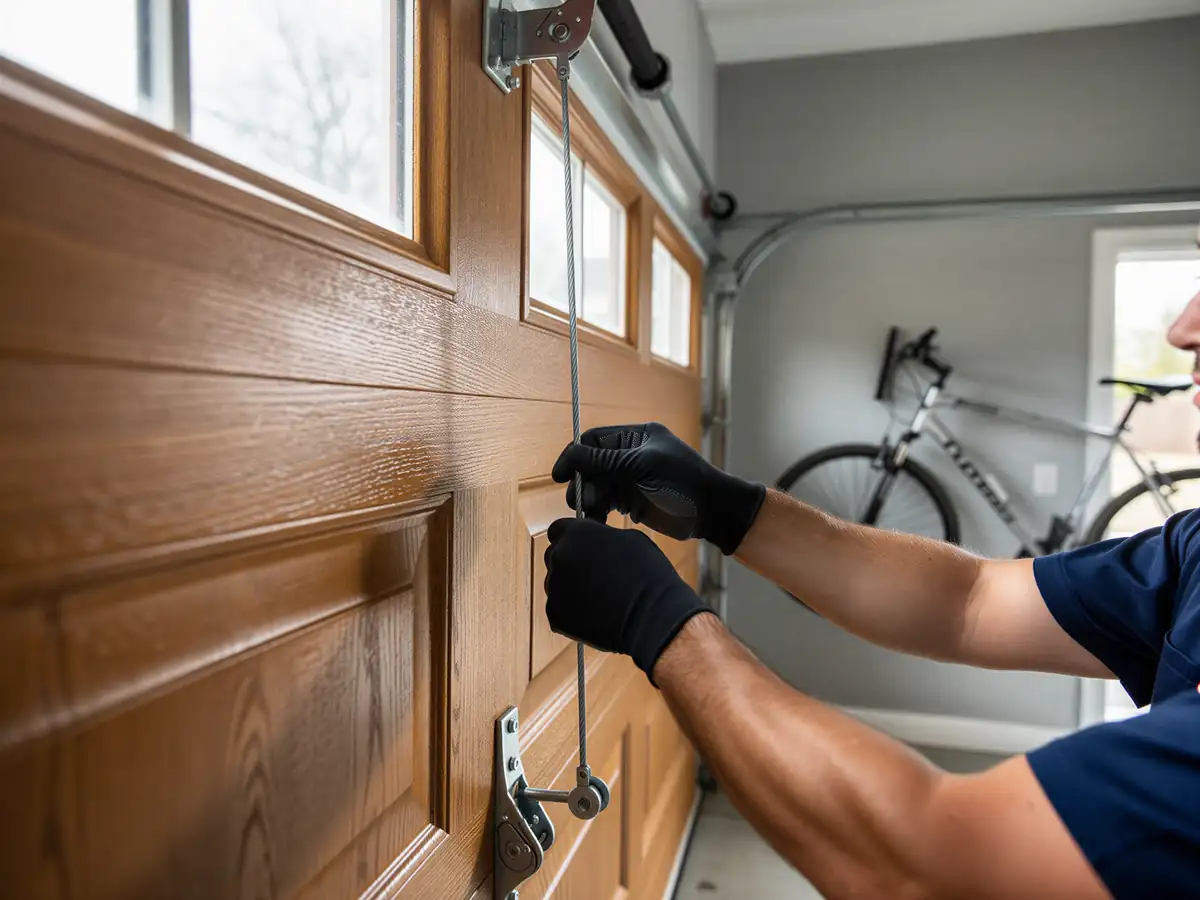
A technician in black gloves adjusts a cable on a brown garage door.

Cable Repair

Snapped or frayed garage door cables are common in Sanford's 1980s-era homes. We repair cables on torsion and extension systems across the Sanford service area.

Learn more
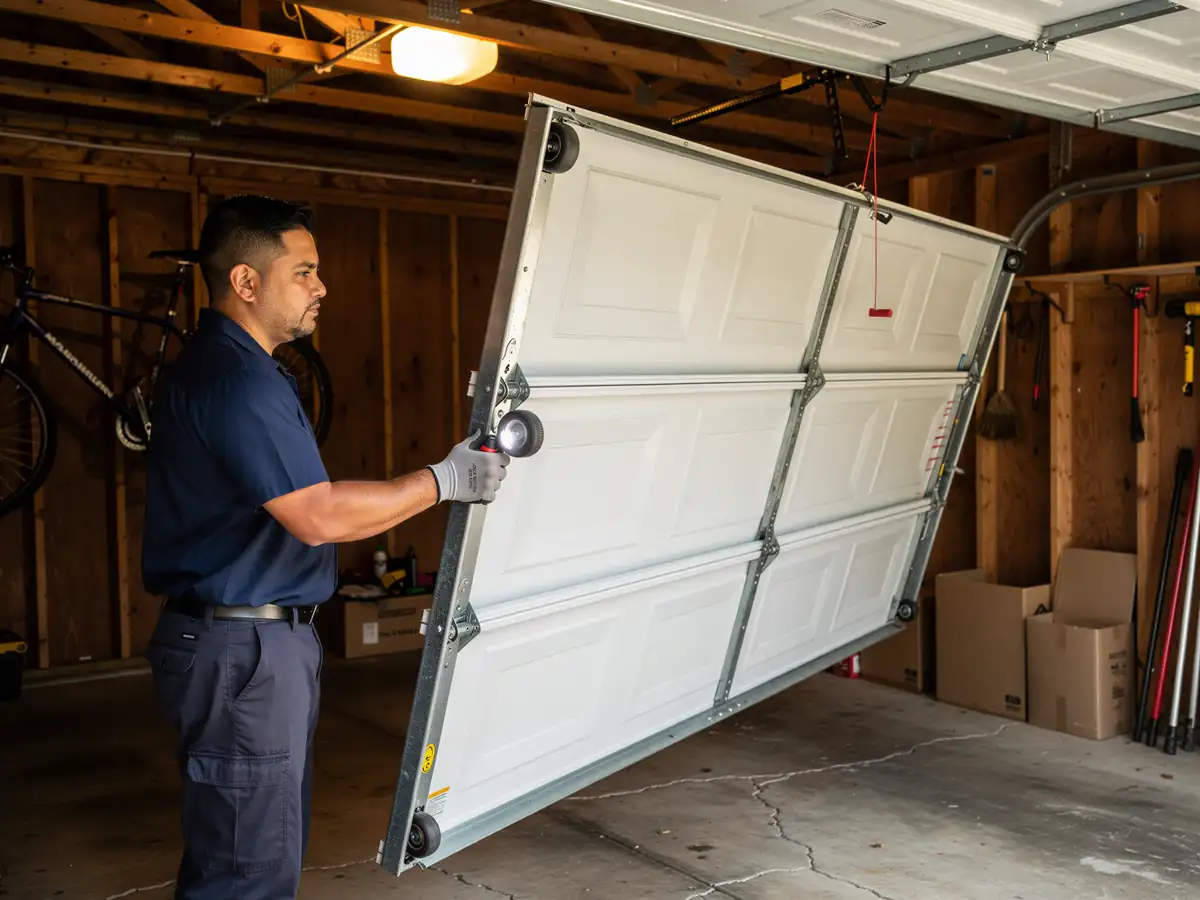
A technician holds a flashlight while working on a white garage door.

Off-Track Repair

A garage door that's jumped its track is common in Sanford's 1980s-era housing stock. Here's why it happens and how to get it fixed across the service area.

Learn more
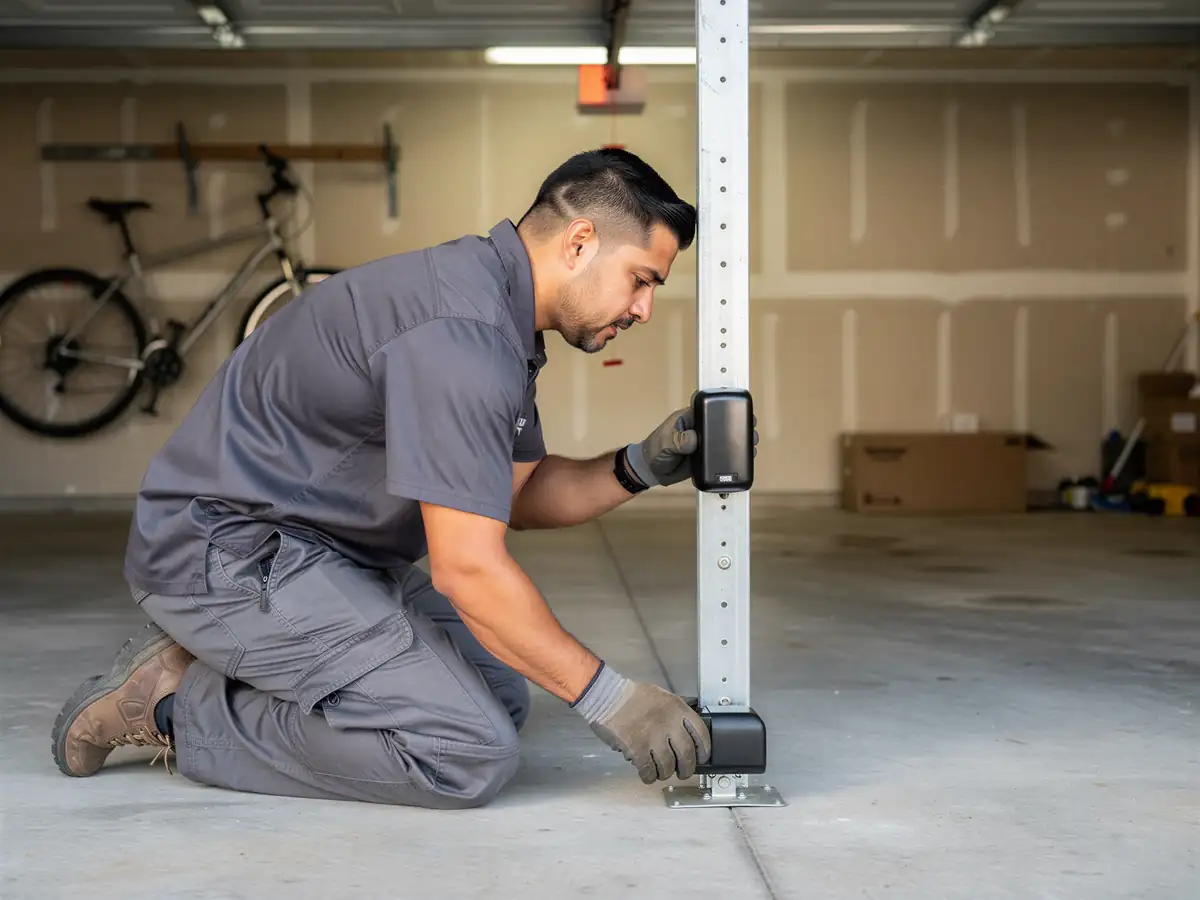
A technician kneels, adjusting a metal support pole with two black devices.

Maintenance

Garage door maintenance for Sanford, NC homes built mostly between 1955 and 1999. We tune springs, rollers, and openers before cold-weather failures hit.

Learn more
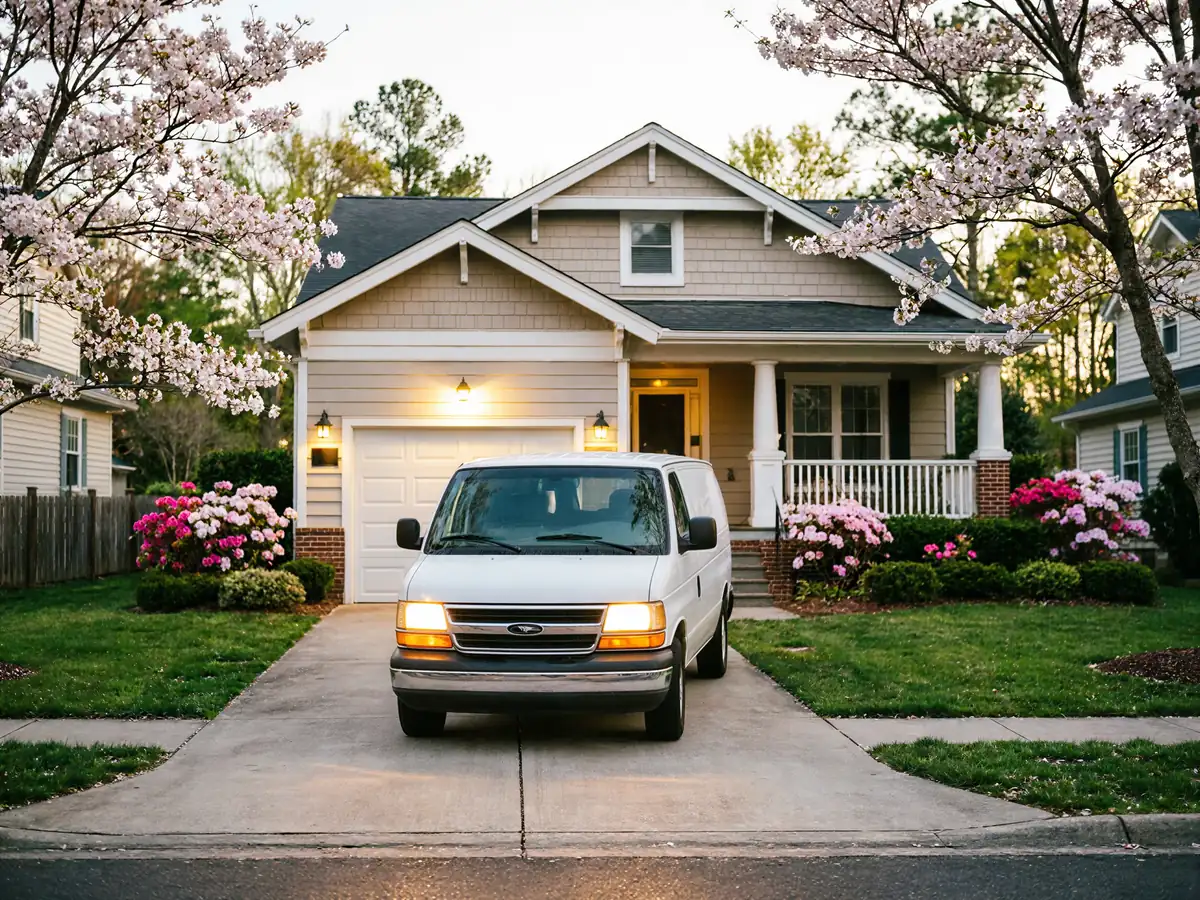
A white van is parked in the driveway of a house with a white garage door.

Emergency Garage Door Repair

Broken spring or dead opener in Sanford? We cover Sanford and the surrounding area out to Broadway, Goldston, Cameron, Pittsboro, Vass, and Carthage. Call now.

Learn more
Questions

Frequently asked

Straight answers about garage door repair in Sanford. Still unsure? Ask us directly.

My garage door is original to the house, built in the 80s. Is it too old to repair?

Not necessarily. Age alone doesn't rule out repair. If the panel is straight and not rusted through, swapping the spring, cables, or rollers on an 80s-era door is usually still worth it. We'd look at the actual hardware before writing it off.

Why does my door feel harder to lift in winter?

This area sits in a cold-moderate climate band, and steel springs lose some tension as temperatures drop. On an older spring that's already fatigued from years of cycling, that seasonal stiffness is more noticeable. It's often a sign the spring is near the end of its life.

Does replacing the door improve insulation in an attached garage?

Often yes. A lot of the housing stock here dates from before current insulation expectations, so original panels from the 1955-1999 era tend to be uninsulated steel or wood. A newer insulated panel can cut down on heat loss into the house, though we can't quote a specific energy savings figure.

Ready to get your garage door sorted?

Tell us what it’s doing and where you are in Sanford - we’ll take it from there.

Request a QuoteCall