How to Book
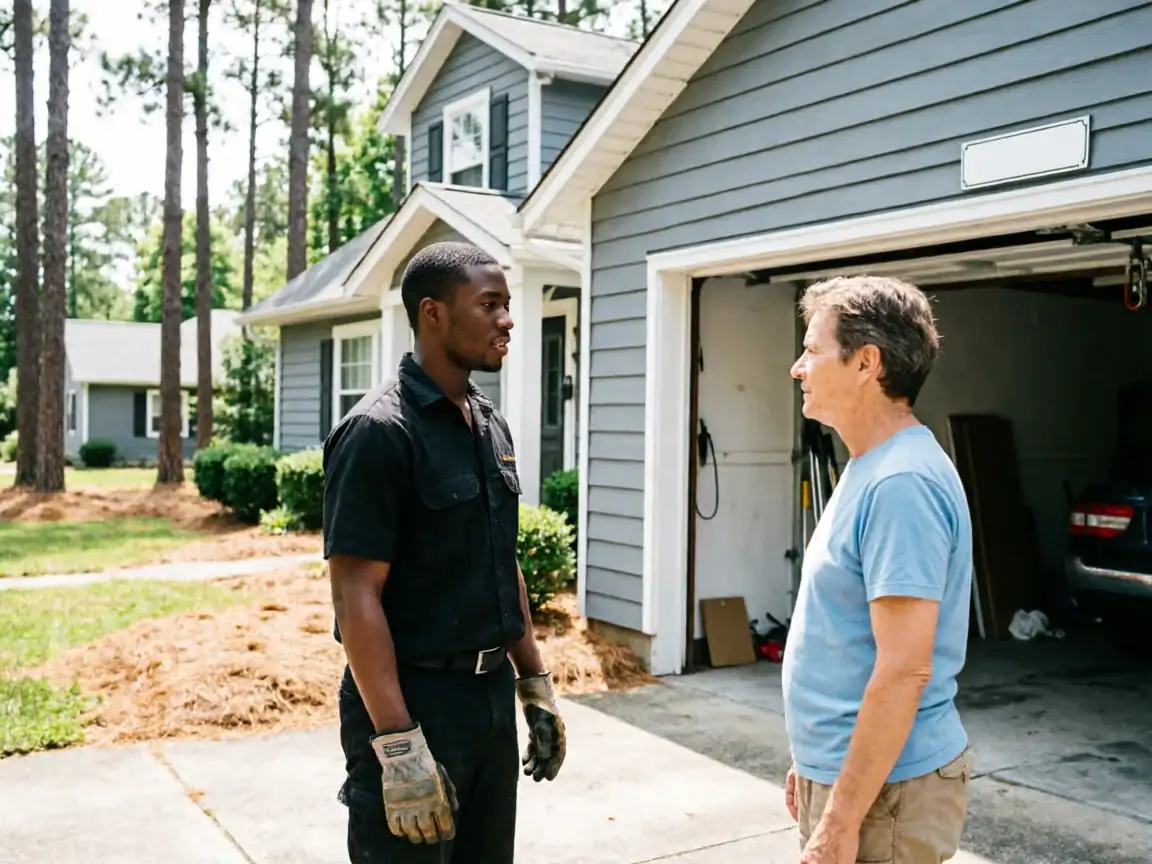
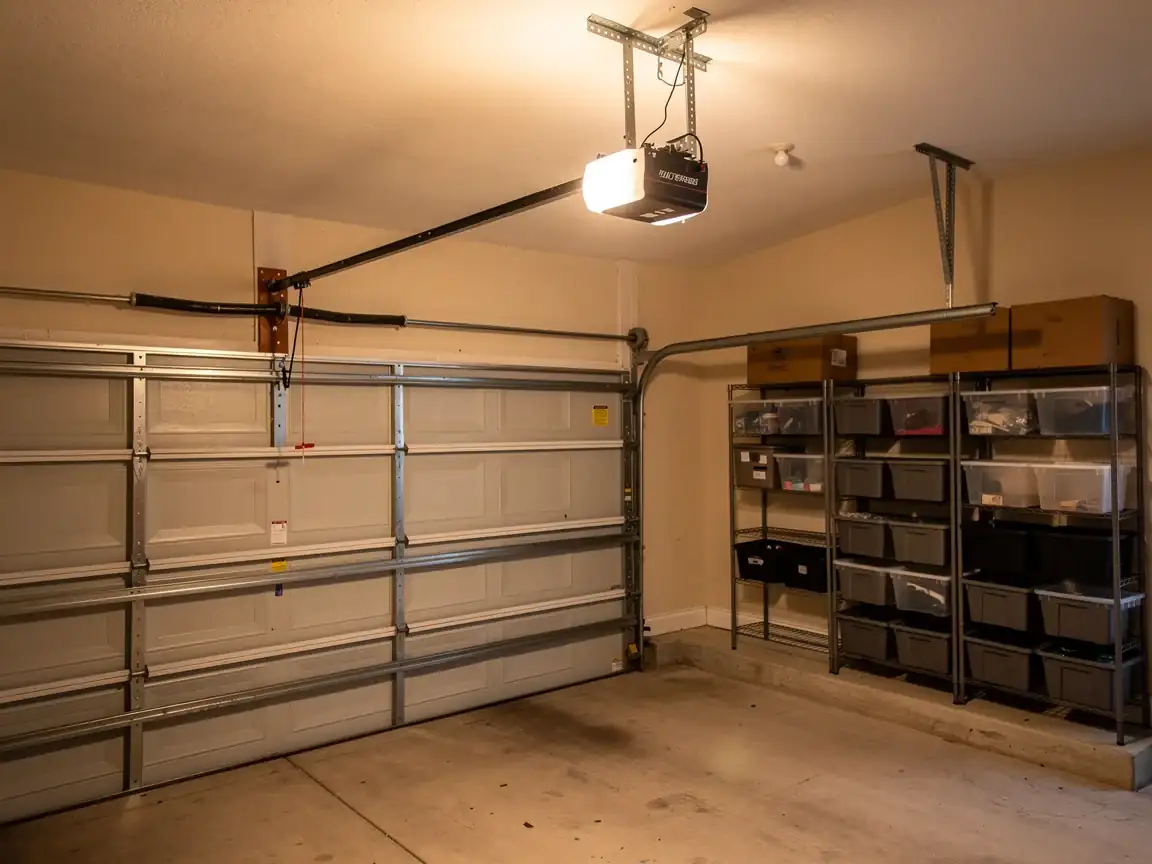
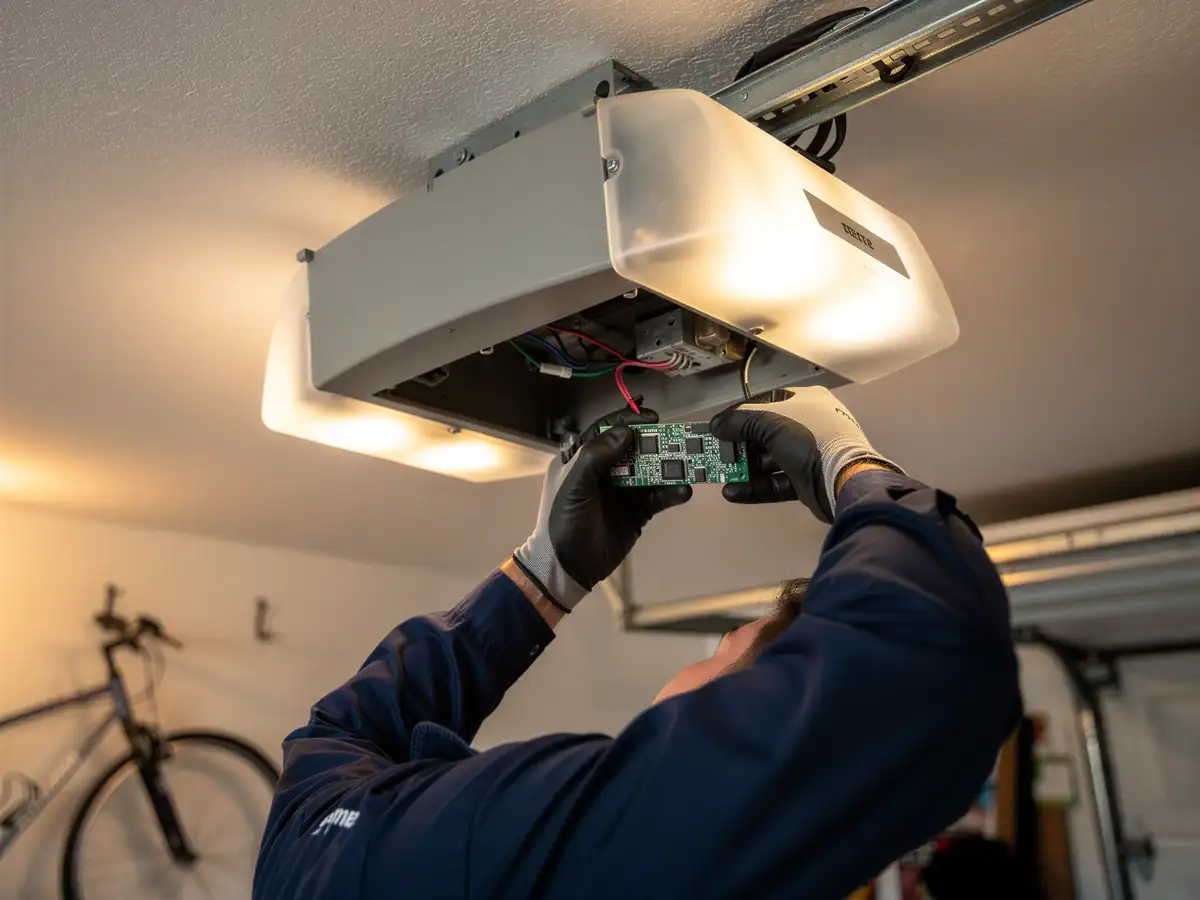
Call the number on our home page and tell us what the door is doing - won't open, won't close, makes a bang, or just sits dead at the opener. We ask for the symptom first because it tells us what's in the truck before we leave the shop. If the spring snapped, we bring springs sized for the door, not a guess. If it's the opener, we bring circuit boards and logic boards that fit openers from the 1980s and 90s builds that make up most of the service area, as well as newer units. Tell us the age of the house if you know it - a door installed when a 1983-era house was built behaves differently than one swapped in during a remodel, and that changes what we load up. We'll give you a window, not a vague "sometime today." If the door is stuck shut with a car trapped inside, say so when you call - that moves you up the list.
The Symptom
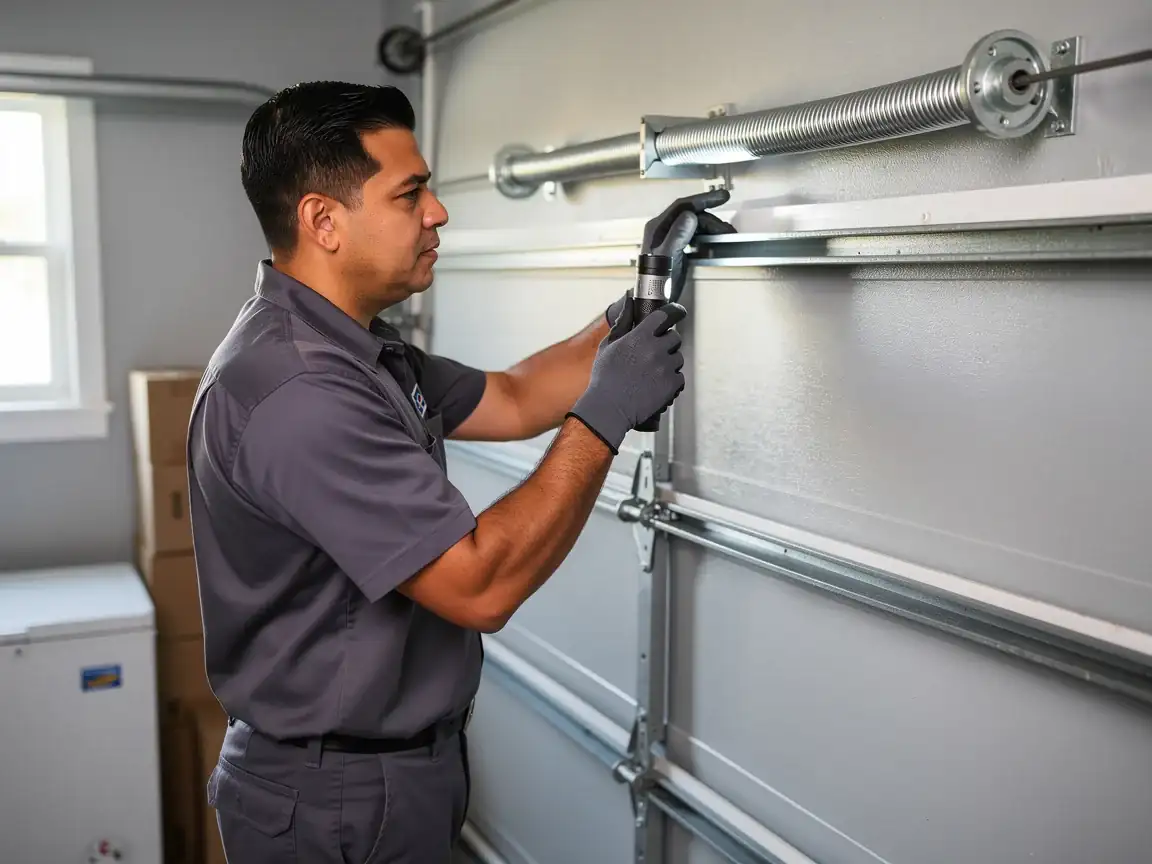
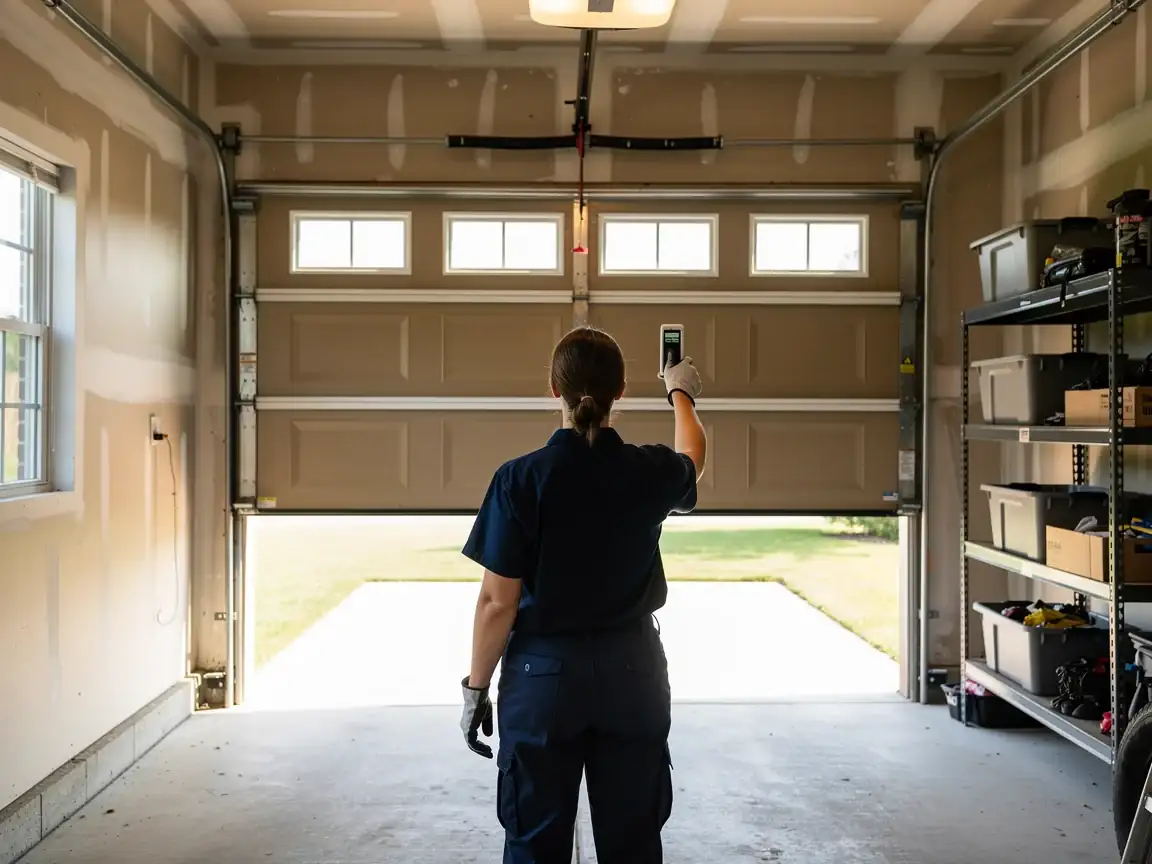
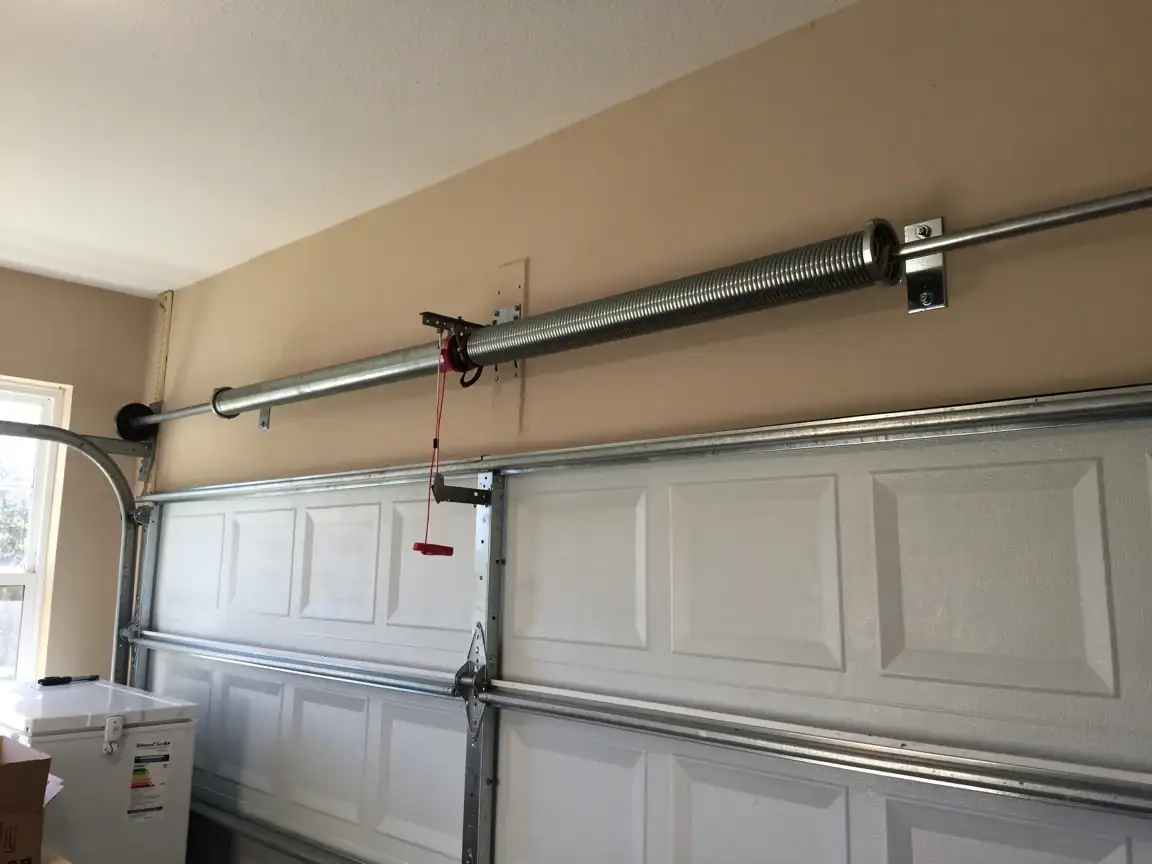
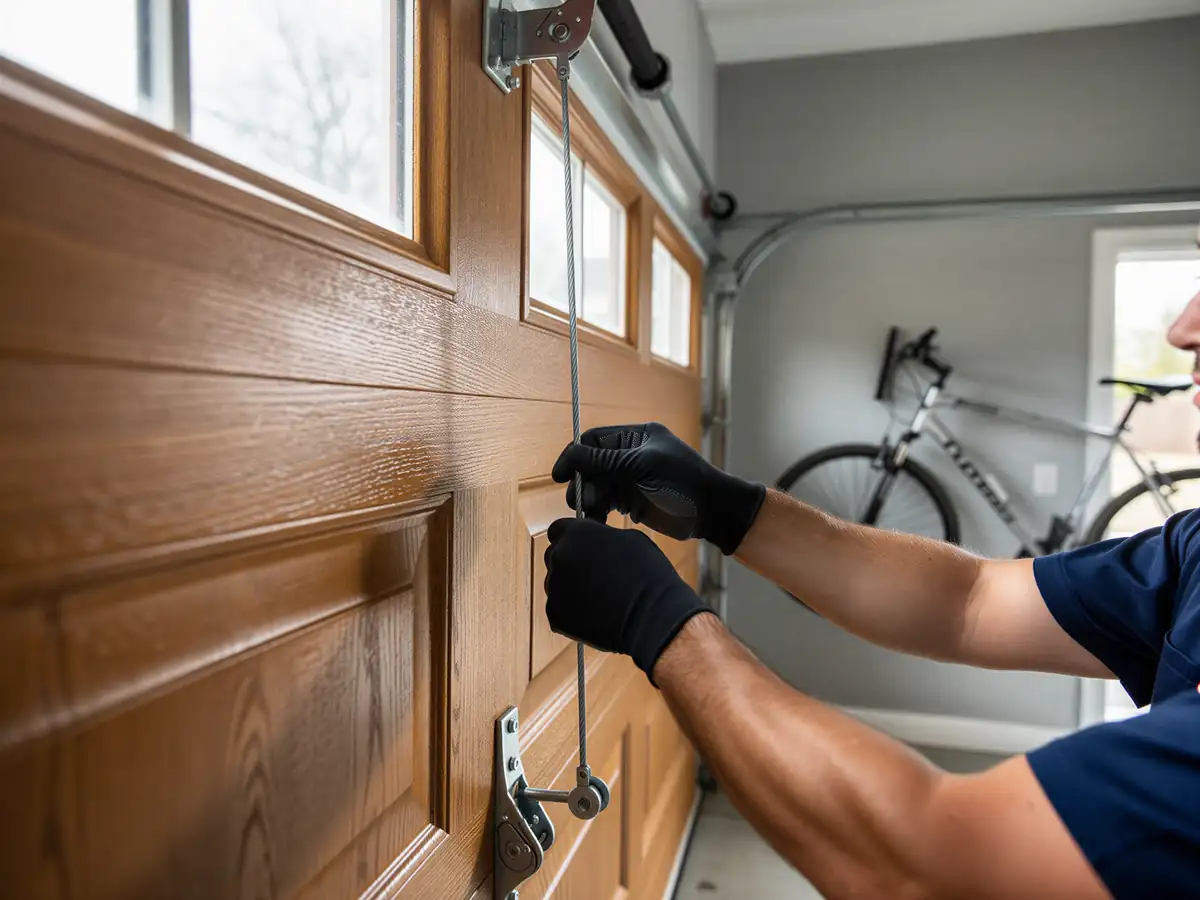
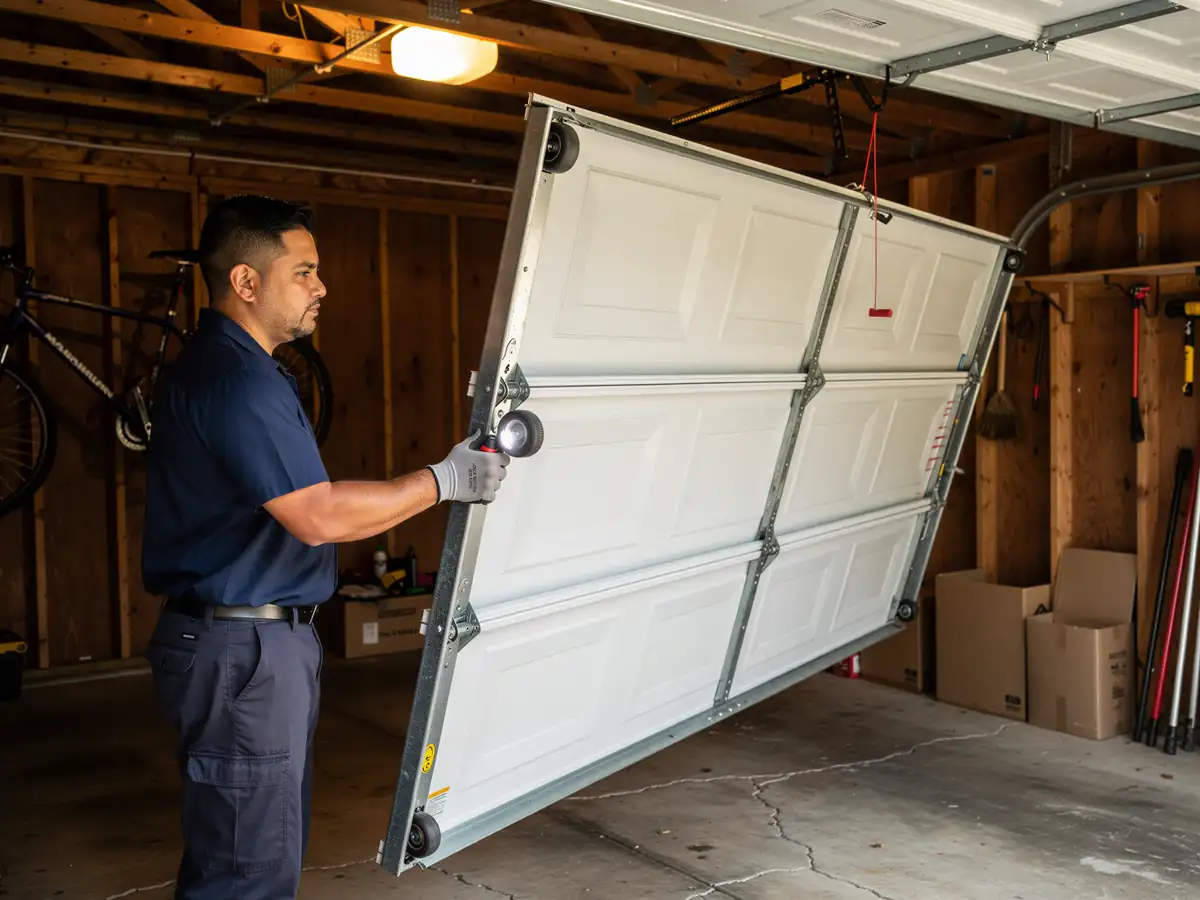
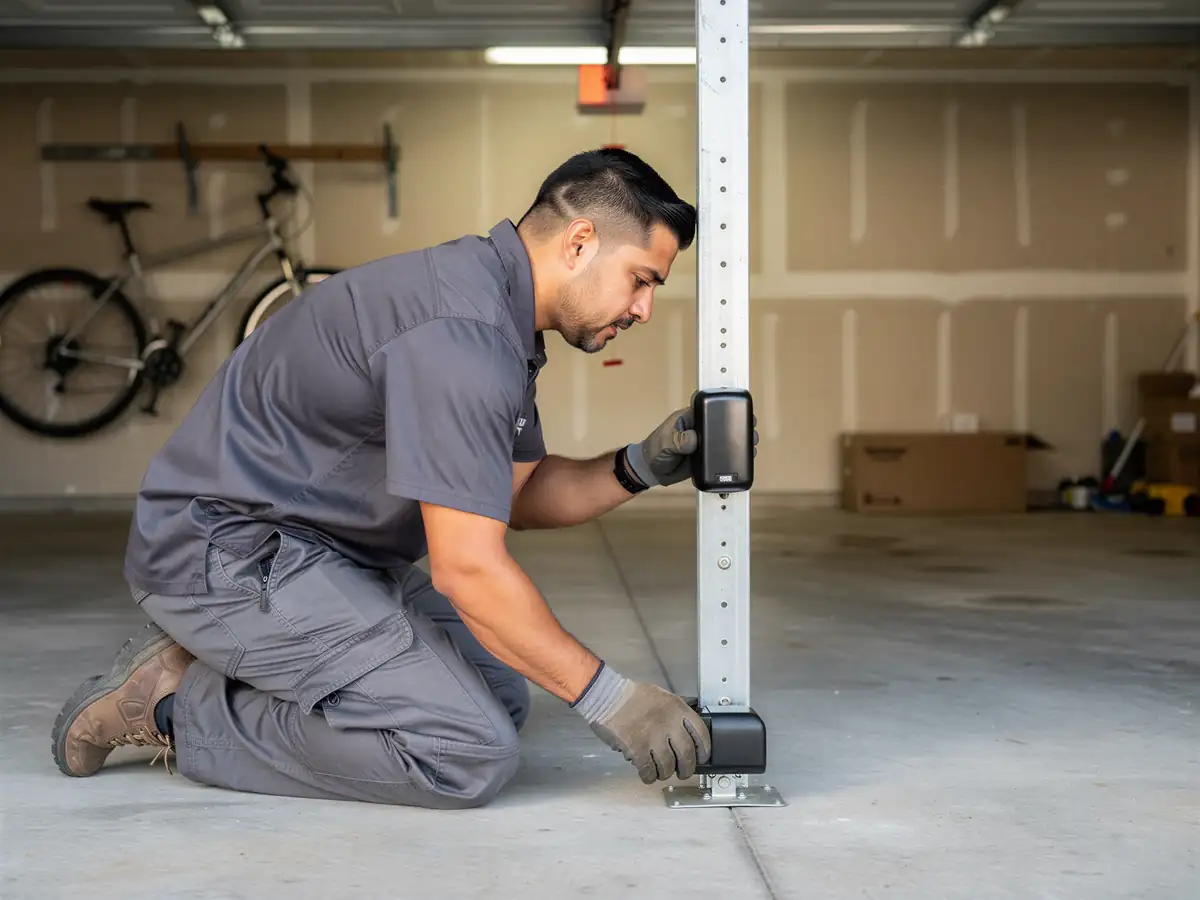
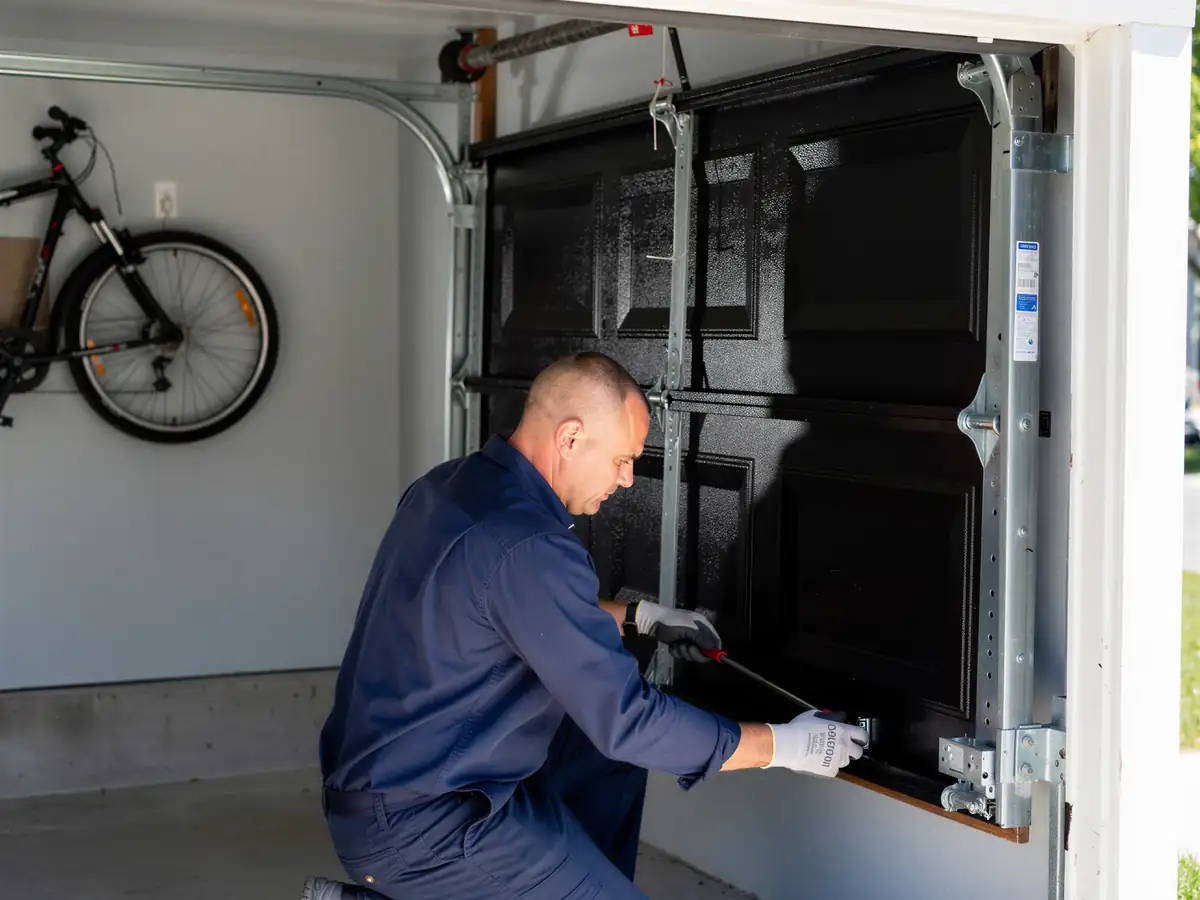
The call we get most is a door that won't lift, or lifts six inches and stops. Nine times out of ten that's a broken torsion spring - the coiled bar above the door that does the actual lifting work, not the opener. The opener just pulls a string; it was never built to lift a 150-pound door on its own, so when the spring goes, the motor strains, the gears strip, and you hear grinding instead of movement. The second most common call is a door that reverses halfway down, which usually means a photo-eye sensor knocked out of alignment or a roller that's worn enough to bind in the track. Less often it's a cable that's frayed and about to let go, which is the one we treat as urgent - a cable snapping under load can drop a door fast. None of these are mysteries once we're standing in front of the door. The hard part for a homeowner is telling a strained opener from a genuinely dead one, because both look the same from the button.
Can You Do This Yourself
Some of this is DIY-safe. Tightening loose hinge bolts, cleaning and lubricating rollers and tracks, realigning a photo-eye that's a few degrees off - a homeowner with basic tools can do all of that in twenty minutes. Torsion spring replacement is not on that list. The spring is wound under enough tension to break a wrist or worse if the winding bars slip, and it's not a job we recommend tackling without the right tools and some practice. We'll also say plainly: if the door is original to a house built well before 1980 and the opener, track, and hardware are all original too, sometimes the honest answer is replacement rather than another repair, because patching a worn system piece by piece can cost more over a year than doing it once. We'll tell you straight which category your door is in rather than selling a repair that won't hold.