How to Book
Call us when the door won't move, won't stop, or is hanging on one cable. Tell us what you see and hear - a loud bang before it stopped, a door that reverses the second it touches the floor, an opener that hums but doesn't lift. That tells us what's on the truck before we leave the shop.
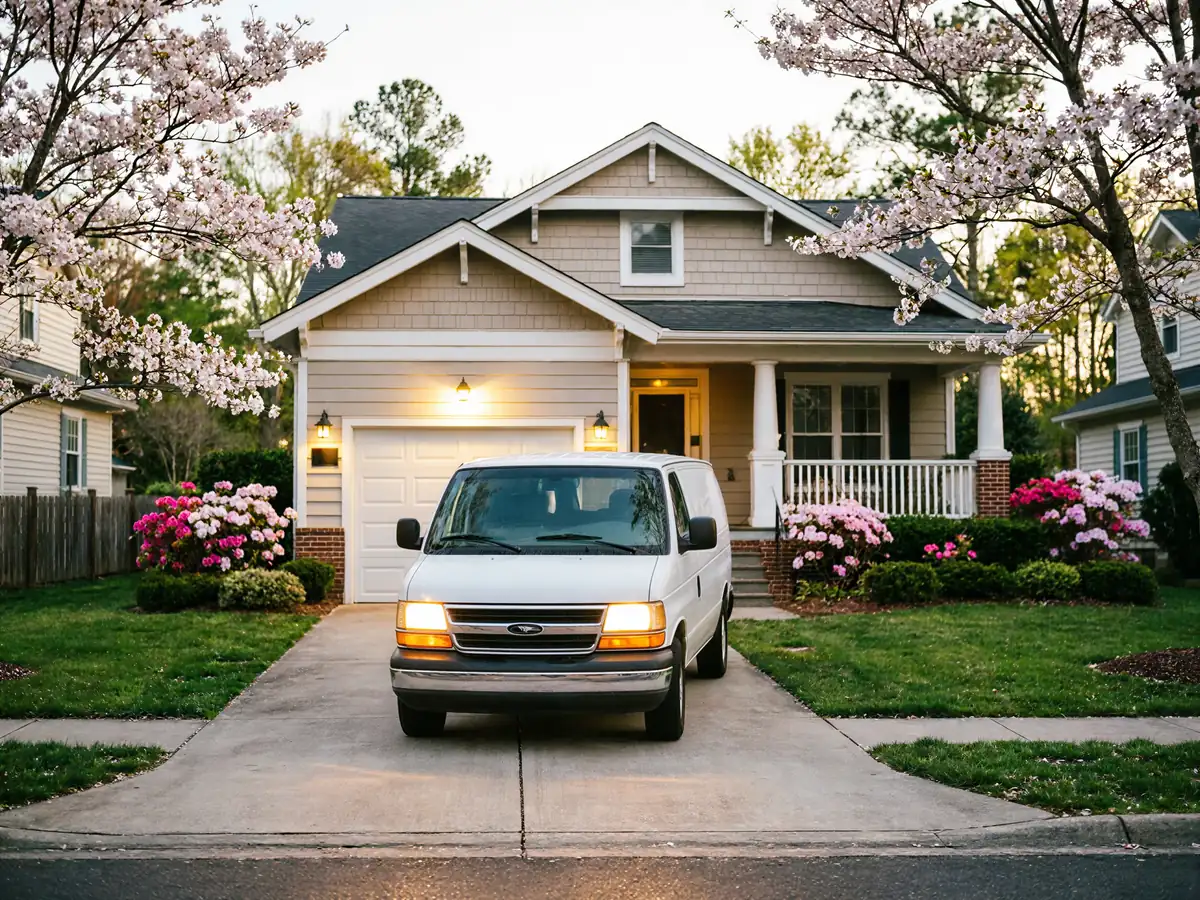
We run jobs across the whole service area, not just inside Sanford proper. If you're closer to Broadway (7 mi), Goldston (11 mi), Cameron (13 mi), Pittsboro (16 mi), Vass (18 mi), or Carthage (18 mi), say so when you call - route and parts load depend on it.
We don't quote a repair over the phone without seeing the door. A broken spring and a broken opener gear sound almost identical to a homeowner, and the wrong guess means a second trip. What we will tell you on the phone is whether it's safe to leave the door where it is until we get there - usually yes, if nobody forces it.
There's no dispatch window we can promise in writing here, because that depends on where in the area you are and what's already on the schedule that day. Ask when you call.
The Symptom
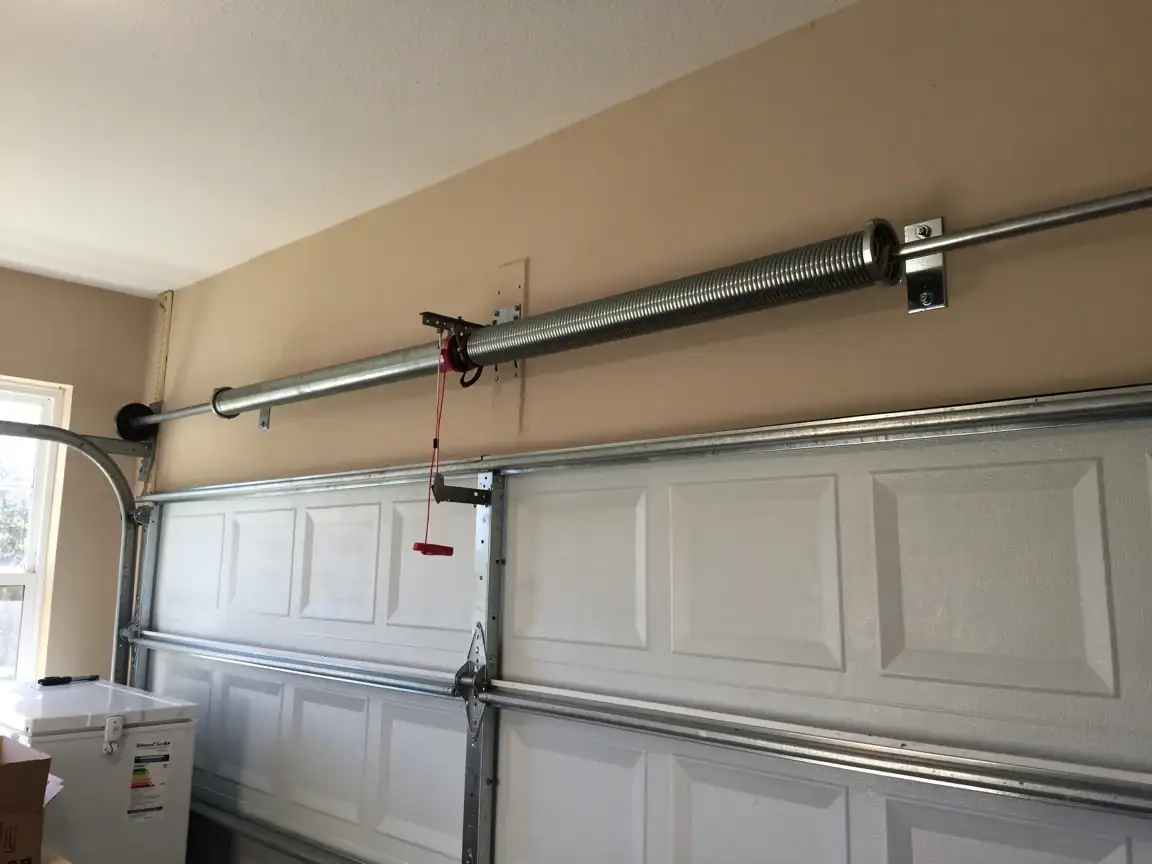
The calls we get most from this area break into a short list: a torsion spring that's split and the door won't budge, a cable that's jumped the drum and the door is sitting crooked in the track, an opener that runs but the door doesn't move because the gear inside stripped out, or a door that slams down instead of lowering because the spring tension is gone.
Less dramatic but just as common - rollers that have worn to the point the door shudders and binds partway up, usually on doors that have been going up and down daily for fifteen-plus years without anyone touching them.
What ties these together isn't drama, it's age and use. A spring rated for a certain number of cycles doesn't fail on a schedule, it fails when it's used up, and a lot of doors in this area are well into that territory.
Why It Happens Here
Most of the housing across the service area went up between 1955 and 1999
With the median build year landing around 1983 - that's roughly 2,523 owner-occupied houses with doors and openers that are original or on their second set of hardware, spread across six named areas of mostly 1980s-90s stock. A torsion spring sized for a standard door in 1983 has had four decades of temperature swings to work through, and springs don't get a pass for being sturdy to start with.
- 2,523 owner-occupied
The climate band here is cold-moderate, not brutal, but it's enough
Steel springs and cables contract in a cold snap and expand again a few days later, and that cycling is what finishes off a spring that was already near the end of its life - it's rarely the cold alone, it's the cold stacked on top of 30-40 years of cycles.
- 40 years
With roughly 4,499 households in the area and a median income of $62,428
A lot of owners are running the original builder-grade opener and hardware rather than an upgraded unit, because replacing a door that still opens isn't a priority until the day it doesn't. That's the pattern we see on these calls - not a design flaw, just hardware reaching the end of a long run.
- 4,499 households
- $62,428 median household income
Can You Do This Yourself
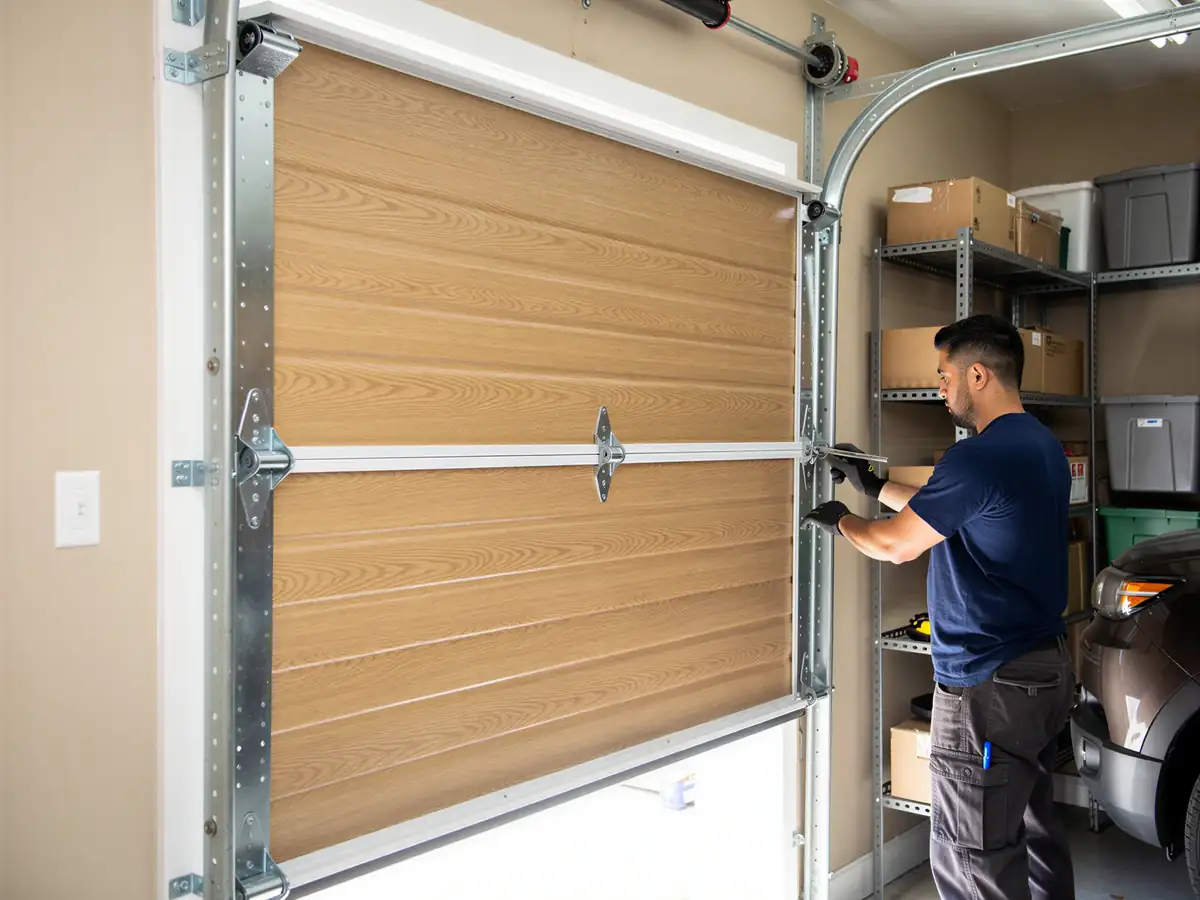
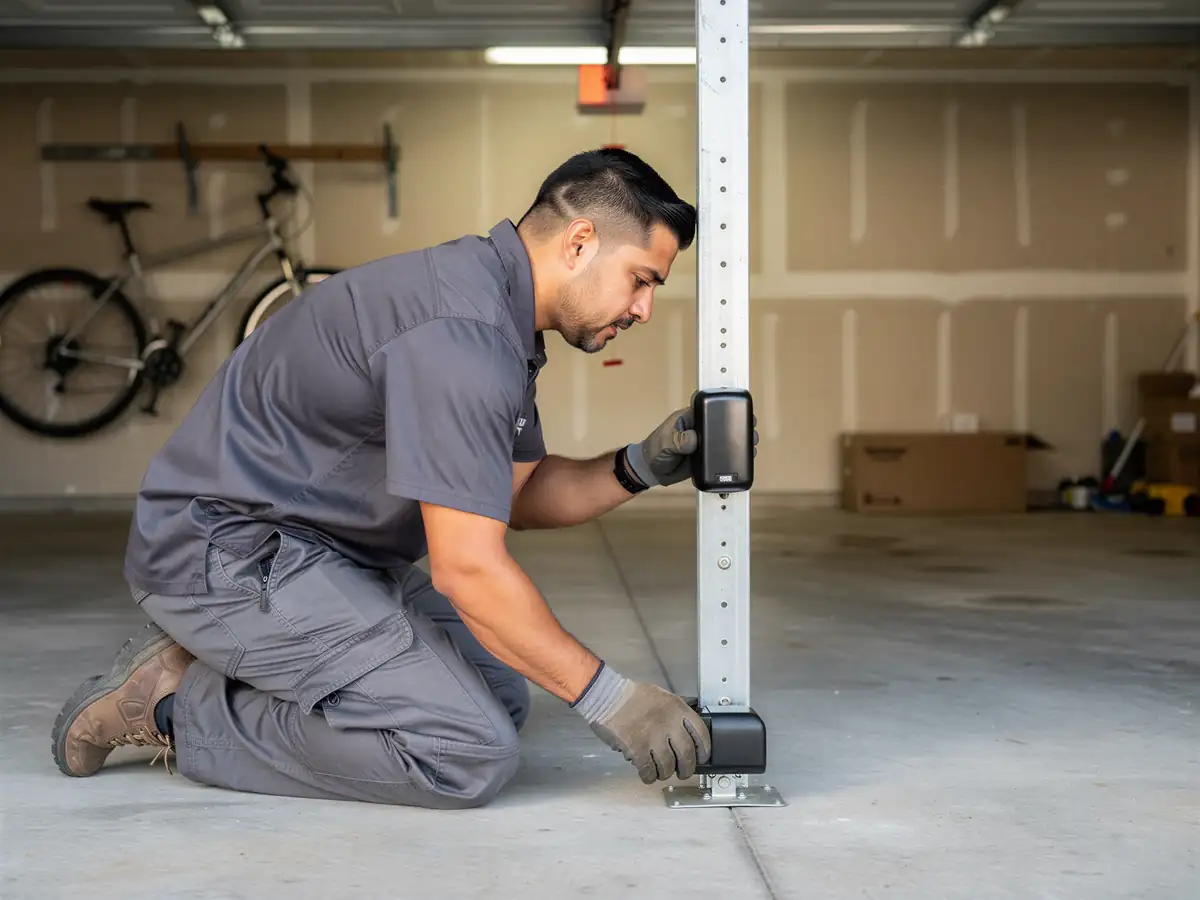
Some of this is fine to handle yourself. Worn rollers, a bent bottom bracket on a door that still opens, a sensor that's just out of alignment - those are screwdriver jobs if you're comfortable on a ladder.
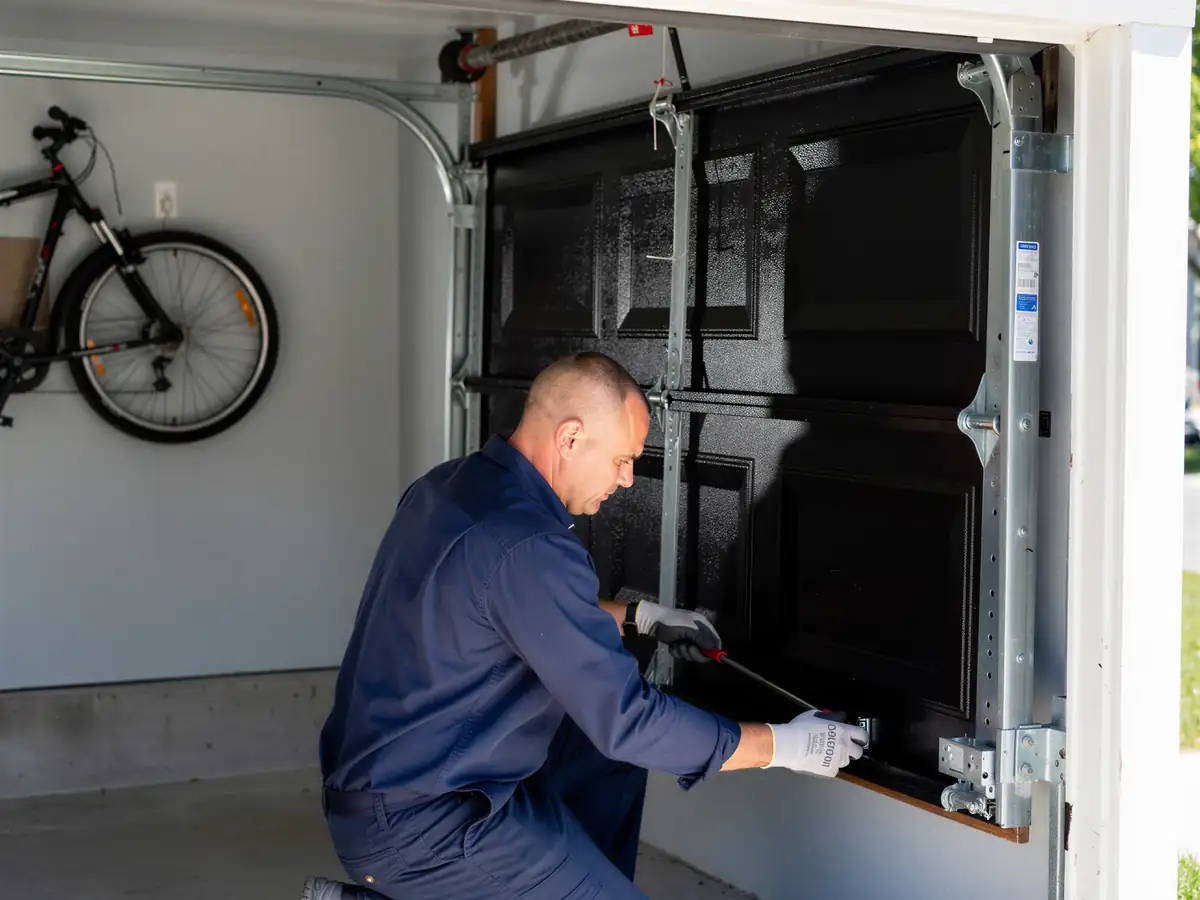
A broken torsion spring is not a DIY repair, full stop. The spring holds the entire weight of the door under tension, and the tools to safely wind or unwind it aren't something most garages have lying around. We've been called to finish jobs that started as a YouTube repair, and the honest truth is that's usually more expensive than if we'd been called first - there's no shame in that call, it's just how the physics works.
If the door is off its tracks and leaning, or a cable has snapped and the door is hanging unevenly, leave it alone and call. Don't try to force it level or cut a cable to "free" the door. That's the one limitation we're always upfront about: we'd rather talk you out of a repair that isn't safe to do alone than show up to a worse mess.