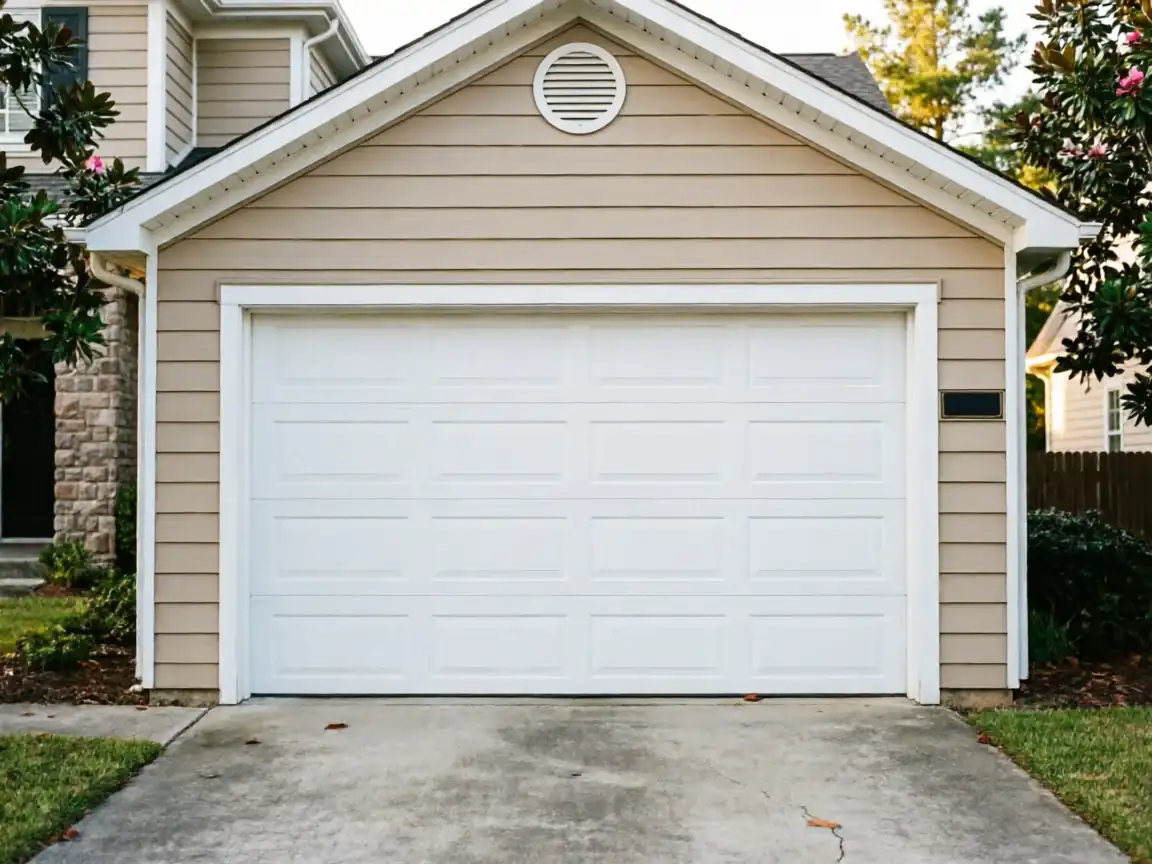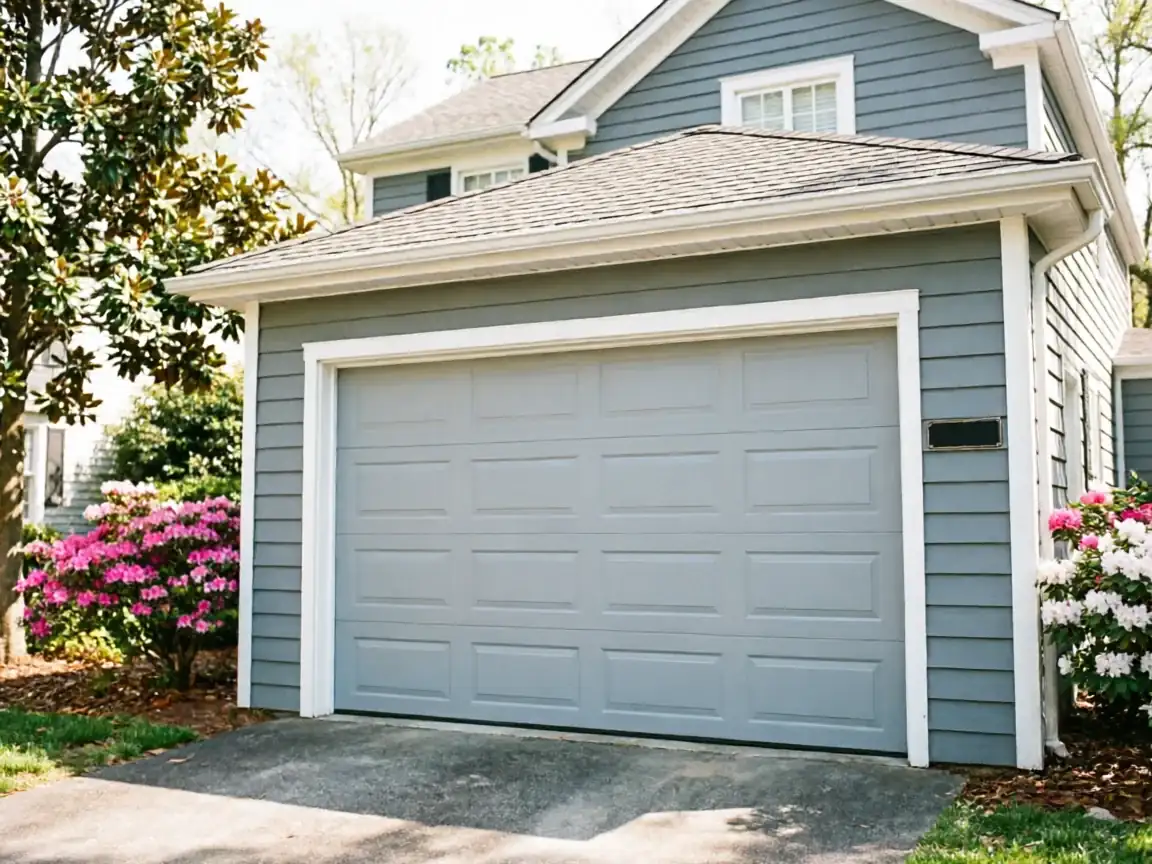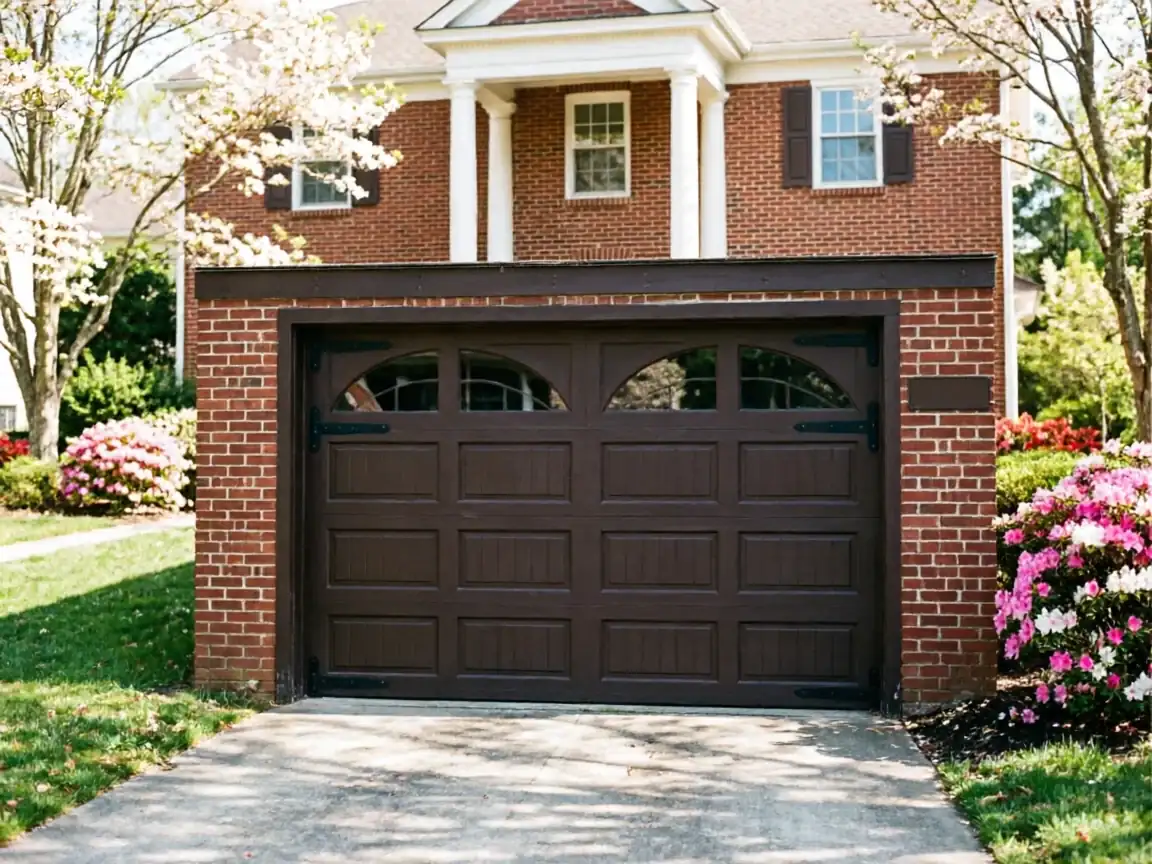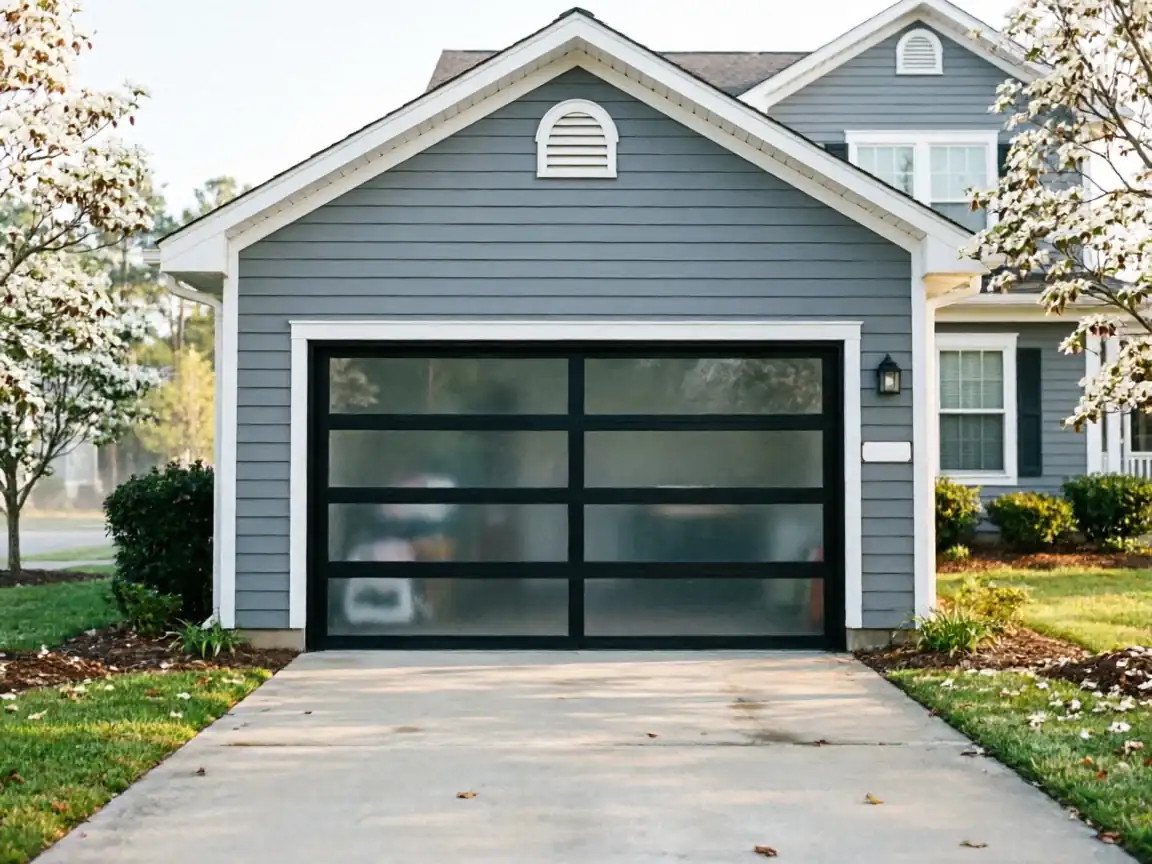
What the Fix Involves
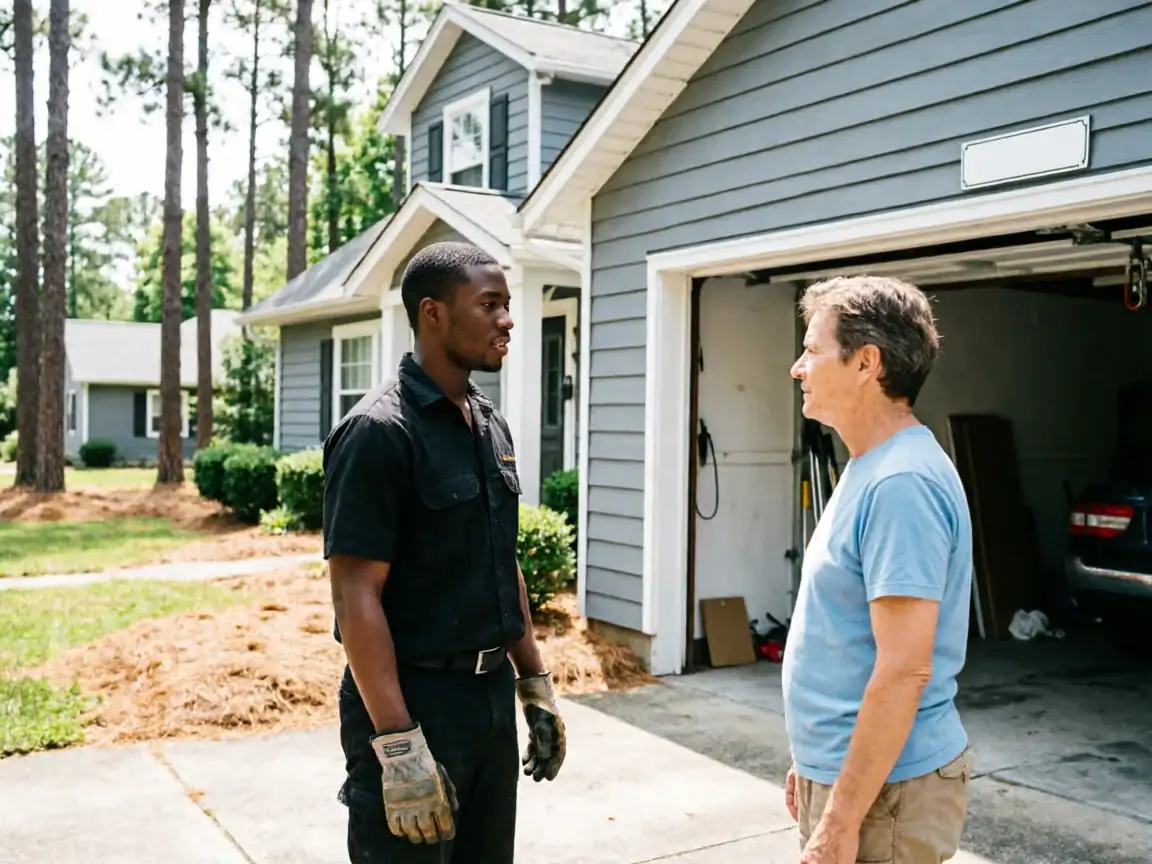
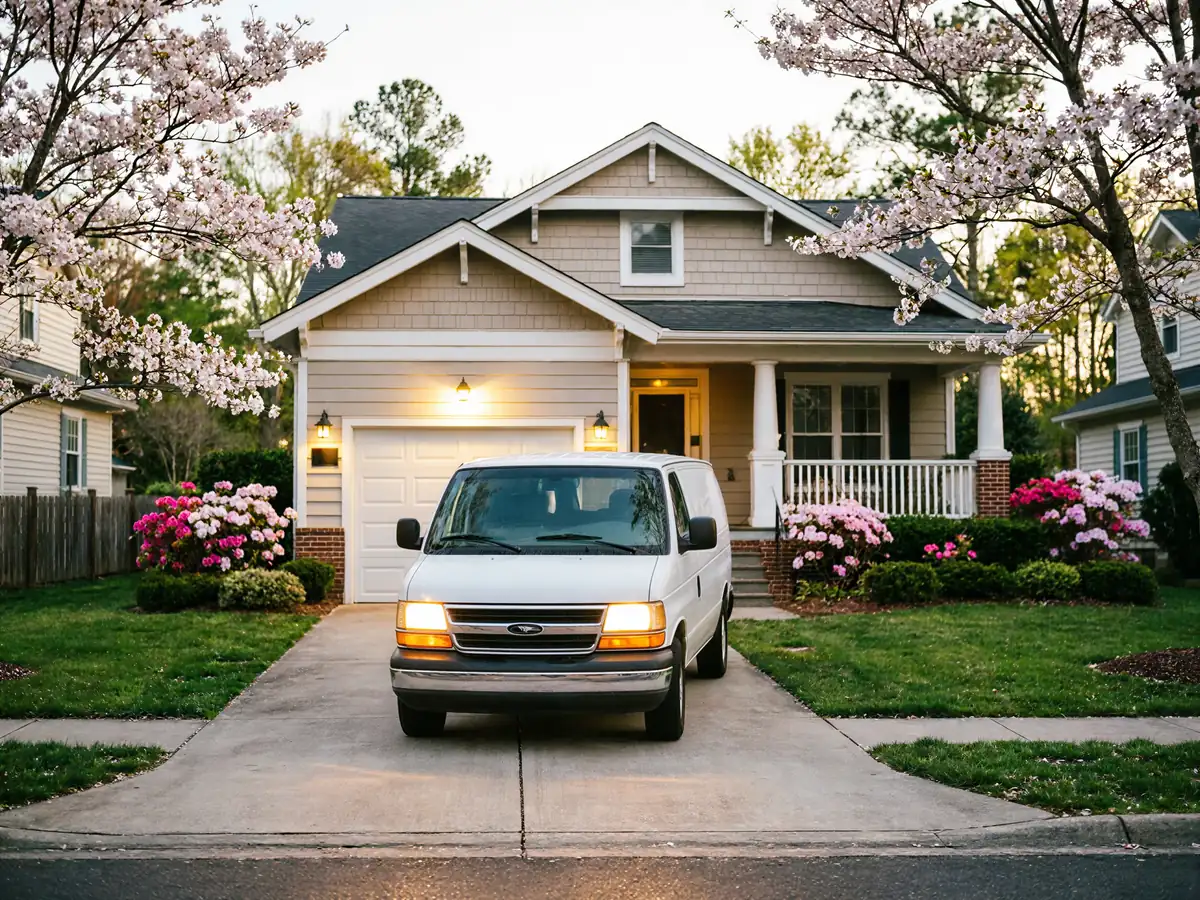
Sixteen miles out, a call to Pittsboro means a full truck before anything else - the right springs, the right opener logic board, the right roller size, because a second trip back to Sanford for a part turns a one-hour job into a half-day one. That drive shapes how we diagnose over the phone: we ask more questions up front about the opener brand, the door's age, and what the spring looks like (torsion coil versus extension) than we would for a job five minutes from the shop. With a median build year of 1999 here, most doors we see are on torsion springs with a standard extension opener, not the older low-headroom setups you find in homes from the 1960s and 70s. That means fewer surprises once we're on site, but it also means the trip has to count. We price the drive into the job, not as a separate add-on, so what you're told on the phone is what you pay, barring a part we didn't expect to need once the door's open in front of us.
The Symptom
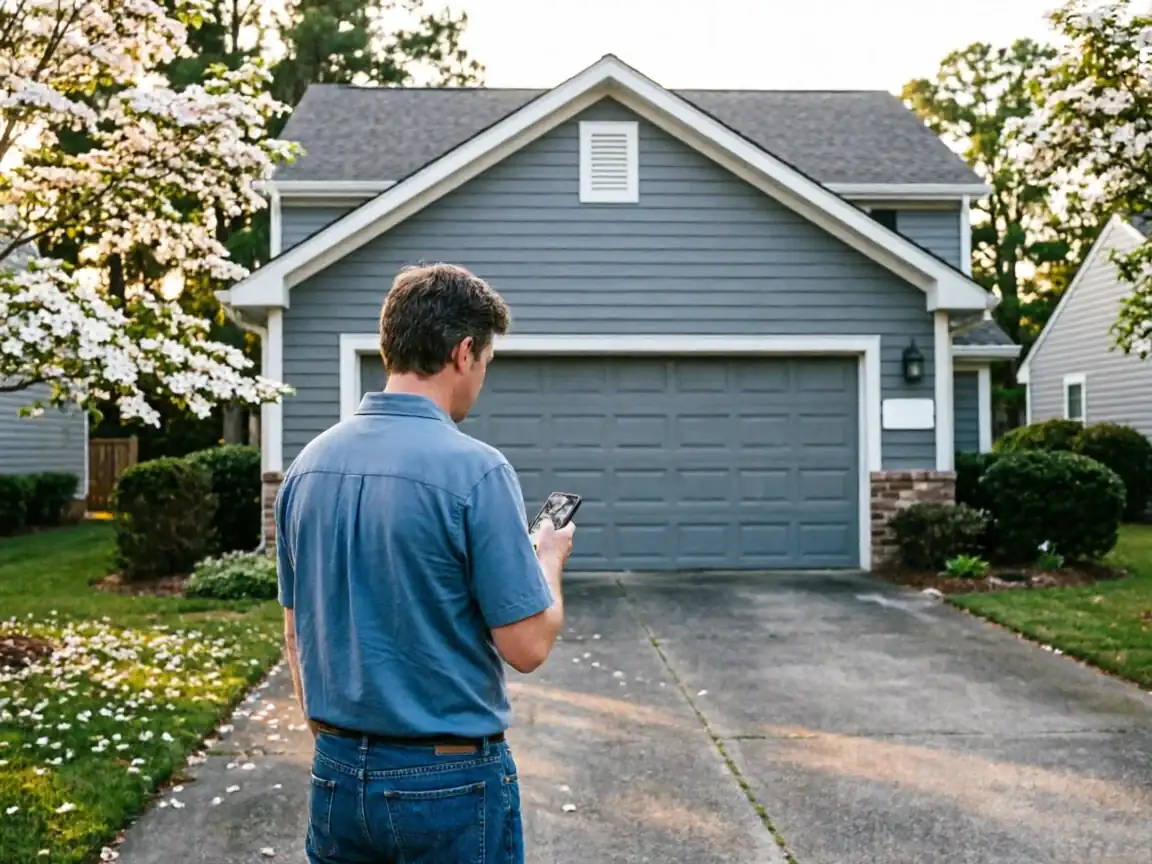
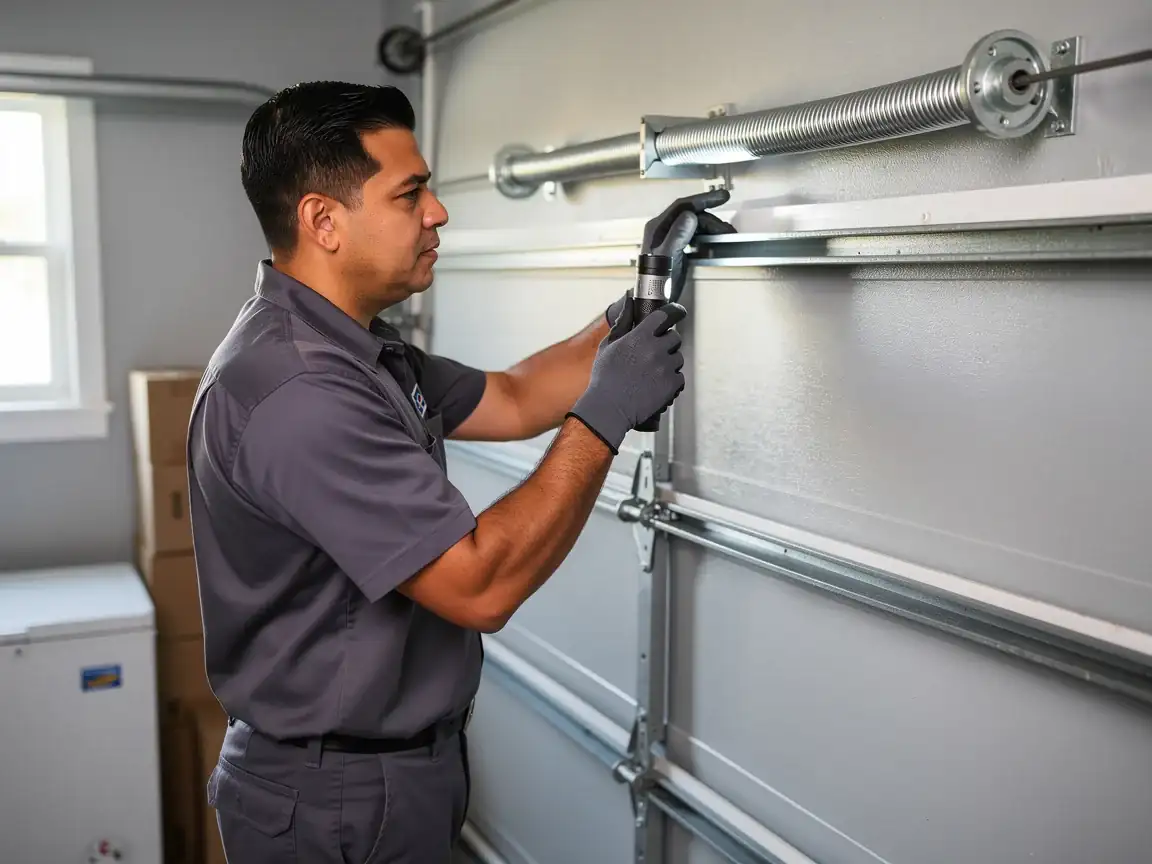
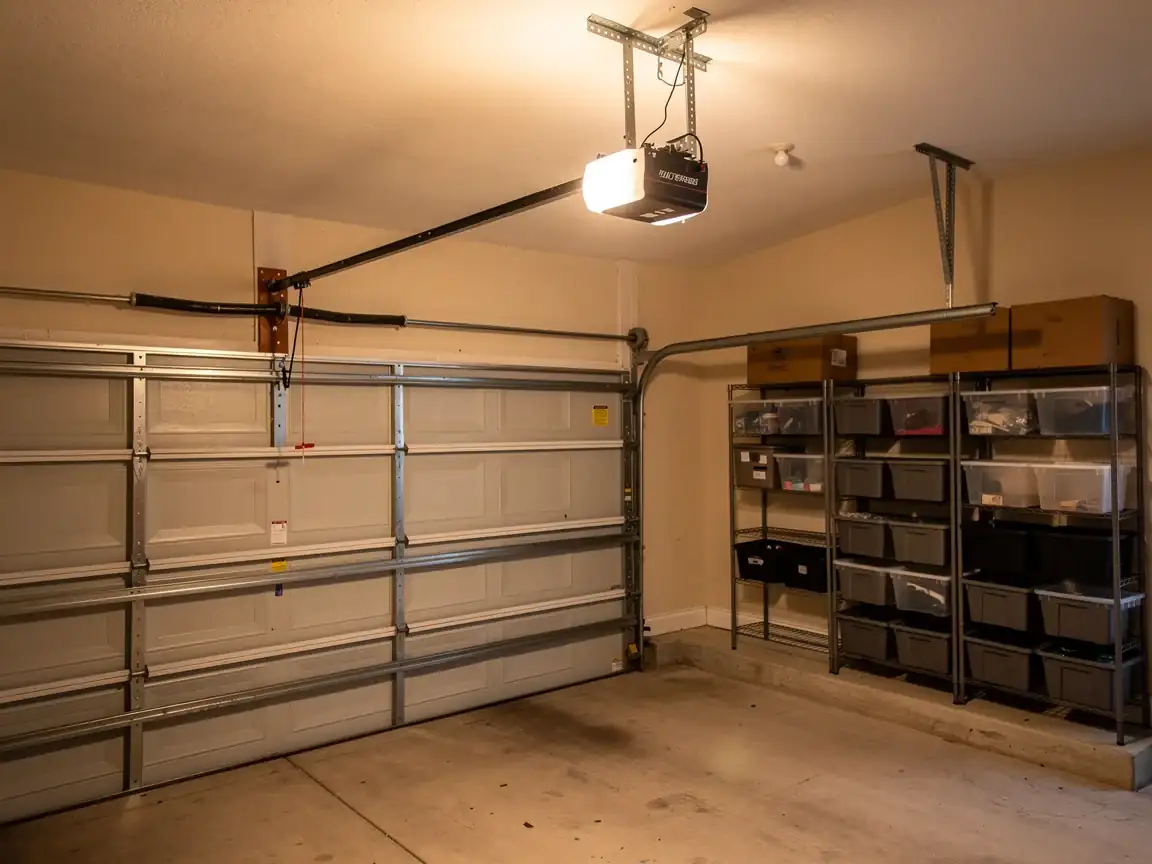
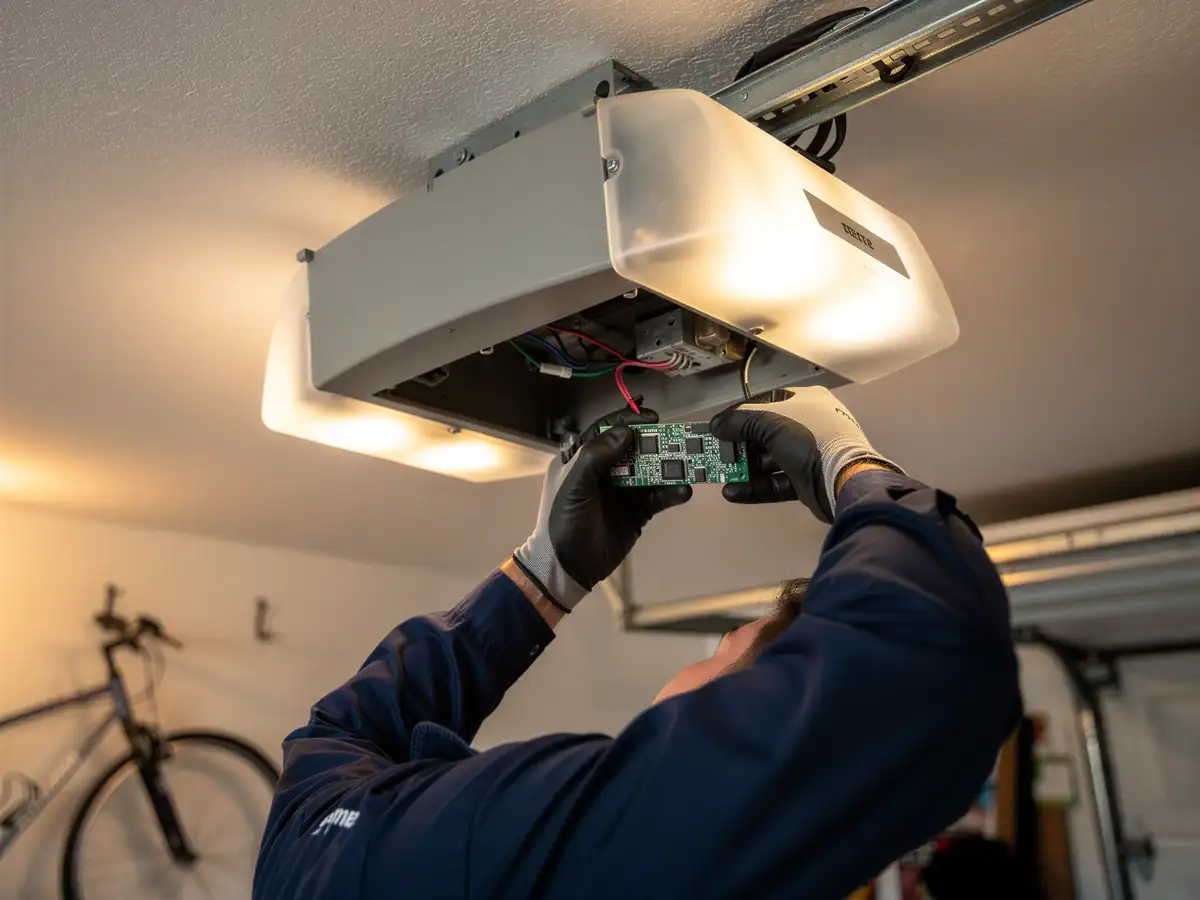
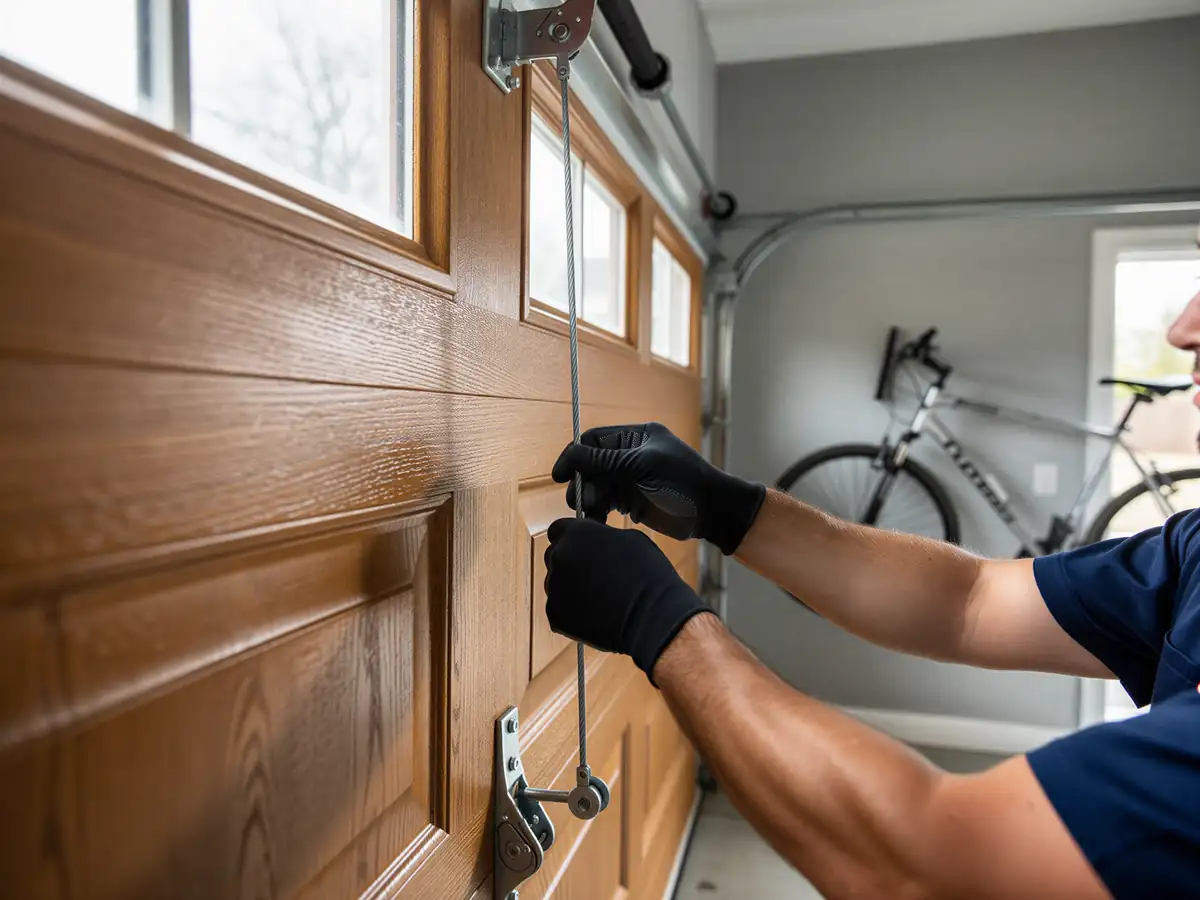
The complaint we hear most from this area is an opener that runs but the door barely moves, or moves and reverses halfway up. On a door from the late 1990s that usually traces to a spring that's lost tension gradually rather than snapped outright - these doors are old enough now that springs are reaching the end of their cycle life, but still young enough that the steel track and rollers underneath are usually fine. We also hear about openers that click but don't fire, which on this era of door is more often a worn drive gear inside the unit than a dead circuit board. Neither is a same-day guess over the phone; we want eyes on the spring coil and the opener's model plate before we say which it is.
How Long You Are Without the Door
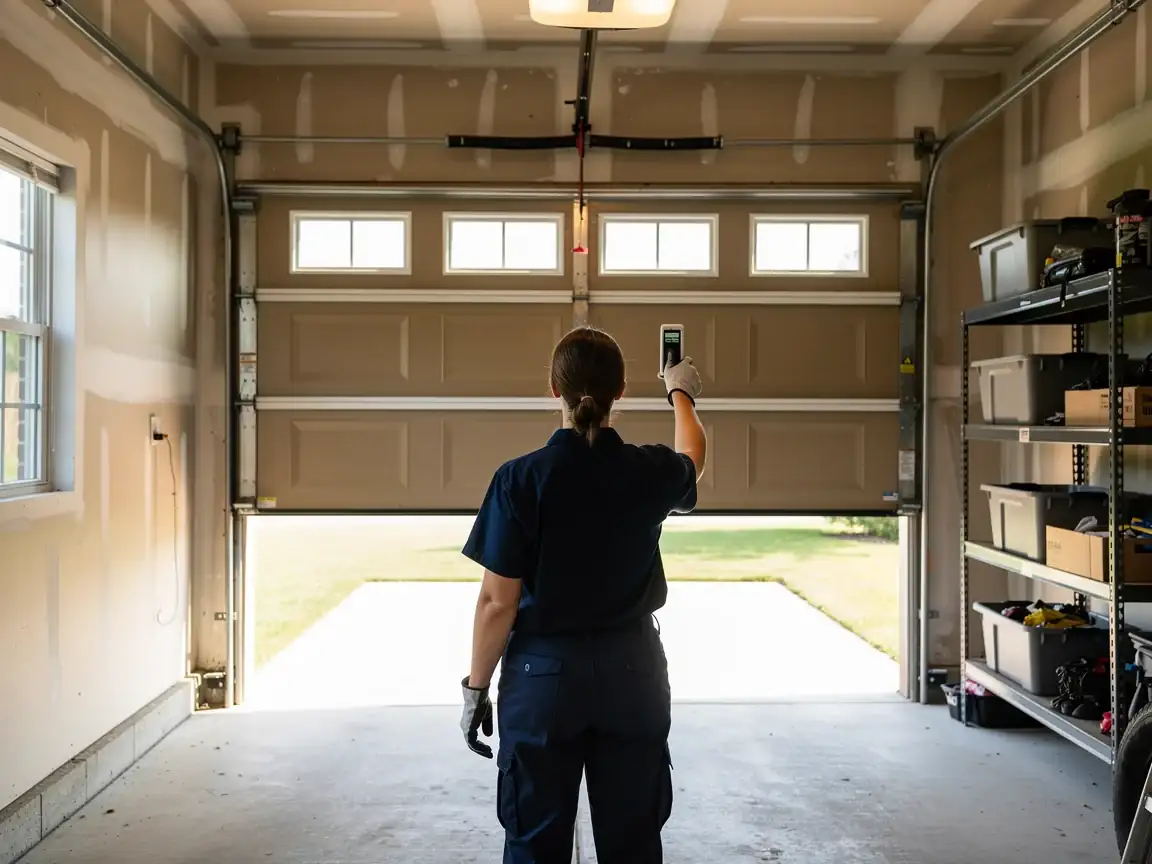
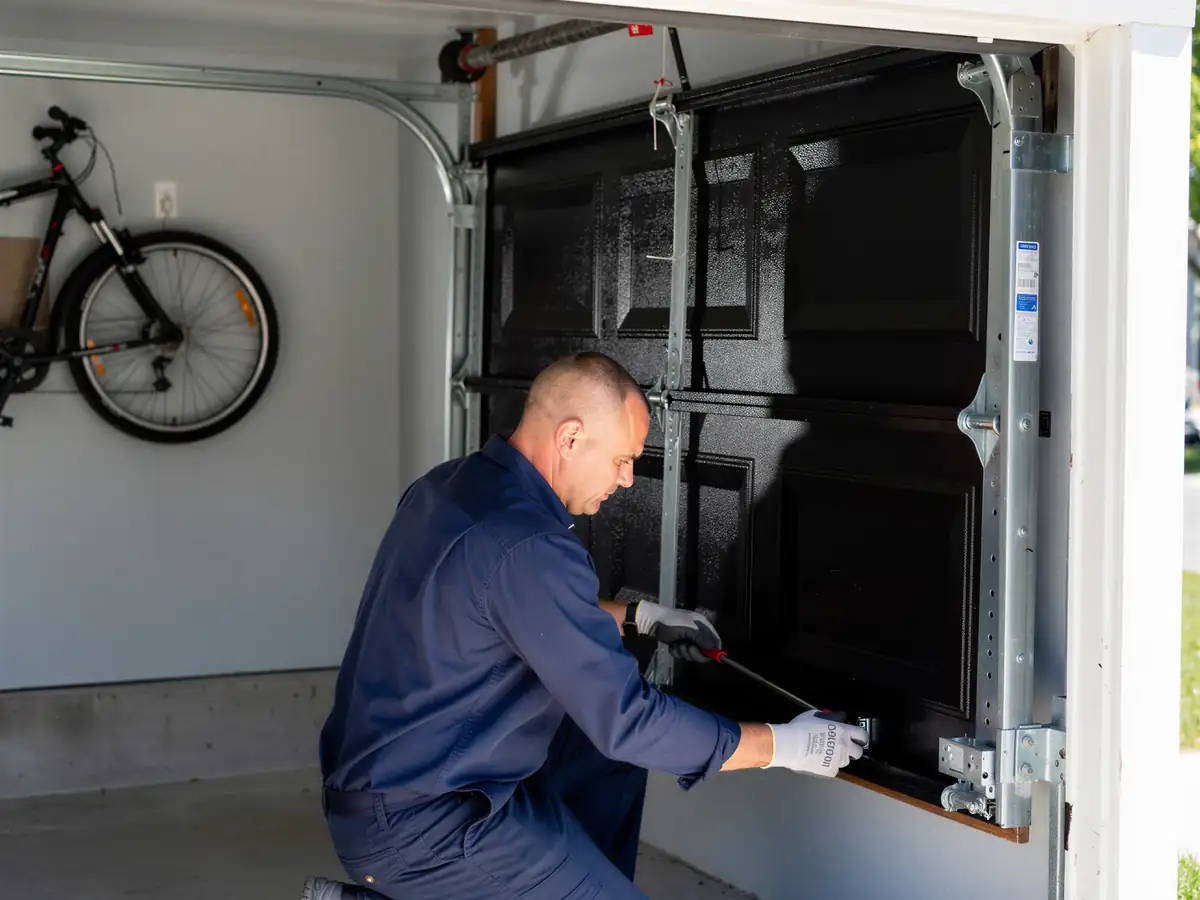
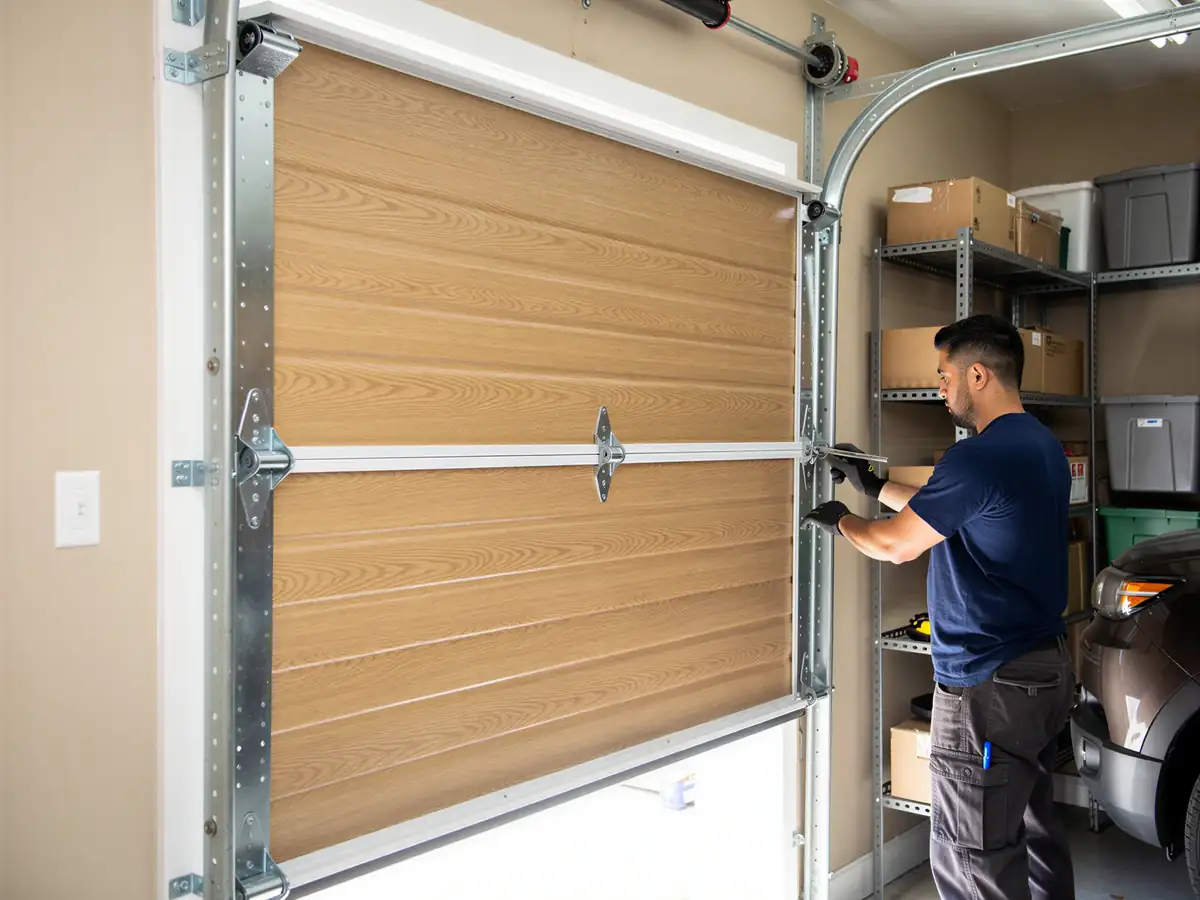
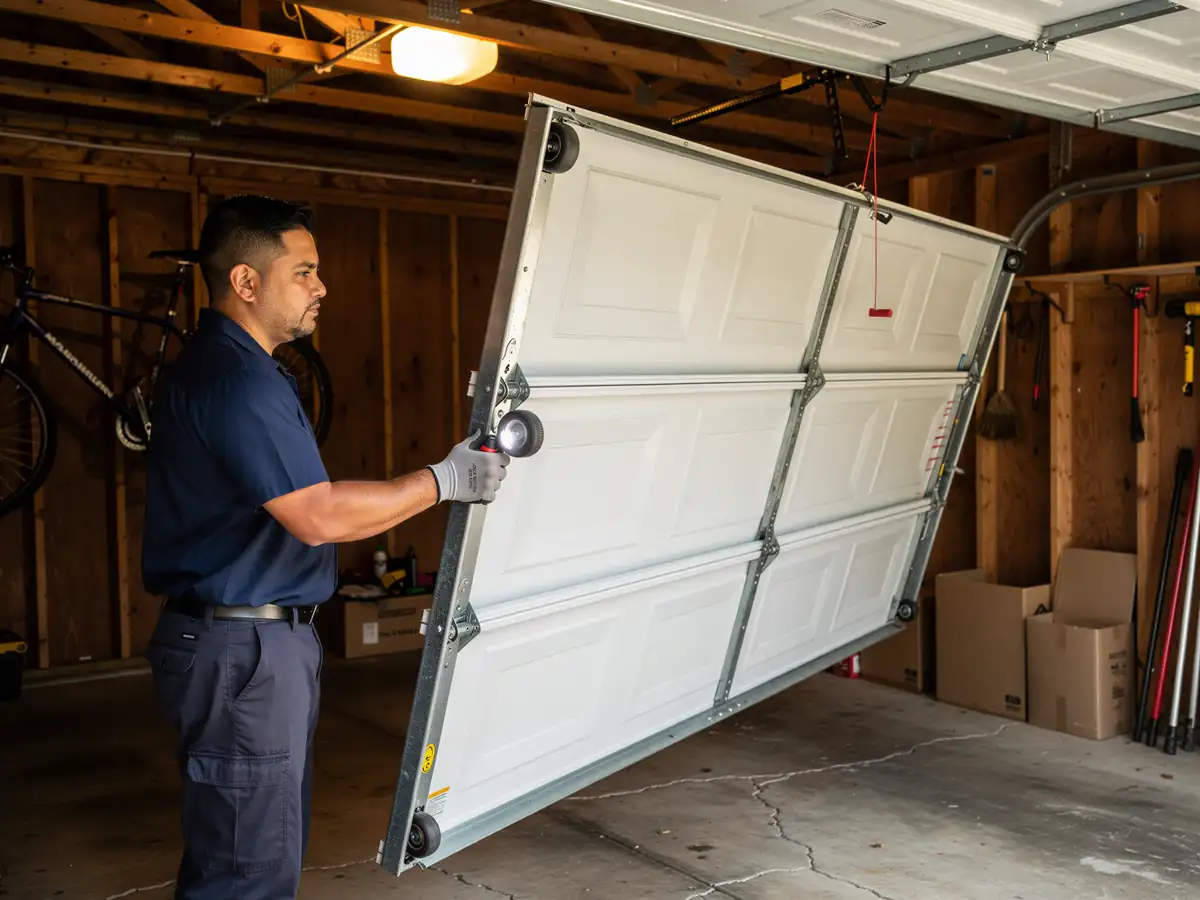
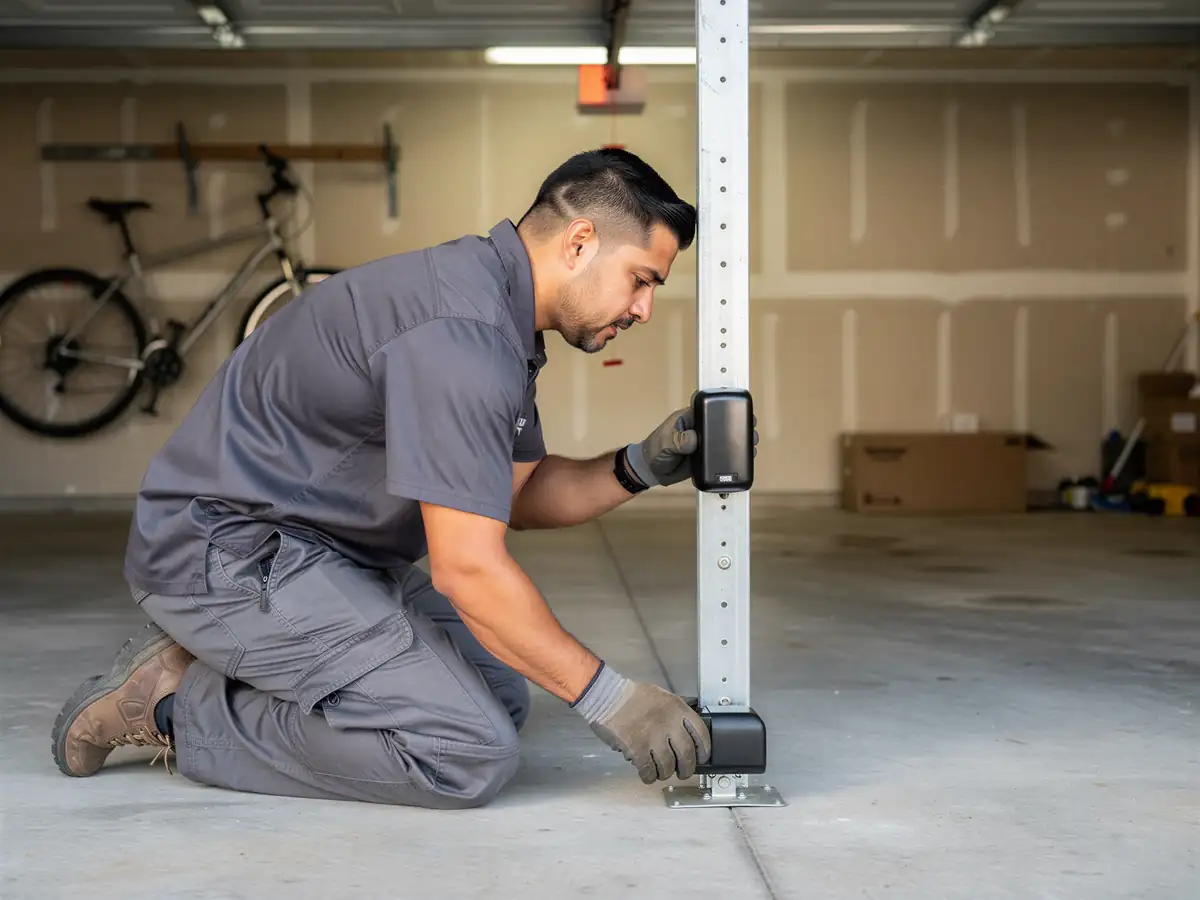
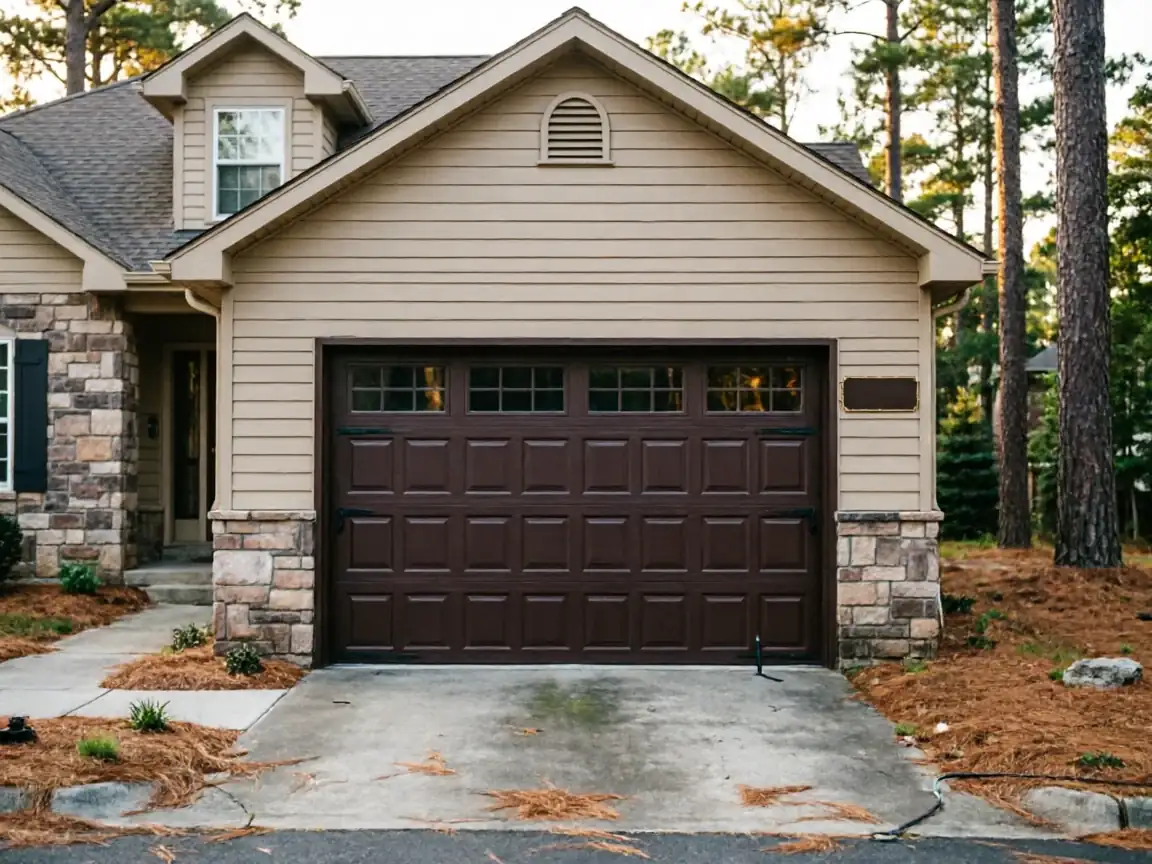
Most single-spring or opener-logic jobs on a door built since the late 1990s run under two hours once the truck is on site, parts in hand. Double doors with two torsion springs take longer because both sides get replaced together, not just the broken one - running one old spring against one new one is asking for the same call again in a year. The honest limit: if the opener's circuit board is the failure and it's an older discontinued model, we may need to order the part, and that's a second trip, not a same-visit fix. We'll tell you on site if that's where the job is headed, rather than let the door sit half-fixed.
Why It Happens Here
Pittsboro's housing stock sits newer than much of the wider Sanford service area - a median build year around 1999 against a surrounding mix that runs from 1955 up through the late 1990s. That matters because the failure points shift with the door's generation: newer doors here mostly fail at the spring or the opener's internal gear, not at rusted track or bent hinge plate the way a 1960s door might. The region sits in a cold-moderate climate band, so steel springs and cables still see seasonal temperature swings that speed up wear, but the swings aren't severe enough on their own to explain a sudden failure - age and cycle count usually do that first. With roughly 2,025 households in Pittsboro and a median income near $64,792, we see a fair number of double-car garages with heavier doors, which puts more load on the spring pair than the single-door setups common in the older parts of the territory.