How to Book
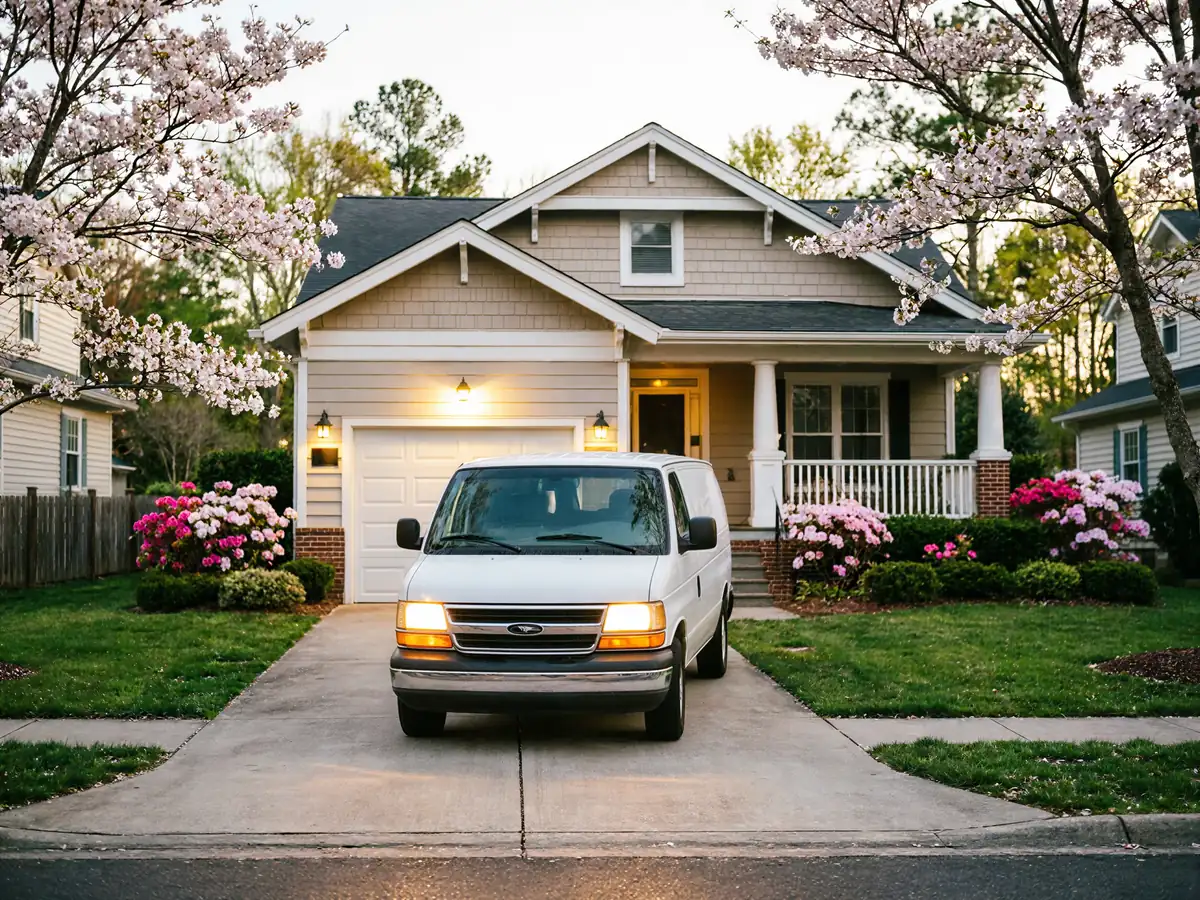
We run this job out of Sanford, 13 miles from Cameron, so there's no local branch or drop-in counter here - you call or book online and we drive the truck to you. Because Cameron is a smaller pocket than the rest of the service area (132 households against the 4,499 across the whole territory we cover), we don't keep a separate schedule for it. You're on the same board as every other call that day, which is fine - it just means we plan the route, not drive around guessing. Tell us the symptom (door won't open, spring snapped, opener clicking but not moving) when you call so we load the right parts before we leave Sanford rather than finding out at your driveway. If you know roughly when your home was built, mention that too - it changes what we bring.
The Complications
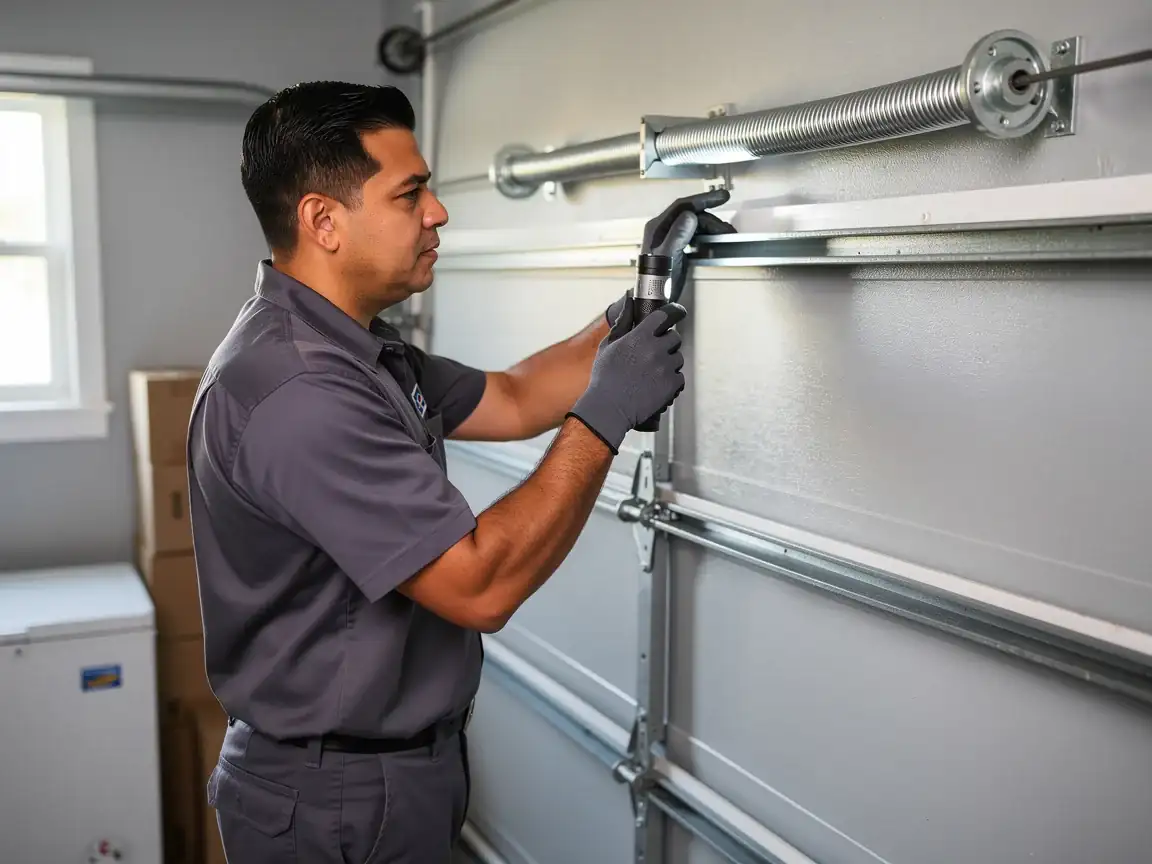
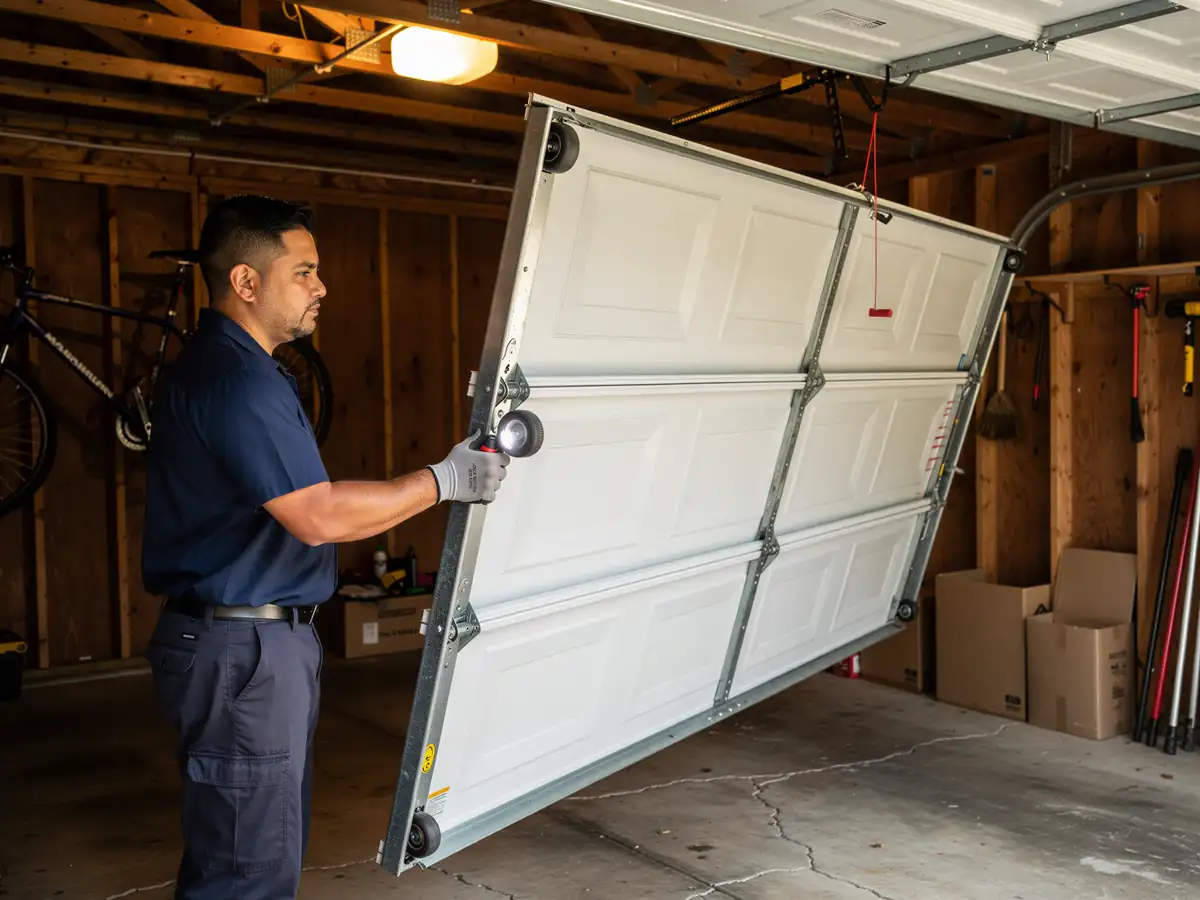
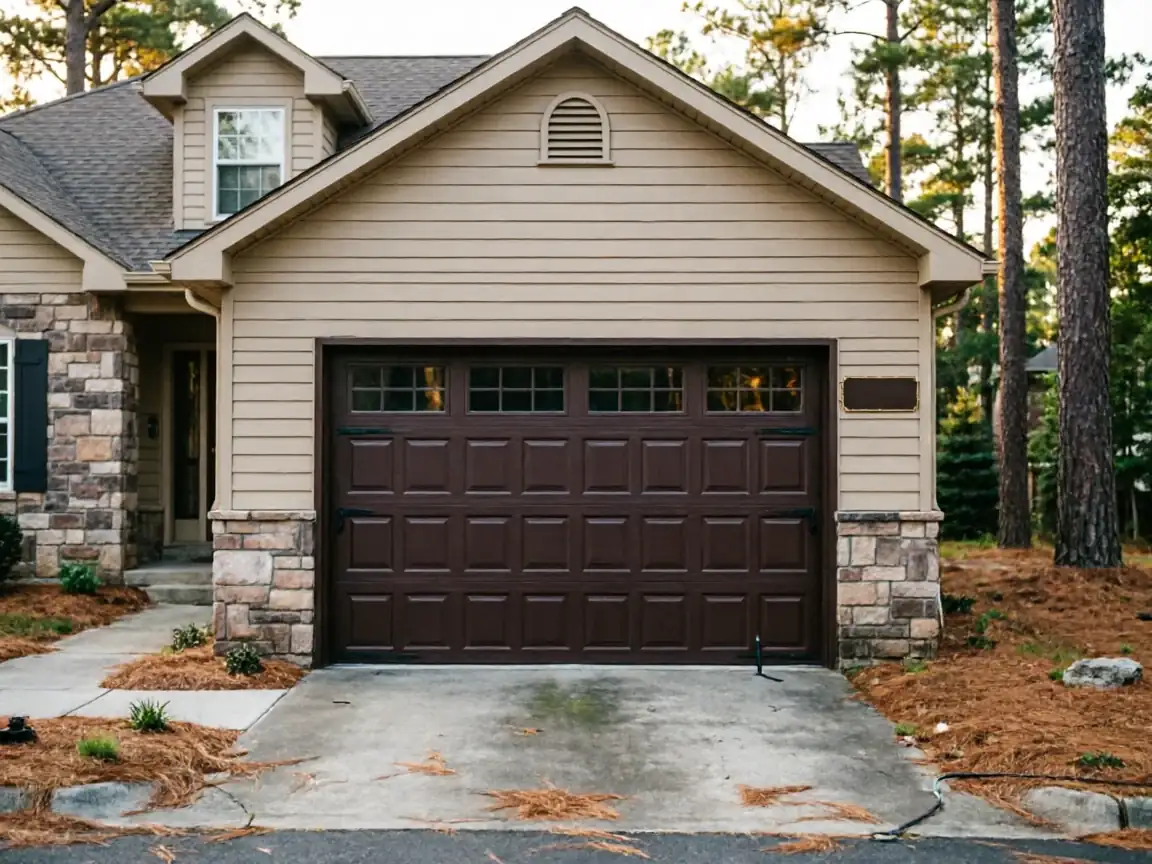
Sanford's service area runs from houses built in 1955 clear through 1999, with the median landing around 1983 - mostly 1980s and 90s stock. Cameron sits at the older edge of that range, closer to 1955 than to the area median. That's not a small difference. A door installed when a house went up in the mid-1950s is a different animal from one installed in 1983: narrower track gauge, older-style extension springs mounted overhead rather than torsion bars beside the opening, and hardware that was never updated to match what newer homes in the territory have. On top of the age gap, this is a cold-moderate climate band, which means steel hardware on an older door has had more decades of temperature swing to work rust into hinges and spring coils that a 1983-built door hasn't seen yet. We see more corrosion-seized rollers out this way than we do on the newer end of the area.
Can You Do This Yourself
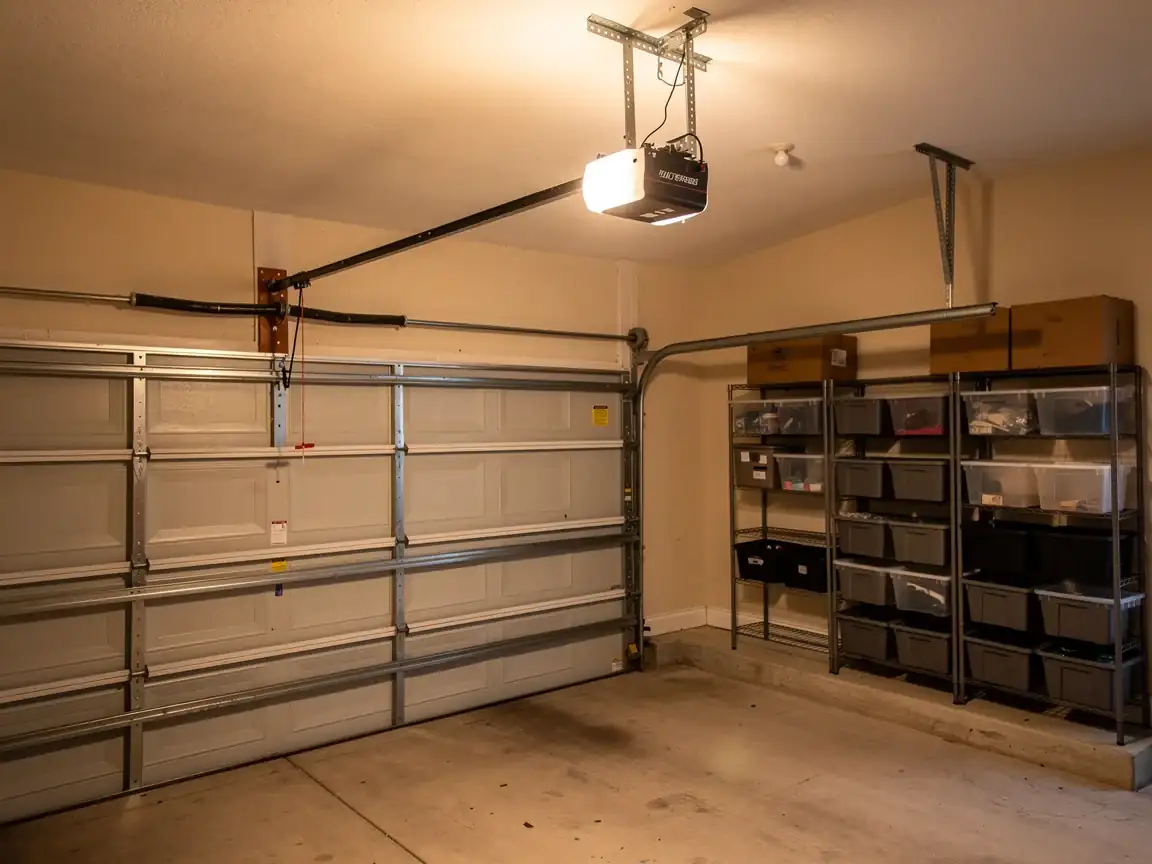
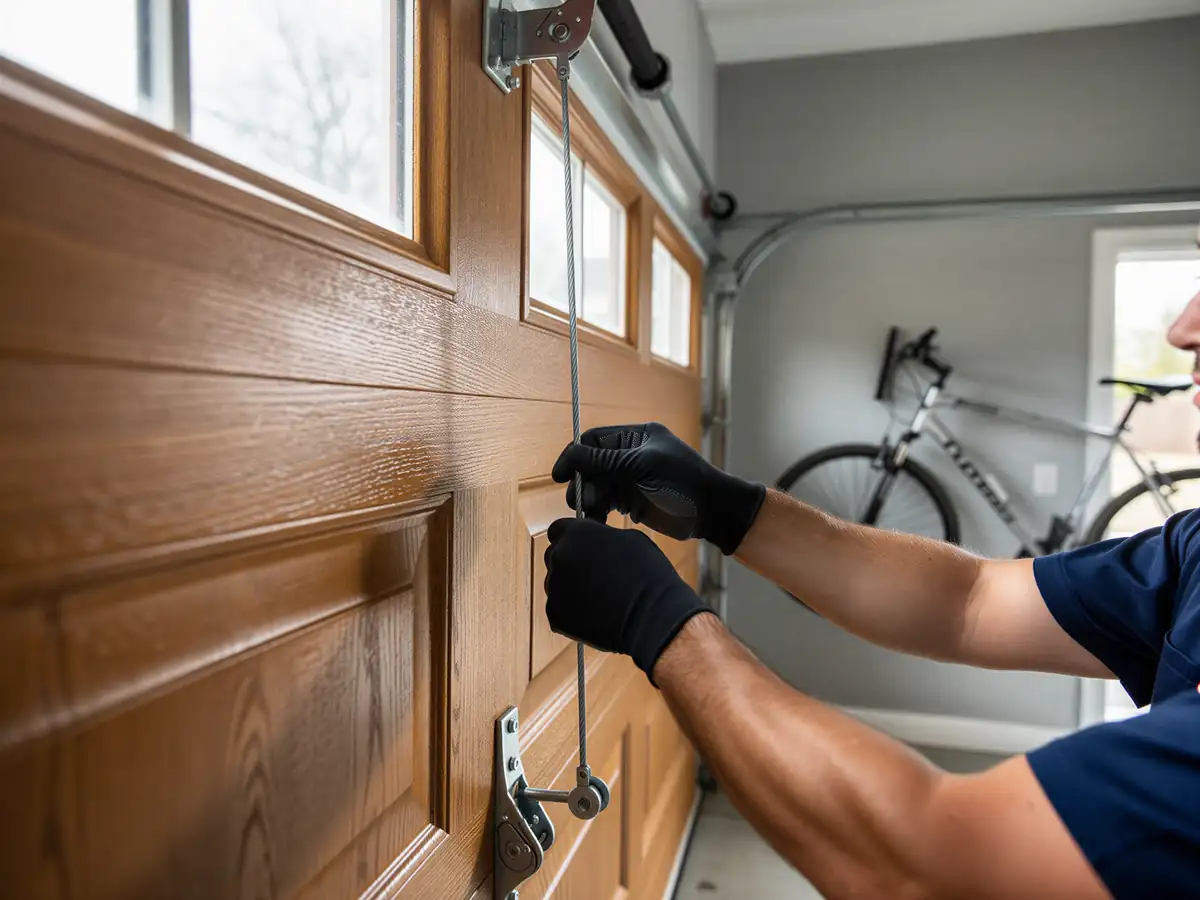
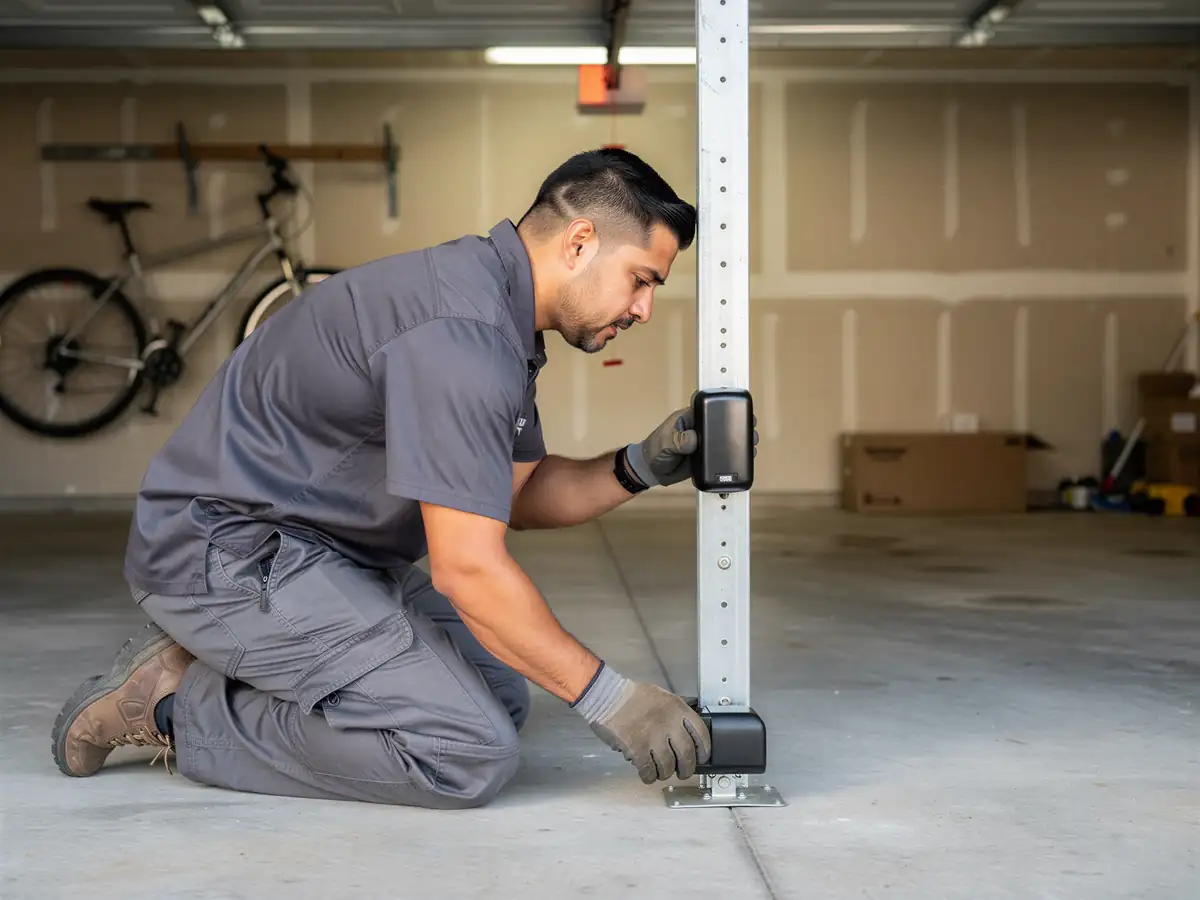
Some of it, yes. Lubricating rollers and hinges, tightening loose bolts on the track, clearing debris from the sensor eyes - that's homeowner work and we'd rather you do it than pay us to. What you shouldn't touch: torsion or extension springs under tension, and on a home from the 1955 end of our range, that spring is more likely to be an older overhead-extension setup, which has its own failure pattern and isn't interchangeable with newer torsion hardware. Guessing wrong on that swap is how people end up in the ER, not just out a repair bill. If your door is from that older stock and the spring's gone, that's a call, not a weekend project.
Stocked Parts
We load the truck in Sanford before we drive out, so what we carry depends on what we know about the call ahead of time. Because Cameron skews toward the 1955 side of the area's 1955-1999 housing range, we try to carry extension spring sets and older-gauge track hardware on runs out this way more than we would on a call closer to the 1983 median, where torsion springs and wider track are the norm. We can't promise every obscure original part is on the truck - some of the oldest overhead-extension hardware from that era just isn't made anymore, and if yours is one of those, we may need a day to source a compatible replacement rather than an exact match. That's the honest limit: we stock what covers most of what we see, not everything that was ever installed.