How to Book
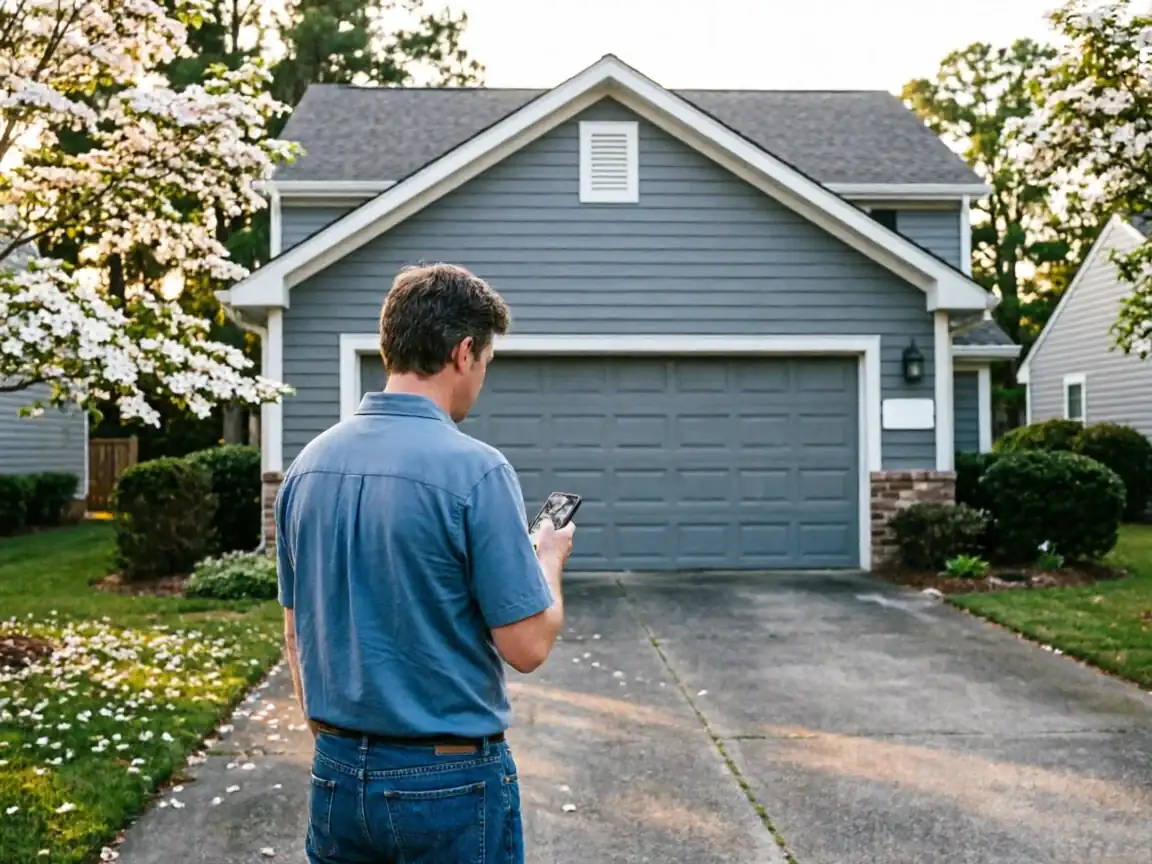
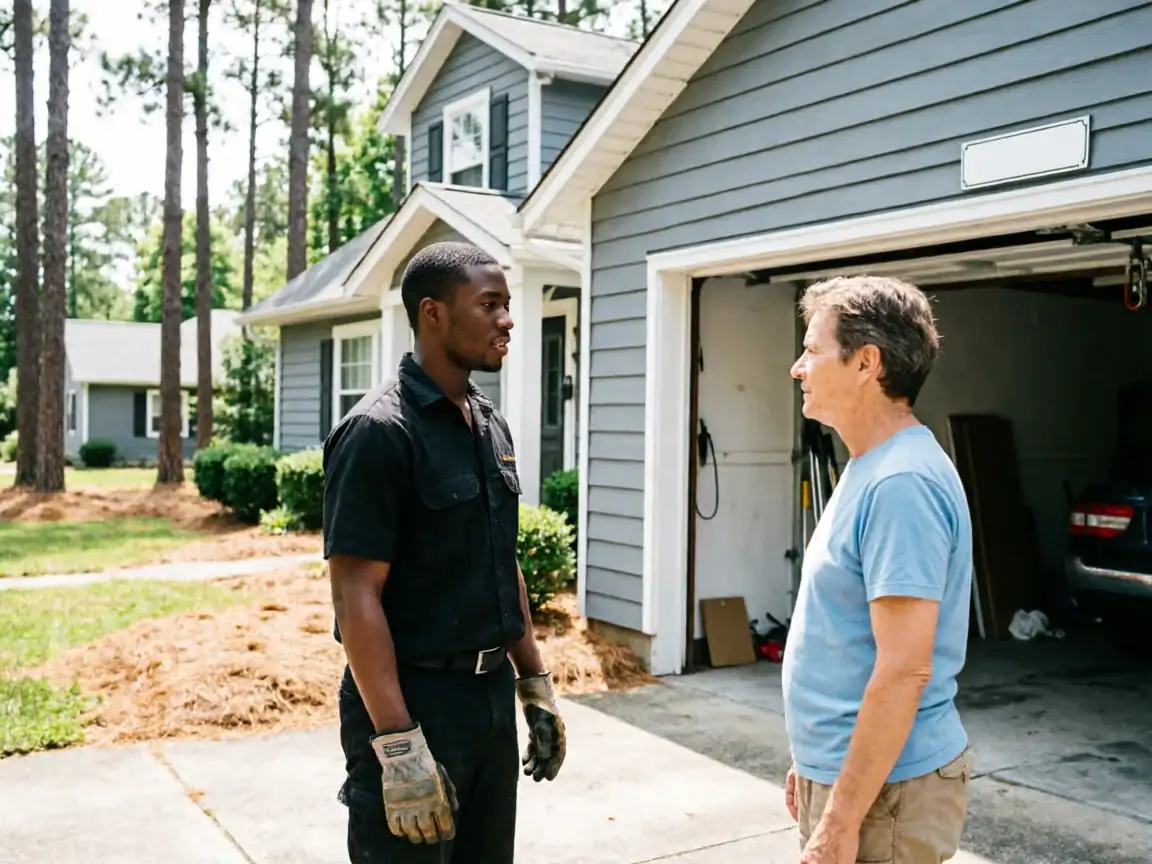
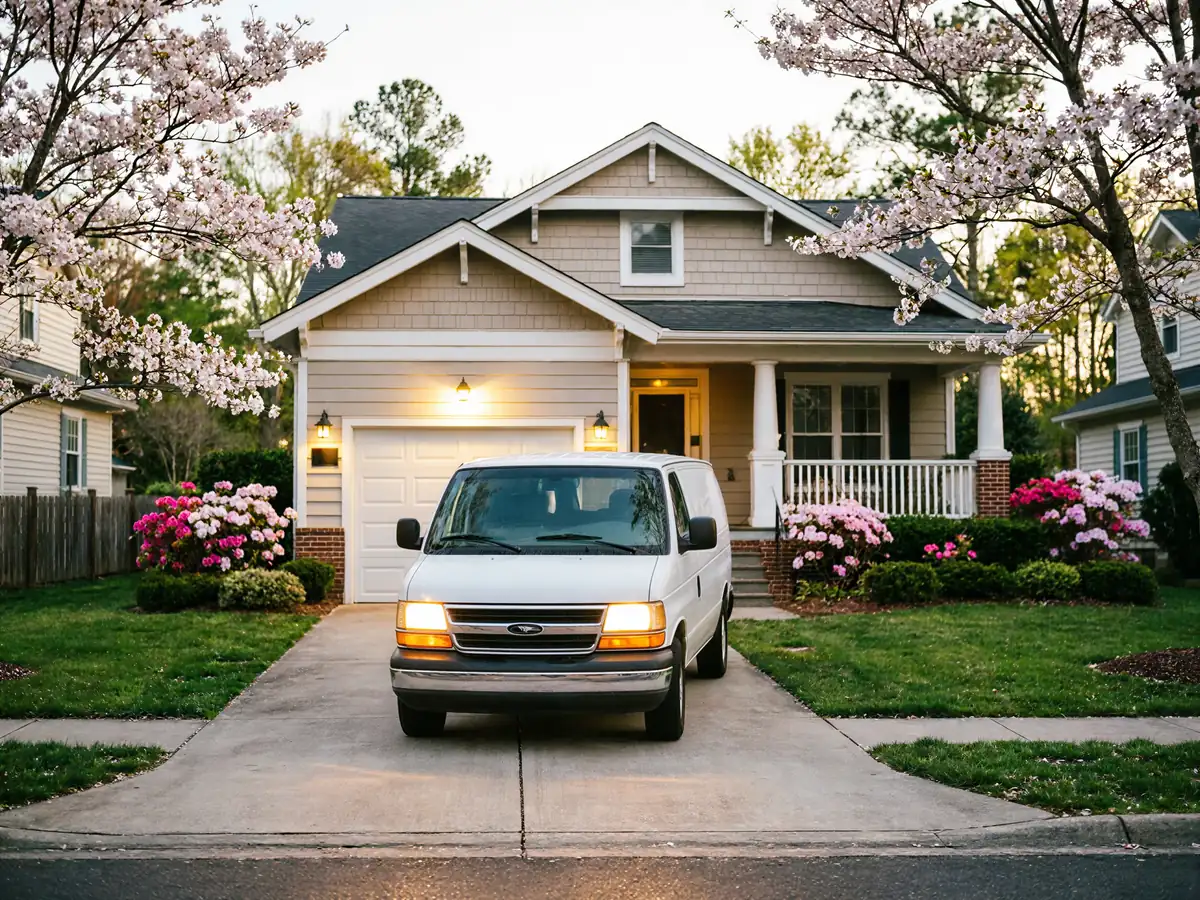
We're based in Sanford, about 18 miles from Carthage, so a visit here isn't a same-day drop-in the way a job three streets from our shop might be - we schedule Carthage calls in blocks so the trip out is worth the drive for you and for us. Tell us the age of your house and what the door is doing (or not doing) when you call, and we can usually tell you over the phone whether it's a five-minute fix or a parts-order situation.
We don't keep a branch or a drop box in Carthage, so there's no walk-in counter - everything routes through the Sanford shop and goes out on the truck from there. If you need a part that isn't on the truck, expect a short wait while it comes in rather than a same-visit swap. Given how much of Carthage's housing stock is clustered in one build era, we tend to carry the common opener and spring sizes for that generation of door, which shortens that wait more often than not.
What the Fix Involves
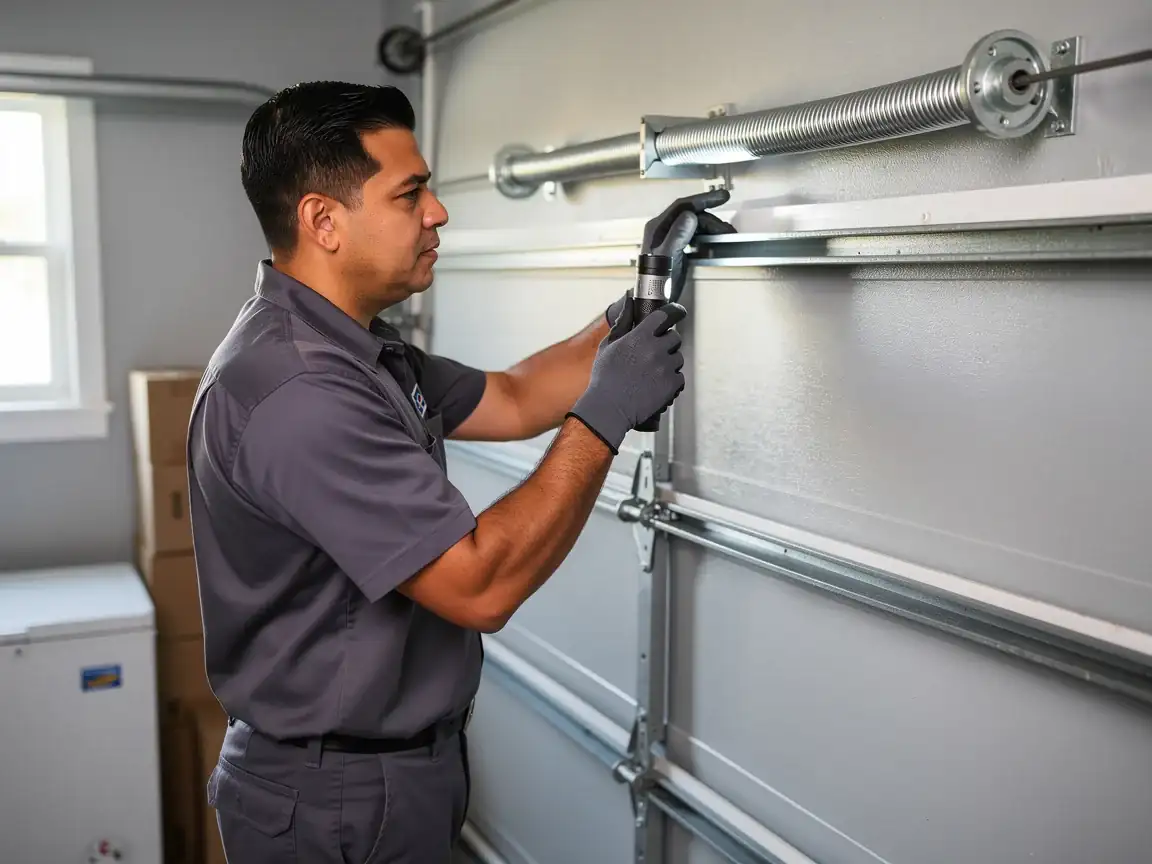
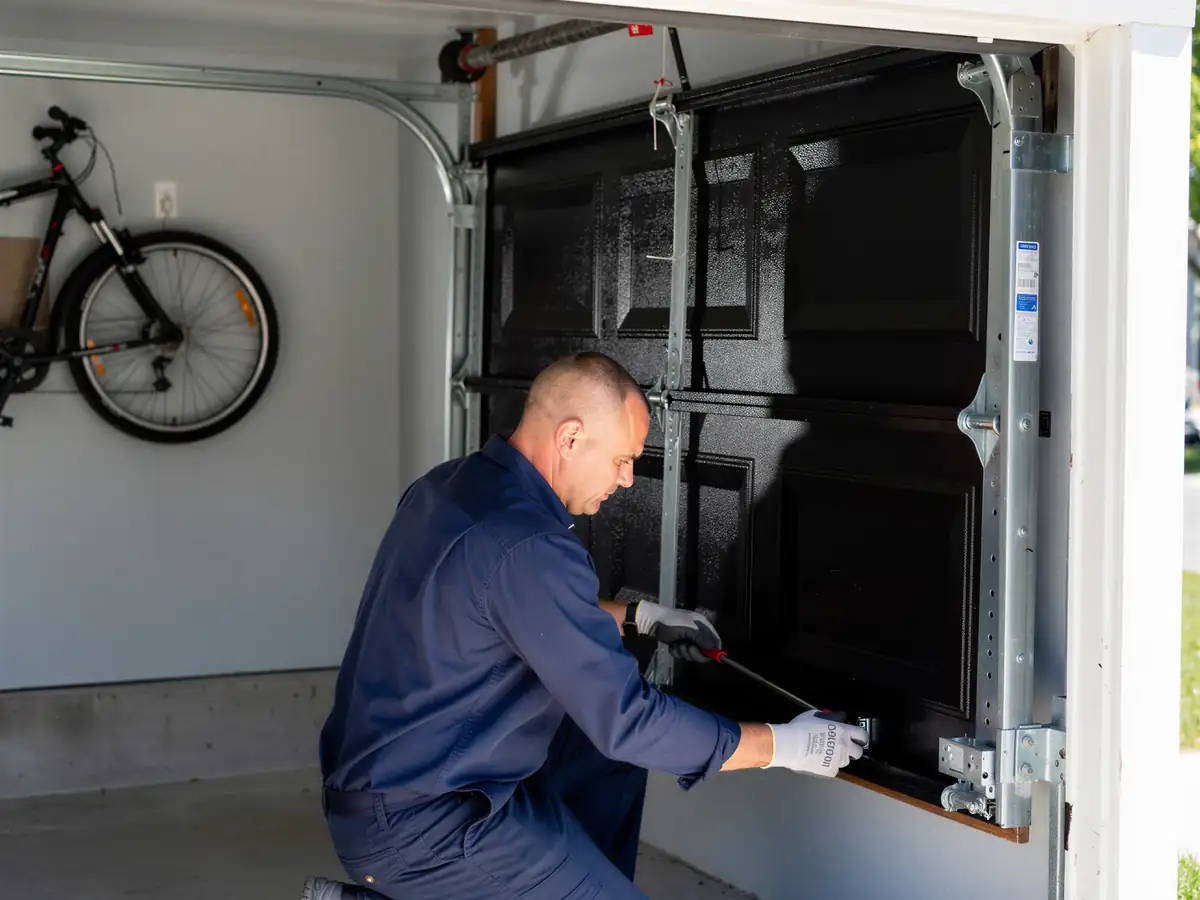
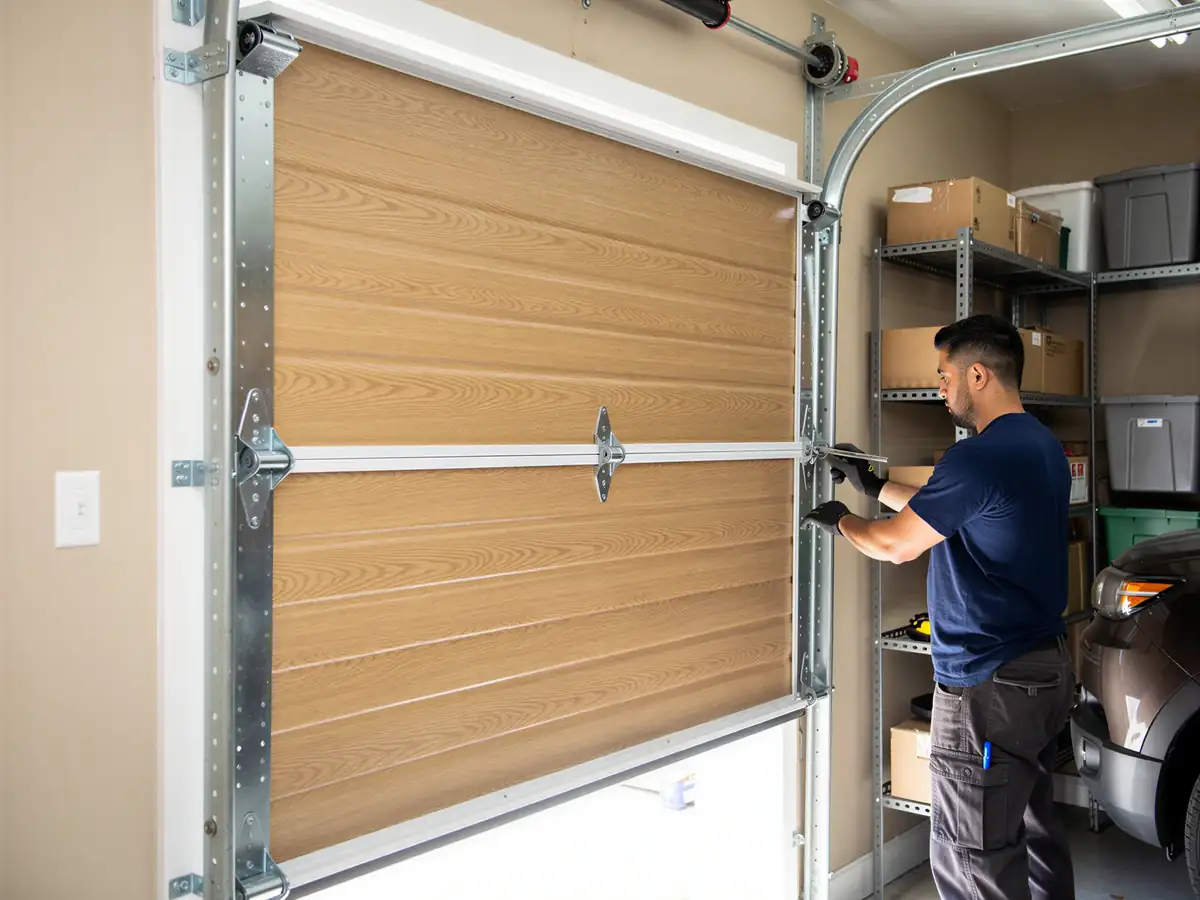
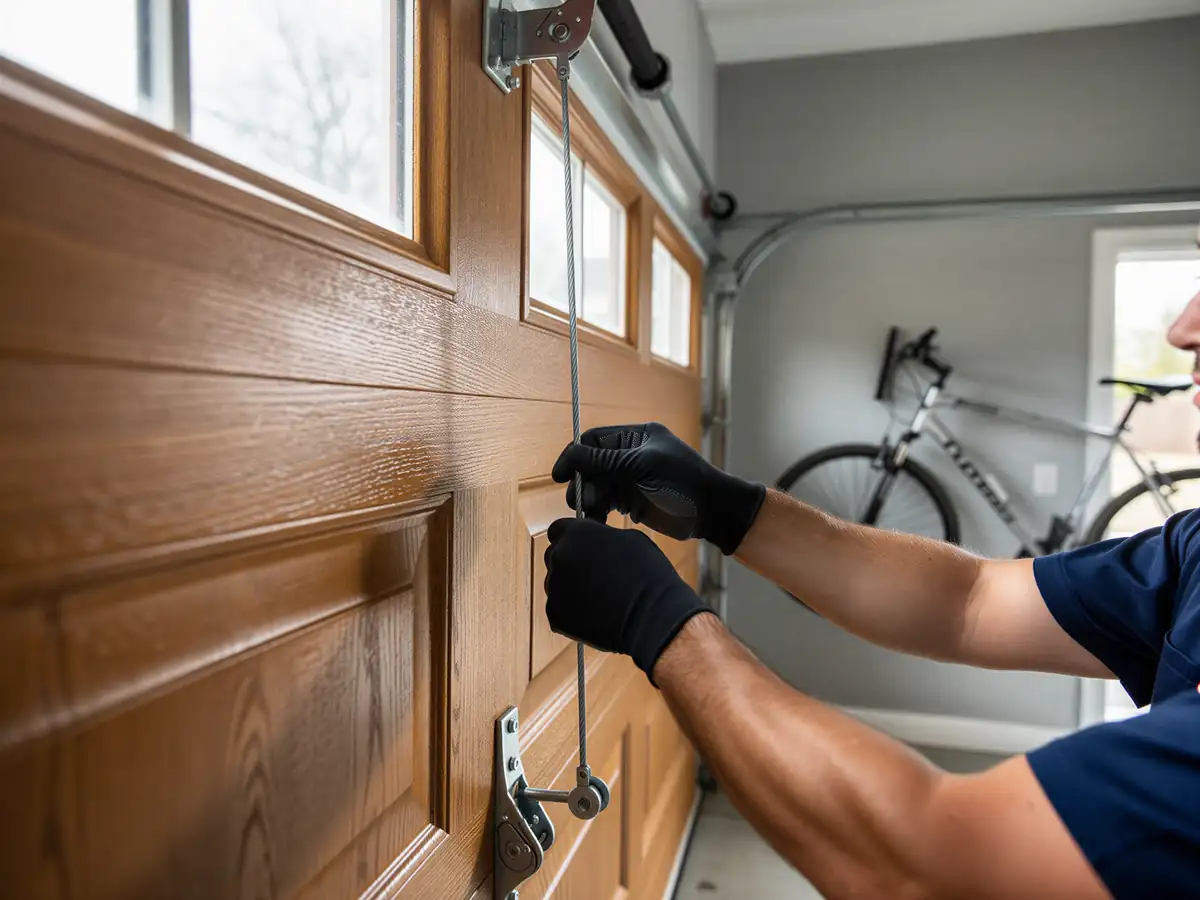
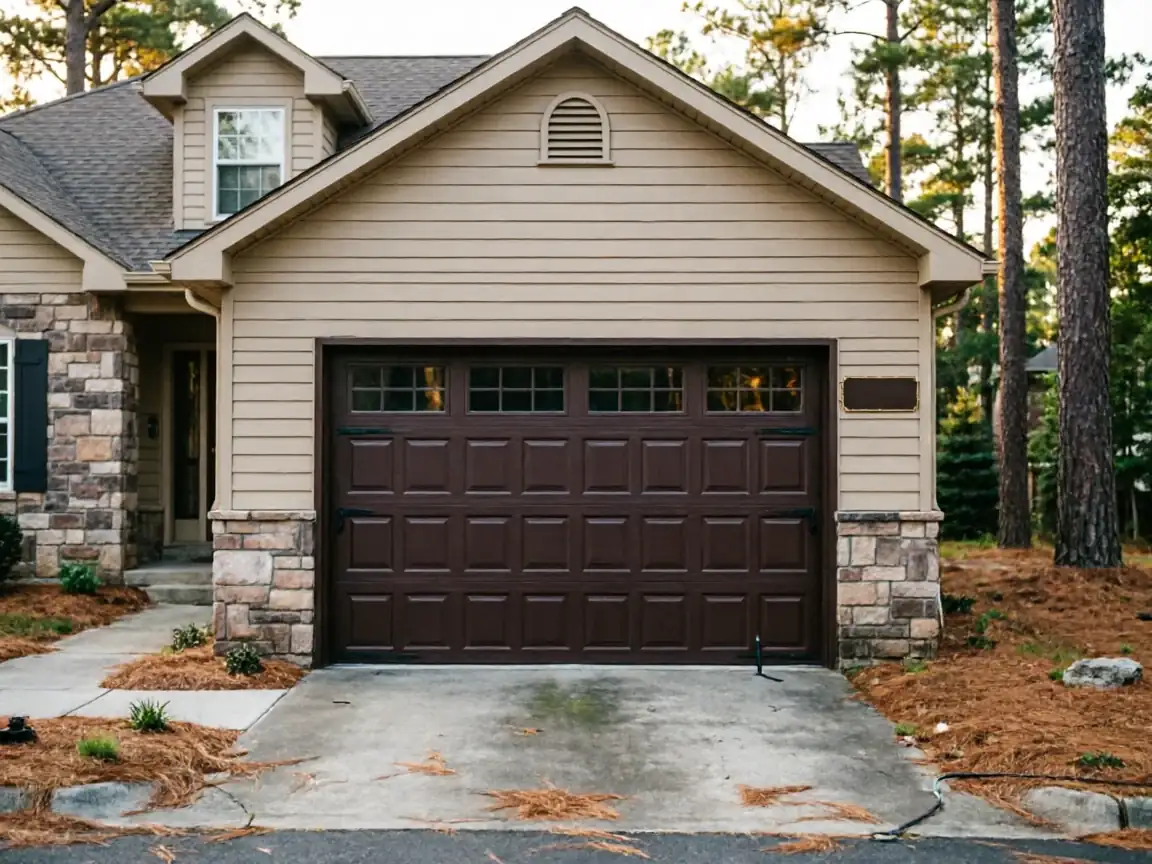
A house built around 1992 usually still has its original torsion or extension spring setup, or a replacement from years back that was matched to the original hardware rather than upgraded. The fix almost always starts with the spring - checking wind count and wire gauge against what the door weighs now, not what it weighed new, since panels sag and gather weight with age.
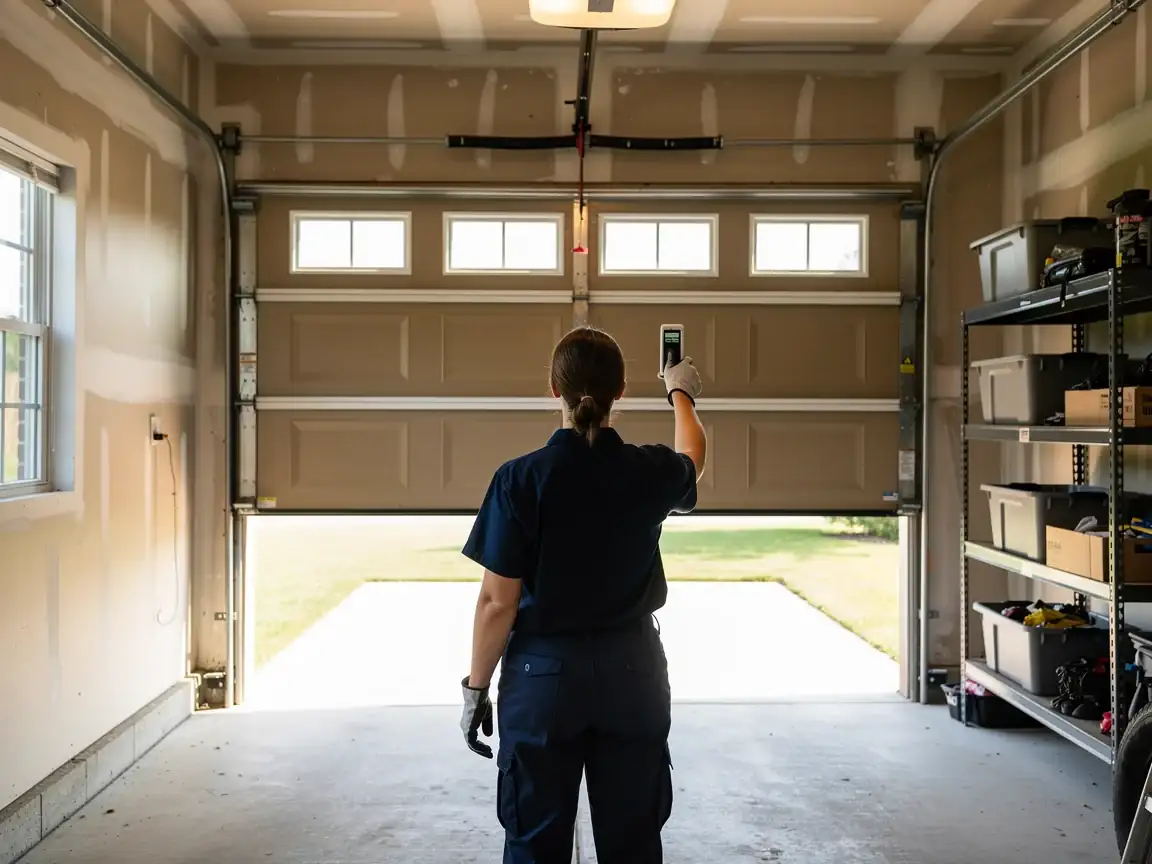
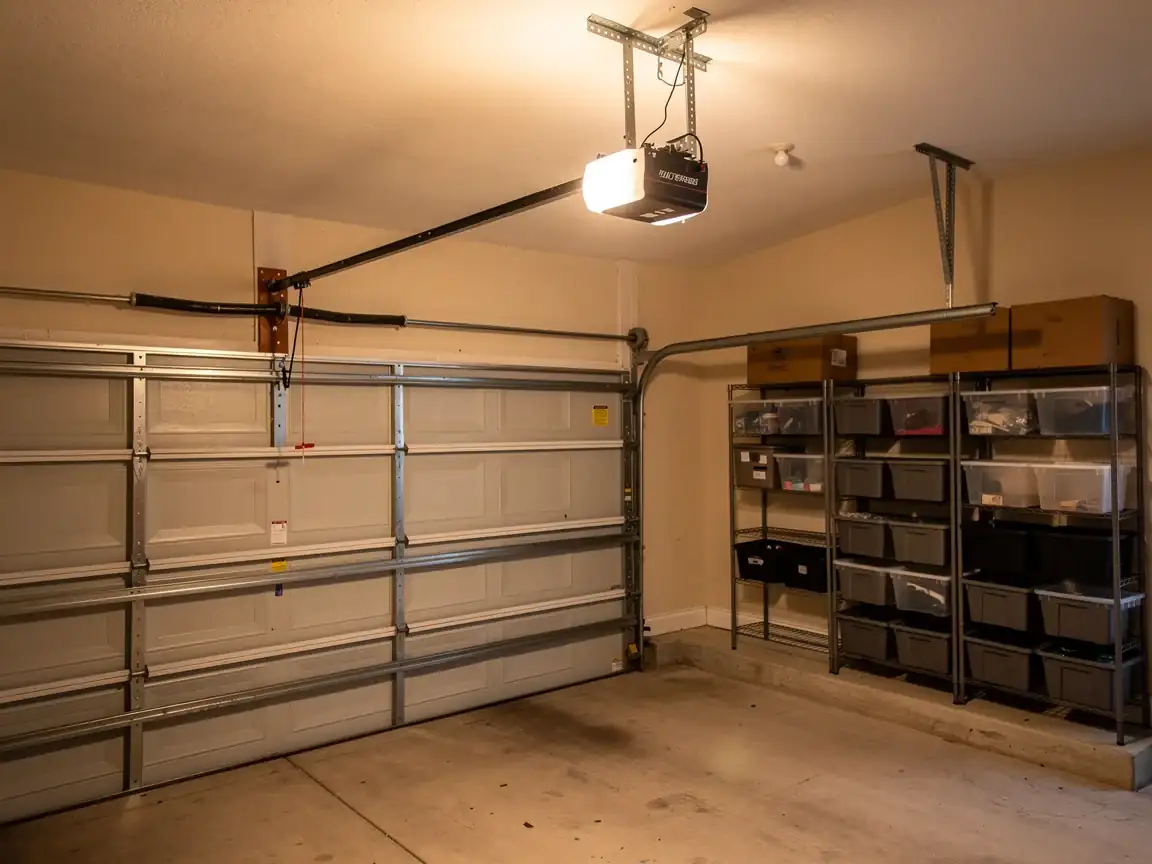
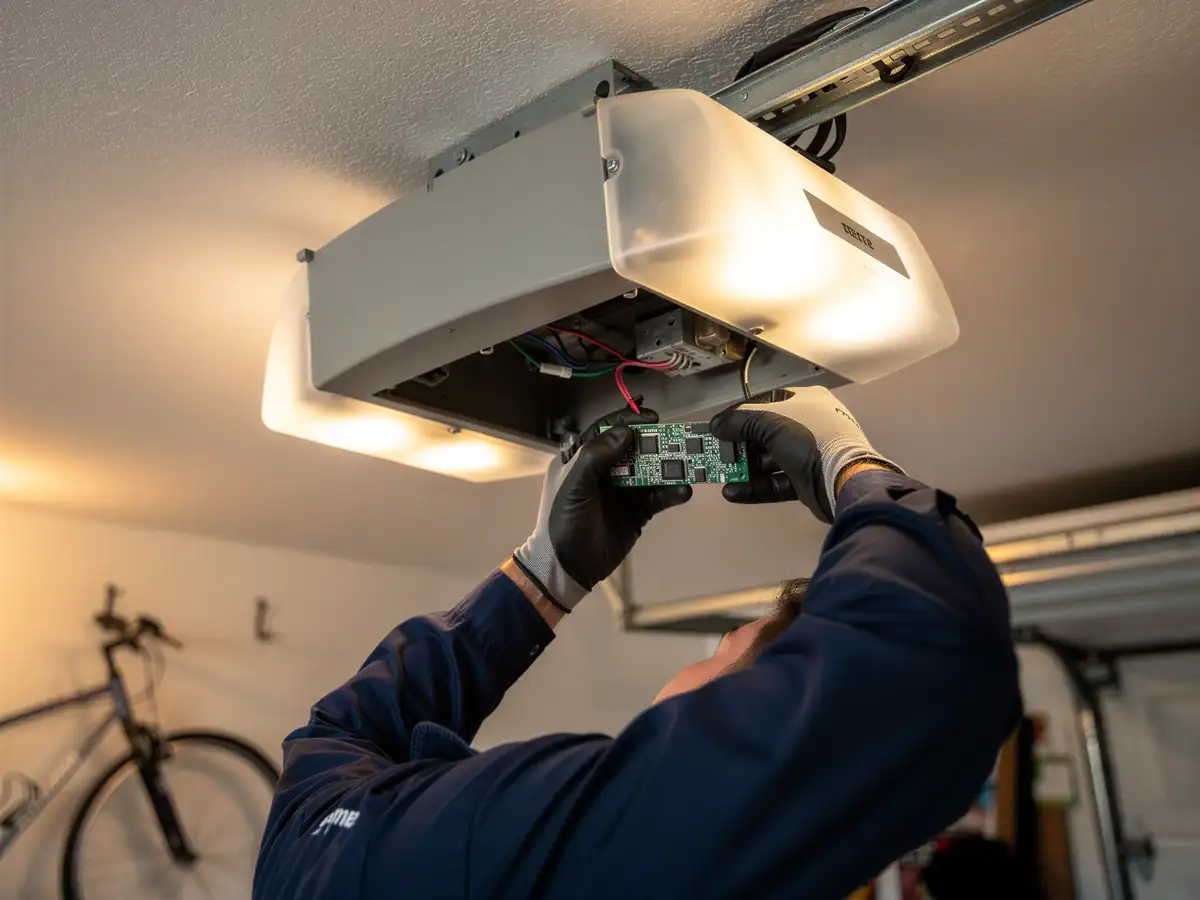
On the opener side, a lot of Carthage garages still run the chain-drive unit that came in when the house was built or shortly after. Logic boards from that era weren't built to last thirty-plus years, and when they finally go, the fix is a full opener swap rather than a board repair - we don't try to patch a dying board, because the labor to diagnose it often costs more than the replacement unit. That's the honest tradeoff: on an opener this old, repair is rarely the cheaper path once it starts failing intermittently.
The Symptom
The call we get most from this area is a door that starts to open, stalls a few inches up, and then reverses
Or one that opens fine but won't close without the opener light blinking and the motor straining. Both point to the same root cause in houses from this build year: a spring that's lost tension relative to the door's weight, forcing the opener motor to do work it was never sized for.
A second common symptom is a door that's noticeably louder than it used to be
More clatter in the track, more grind at the top of the run. On a door this age, that's usually worn rollers combined with a track that's shifted slightly out of plumb over three decades of use. Neither symptom is an emergency the way a cable snap is, but both get worse fast once the opener starts compensating for a spring problem it can't fix on its own.
Why It Happens Here
Carthage's housing is newer than some of the other towns we cover from Sanford - the median build year here lands around 1992, later than the wider service area's 1955-1999 range and its 1983 midpoint. That later build date matters because it narrows down what's actually installed behind the door: fewer of the original one-piece doors we see elsewhere, more sectional steel doors on torsion hardware that was standard by the early '90s, but hardware that's now closing in on its third decade of winters.
Those winters matter too. This part of the state sits in a moderate cold climate band, not a severe one, but cold still stiffens grease in rollers and bearings and makes springs more likely to bind or snap on a cold morning than a warm afternoon. With roughly 1,130 households in Carthage and median income near $62,177 - close to the $62,428 figure across the wider service area - most of these are owner-occupied homes where the door and opener are original equipment nobody's gotten around to replacing yet, right up until the morning it won't open at all.