How to Book
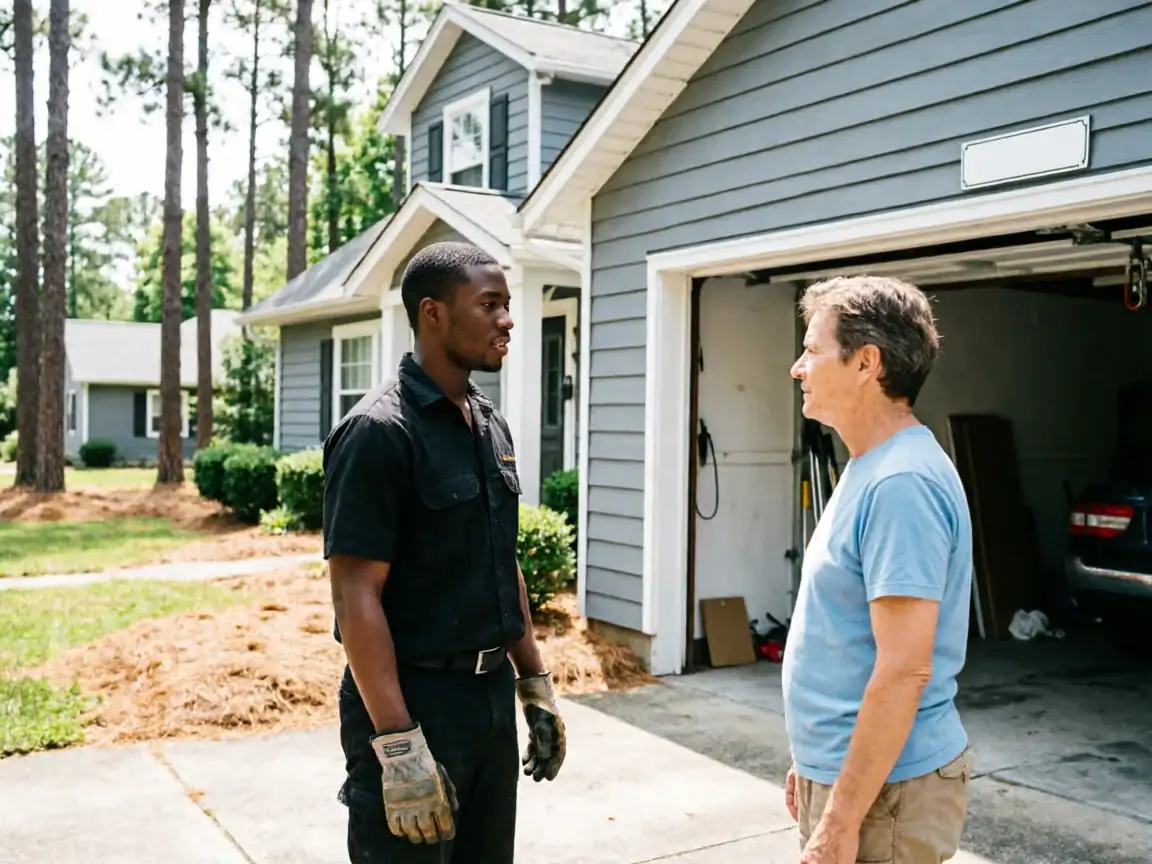
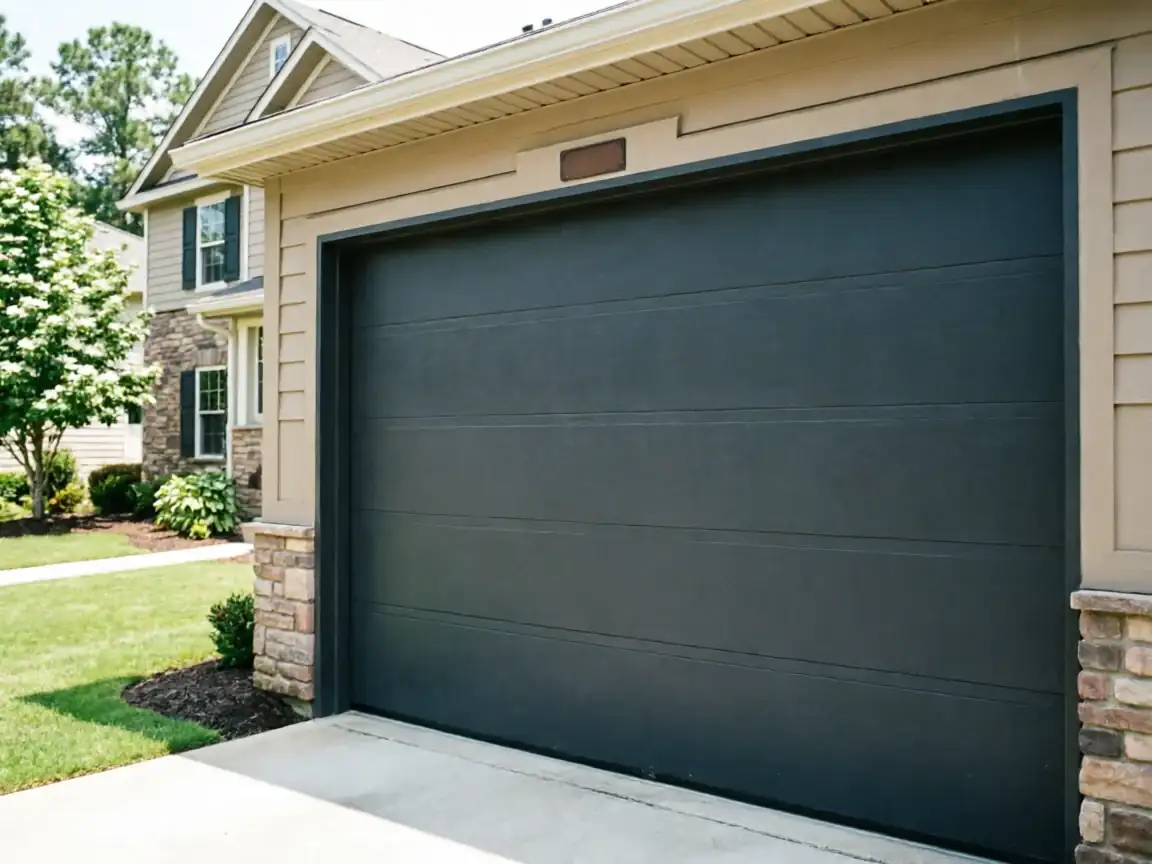
Carthage sits about 18 miles from our shop in Sanford, so when you call for a new door install here, we build the drive into the estimate instead of pretending it's a five-minute hop. Tell us the size of the opening, whether you're replacing a single or double door, and what's currently in there - a steel sectional, an old wood panel door, or something that's been patched more than once already. We'll walk you through door and opener options that make sense for a house built around 1992, and if you're not sure of the exact opening width we'll measure it when the truck is out.
We don't keep a branch or a storage drop in Carthage. Every job here is scheduled out of Sanford, so the day we can get a truck to your street and how fast a custom-width door can be ordered both factor into your install date - we'll give you a real number once we know the size and style you want, not a guess.
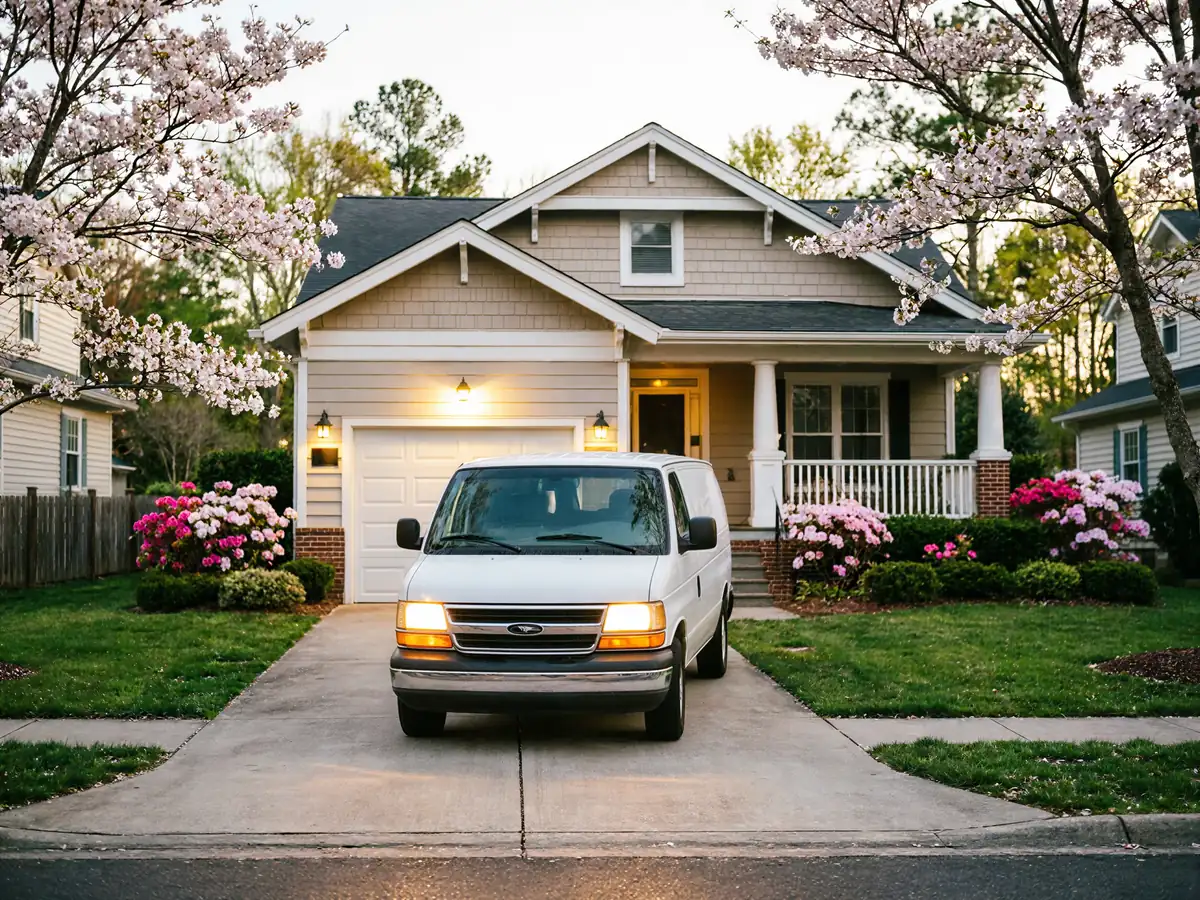
For the general scope of what a new install covers across the whole service area, that's on our main installation page. This page is about what the job actually looks like once the truck is parked in your Carthage driveway.
What the Fix Involves
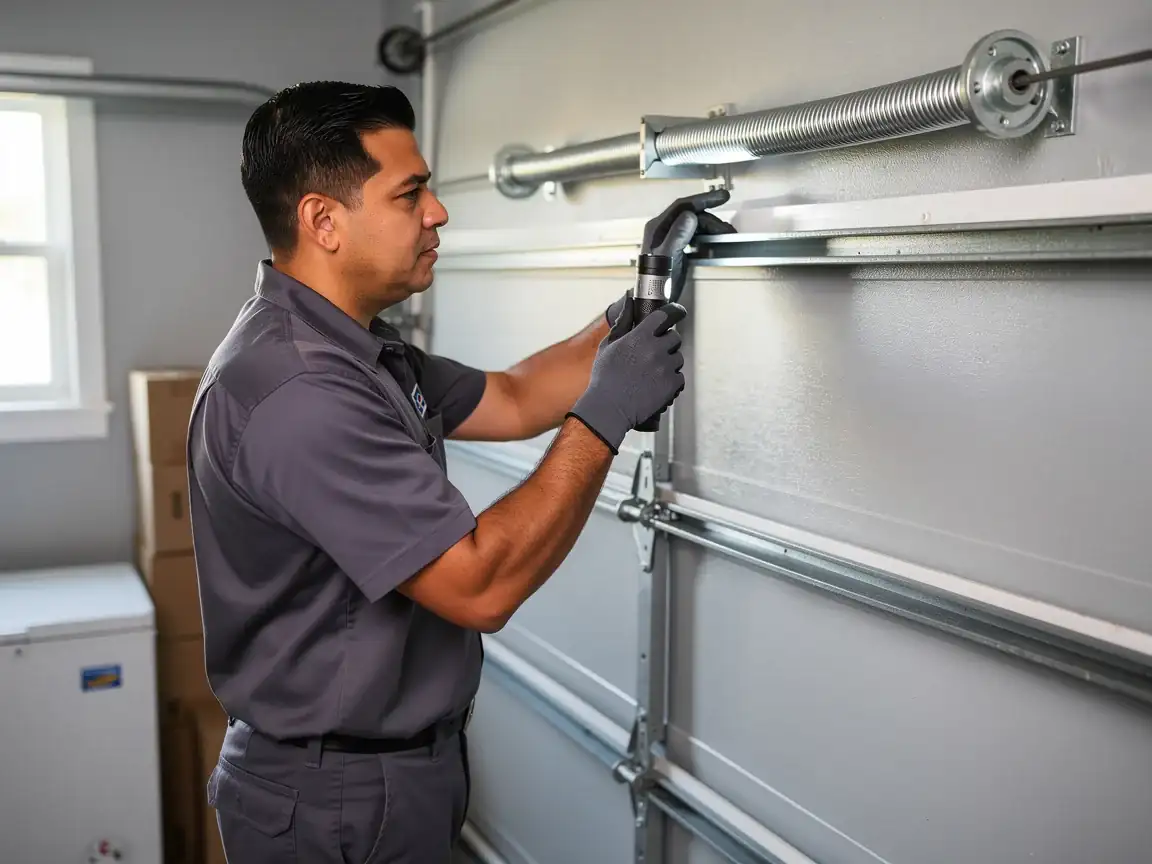
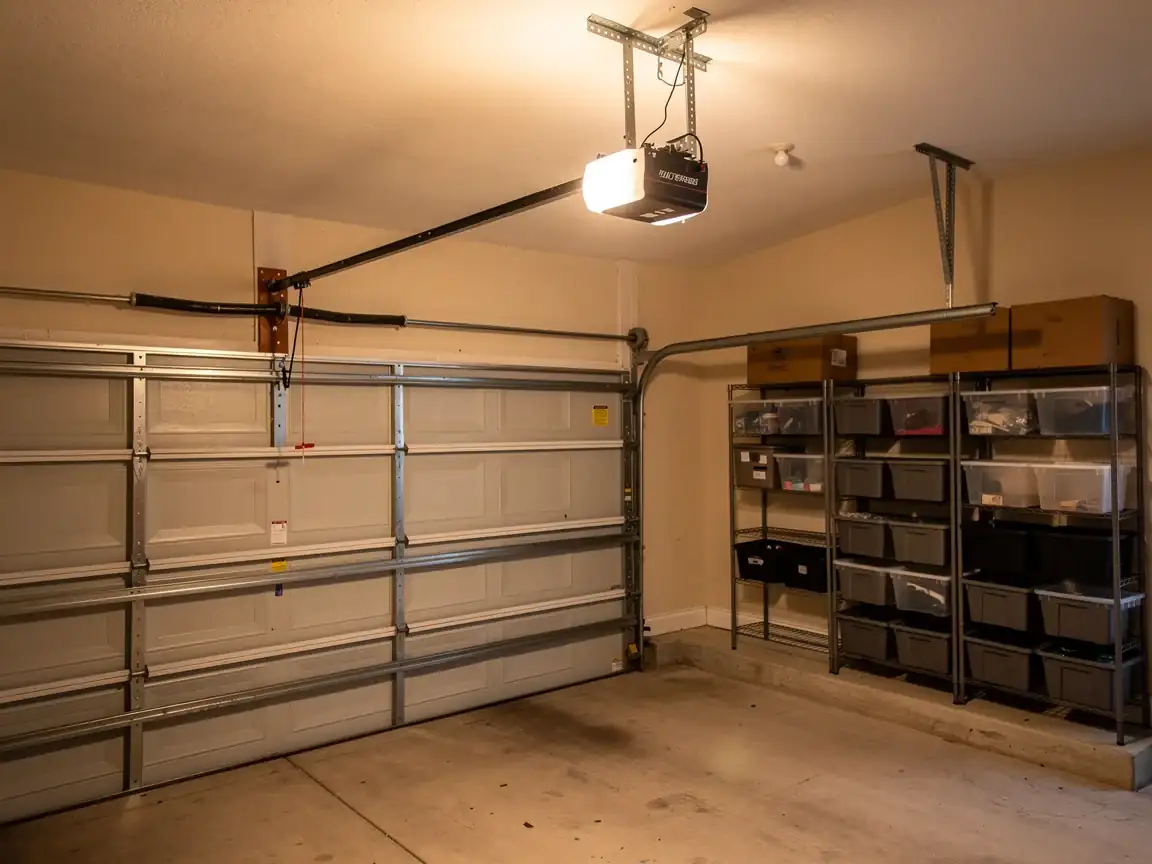
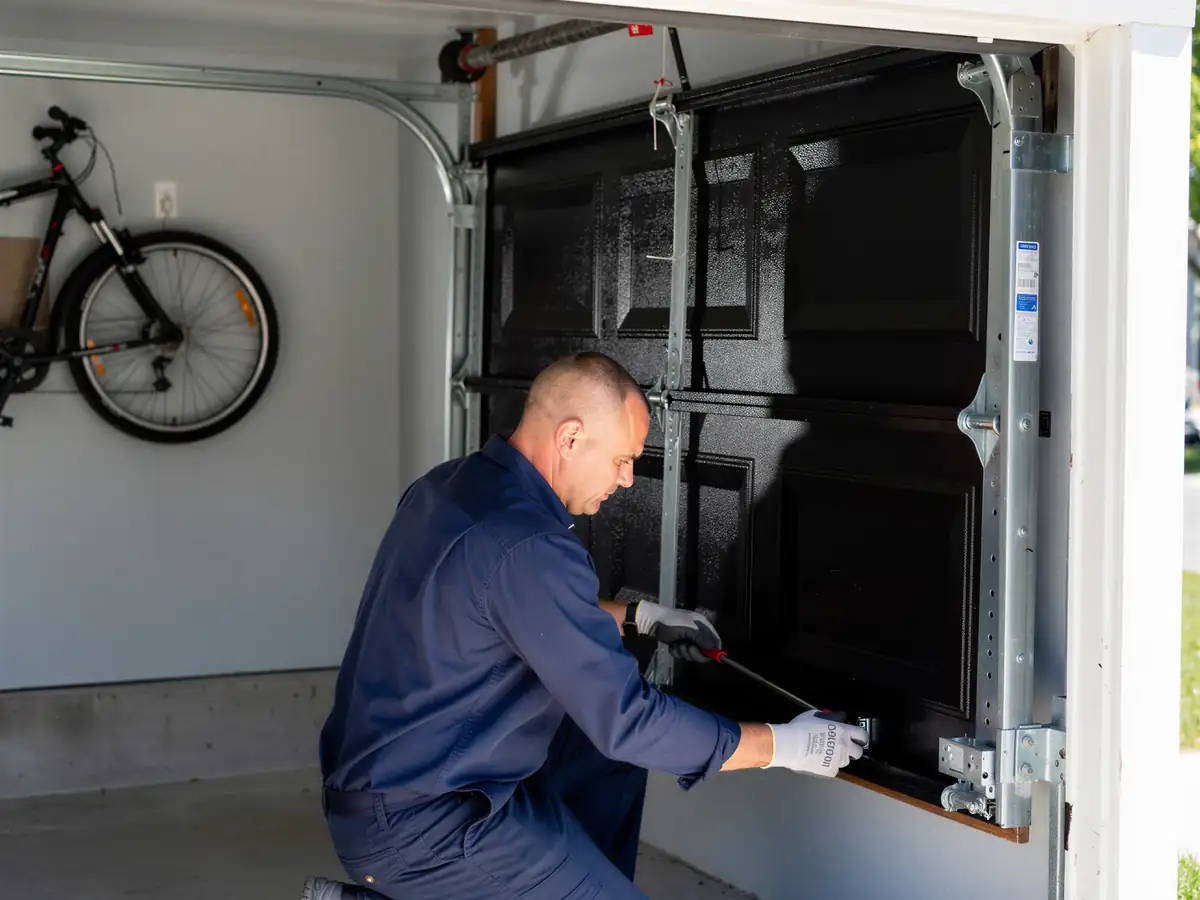
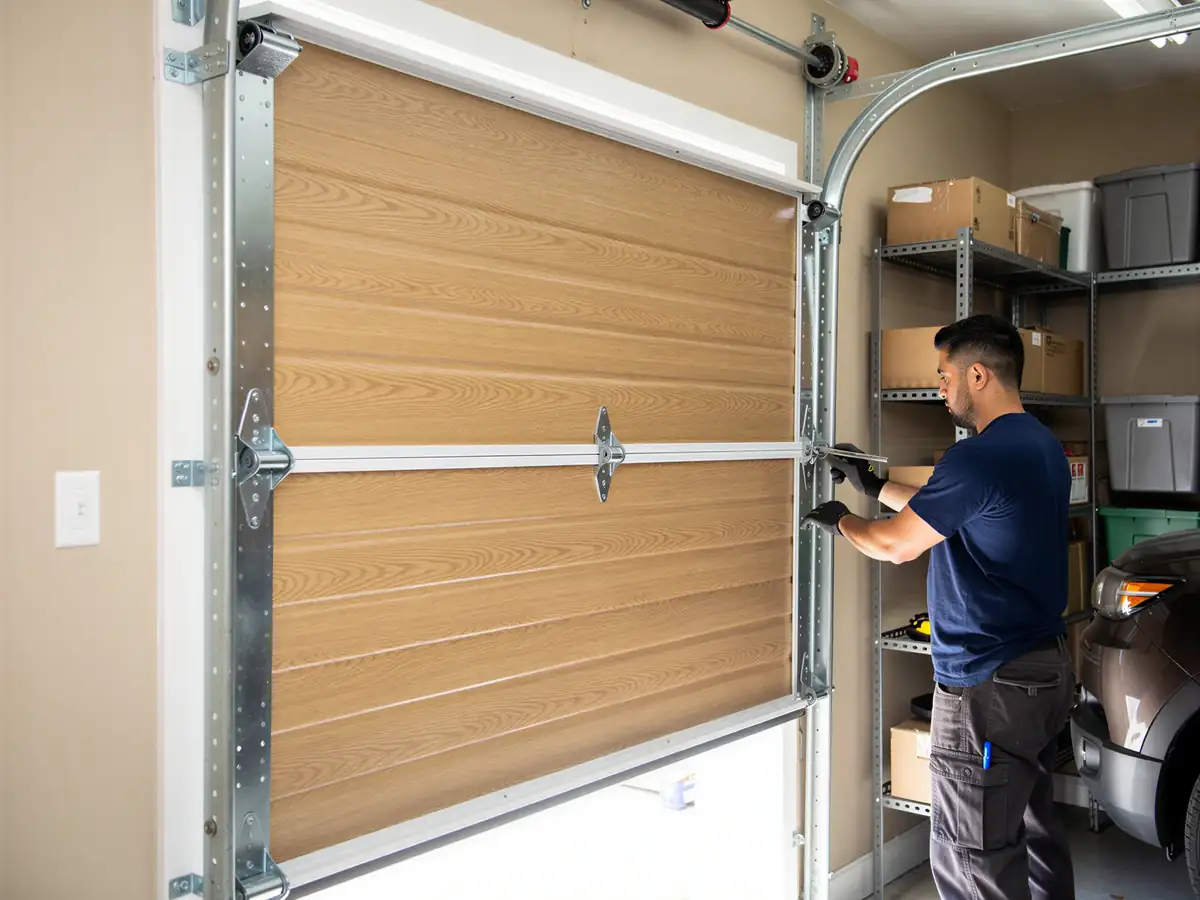
A new install here starts with pulling the old door and track off the opening entirely, not working around what's there. If your house dates to 1992 or close to it, the original track is almost always lighter-gauge steel than what gets installed today, and it comes out with the door. We replace it with new galvanized track sized to the door you're putting in, and we size the torsion spring to the actual weight of the new door rather than reusing whatever was calculated for the original.
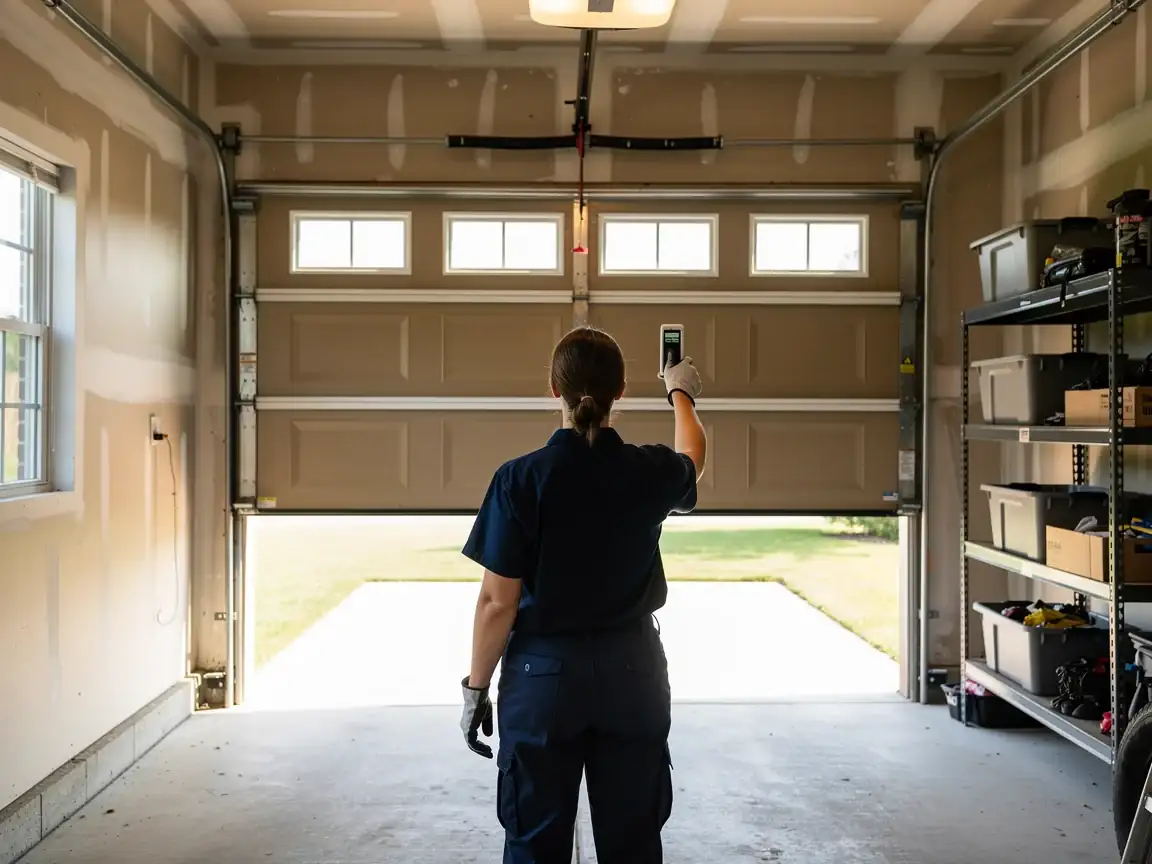
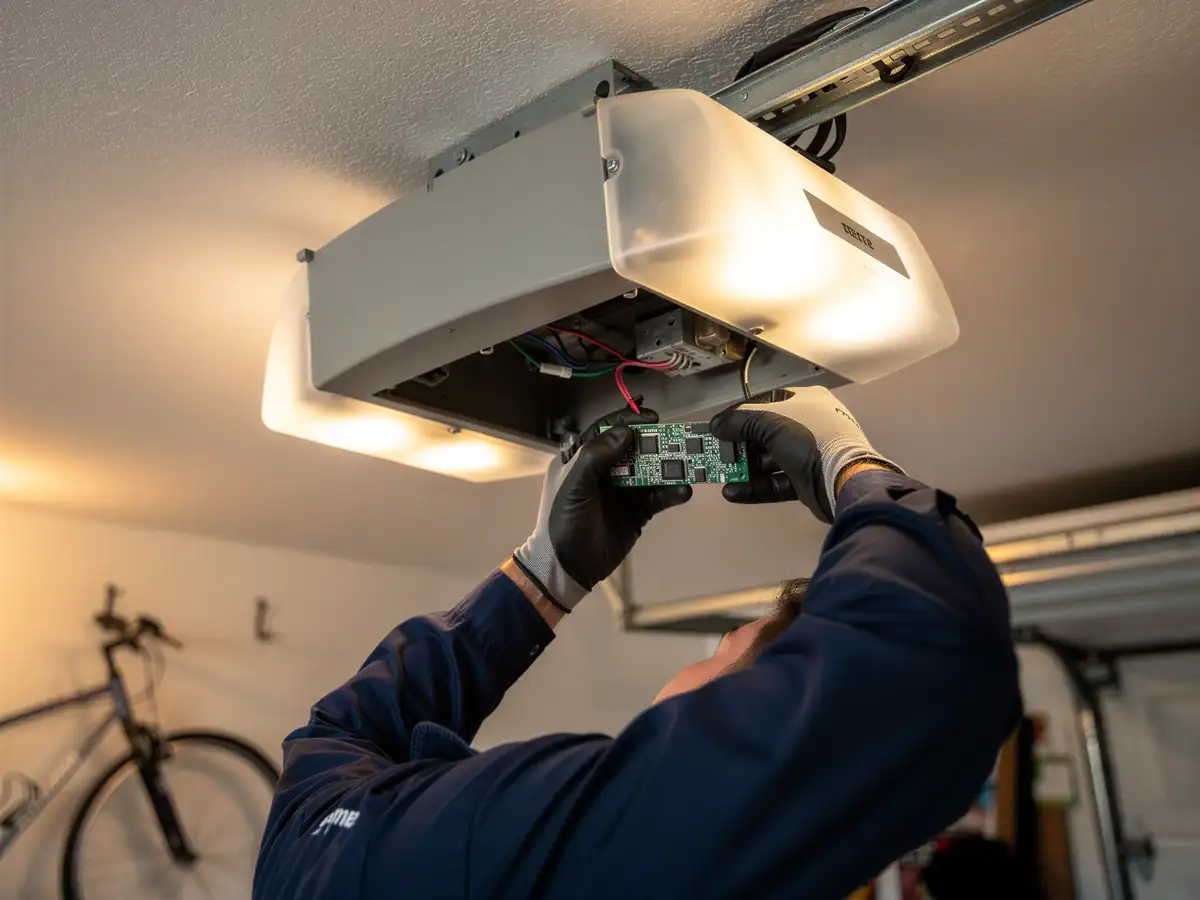
For door panels, insulated steel is the standard recommendation given the cold winters this area sees - a solid core holds up better against the freeze-thaw cycle than the single-layer steel that was common on builder-grade doors from that era. We install a new opener at the same time in most cases, since running a new door off a thirty-year-old chain-drive unit usually means the opener fails within a year or two anyway and you're paying for a second visit.
The one real limit: wide custom openings - anything outside standard single and double widths - take longer to order than what we keep stocked for common sizes, and we'll tell you that lead time up front rather than let it surprise you on install day.
The Symptom
If your house in Carthage was built around 1992, here's what original equipment looks like by now
A bottom panel with hairline cracks from three decades of sun and cold, a top section that's started to bow slightly where the hinges have worked loose over the years, and an opener - usually a chain-drive - that grinds or hesitates on the way up because the gears inside have worn down.
The spring is the part people notice last and should notice first
A torsion spring from the original install has done tens of thousands of cycles by now, and the failure mode isn't gradual - it's a loud bang and a door that won't lift, often on a cold morning when the steel is tightest. If you're hearing new noise on the way up, seeing daylight at the corners of the door when it's shut, or your opener strains and reverses, that's original hardware telling you it's near the end, not a part that needs a quick adjustment.
Why It Happens Here
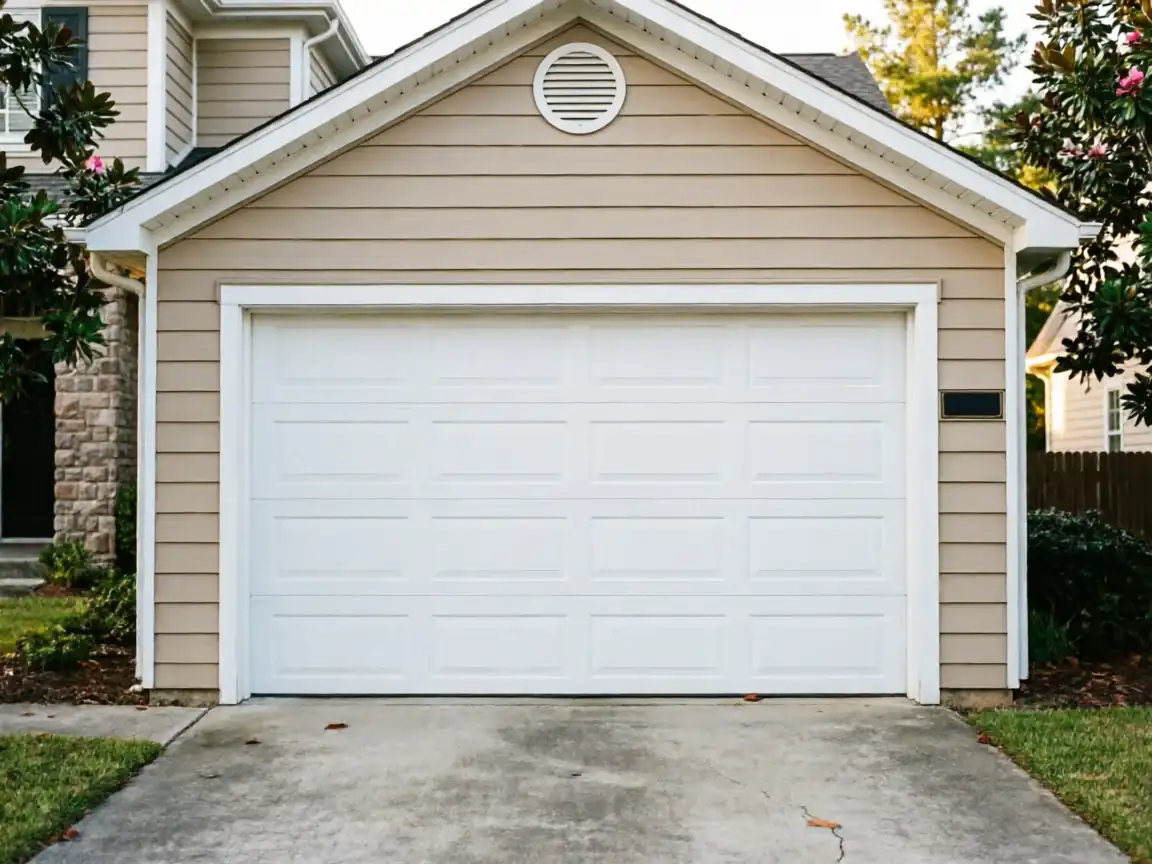
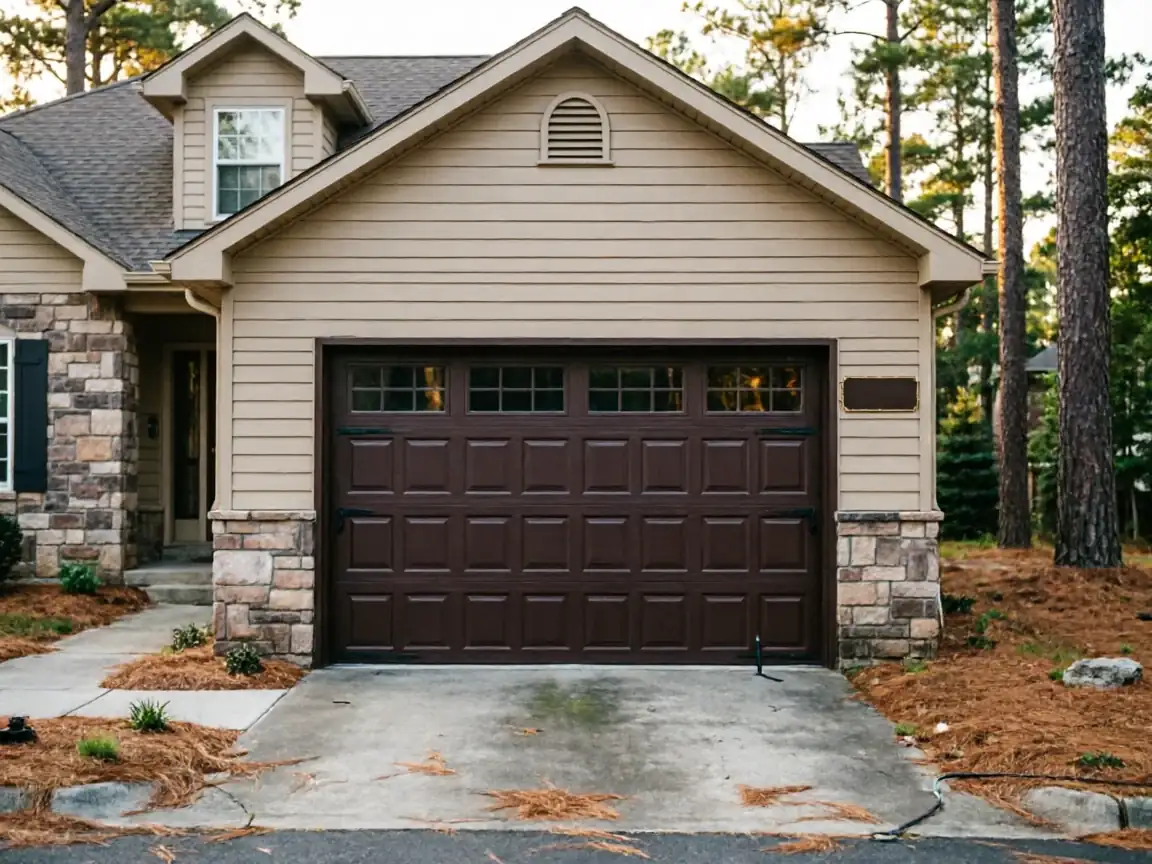
Most houses in Carthage date to around 1992, which puts them toward the newer end of a broader service-area stock that runs 1955 to 1999 with a median around 1983. That one fact changes what we expect to find on a job here versus an older section of the territory: instead of original one-piece wood doors, Carthage houses mostly started with steel sectional doors and early chain-drive openers - the standard builder package for the early 90s, not upgraded since.
That hardware was built to a lighter spec than what ships today, and thirty-plus years in a cold, moderate climate band means real wear: steel contracts and expands every winter-to-summer swing, hinges loosen, and torsion springs lose tension cycle by cycle until they let go. None of that is unique to any one house - it's what happens to an entire cohort of same-era doors at roughly the same rate, which is also why we tend to get several calls from the same part of town within a season or two of each other.