How to Book
Carthage is a small place - about 1,130 households - and we don't keep a branch there. We run the call out from Sanford, 18 miles up the road, so when you book an off-track repair, you're scheduling a truck that's coming from town, not one already parked around the corner. That's worth knowing going in: we don't quote a same-hour window here the way a local outfit might, and we won't pretend otherwise.
What we can do is get the details right before the truck leaves. Tell us whether the door is stuck open, stuck shut, or hanging crooked, and whether you hear a grinding or popping sound when it moves. That tells us whether we're bringing a roller kit or a full track section, and it cuts down on a second trip.
Booking is the same whether you call or go through the site - we ask for the door size, whether it's a single or double, and roughly how old the house is, since that tells us a lot about what's on the track before we ever see it. With a household count this size, we're not juggling dozens of Carthage jobs a week, so getting your details straight the first time matters more than it would in a bigger market.
What the Fix Involves
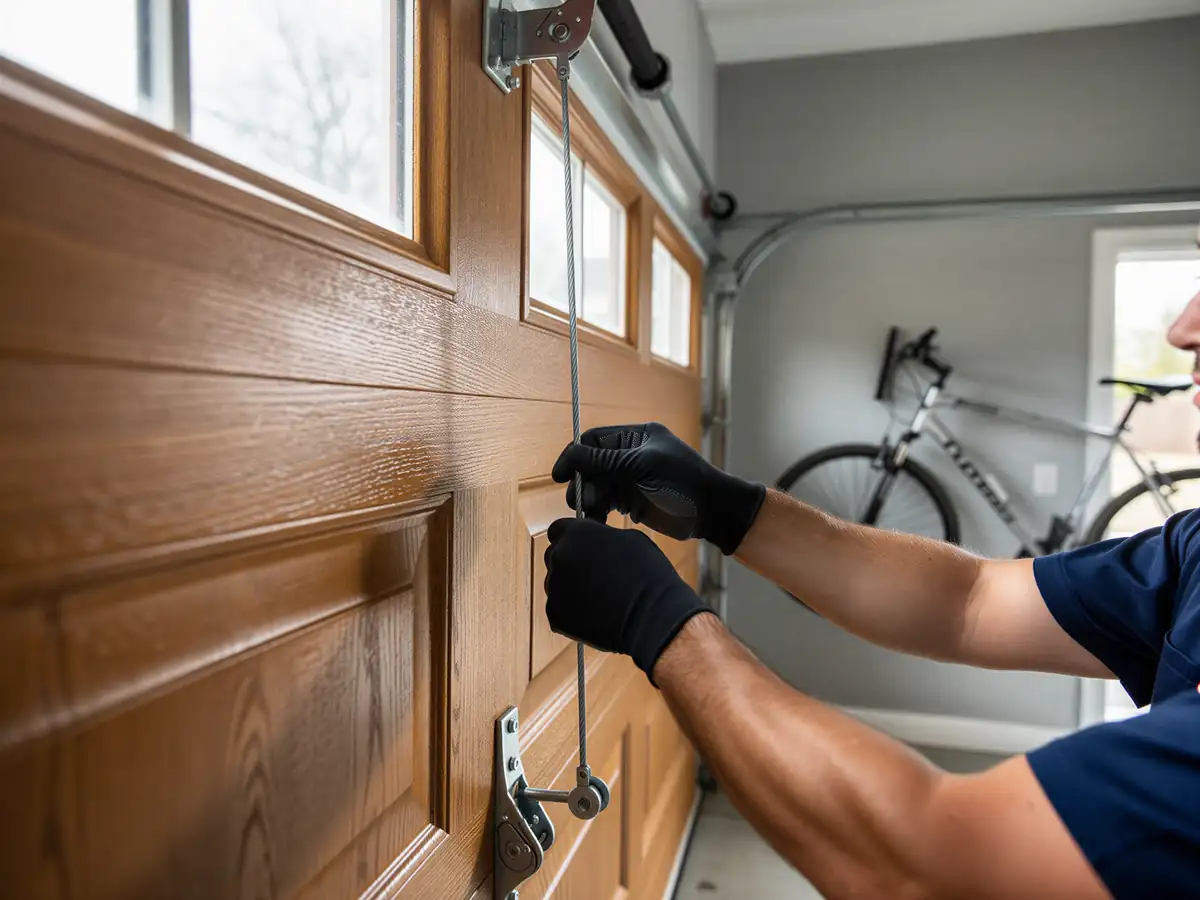
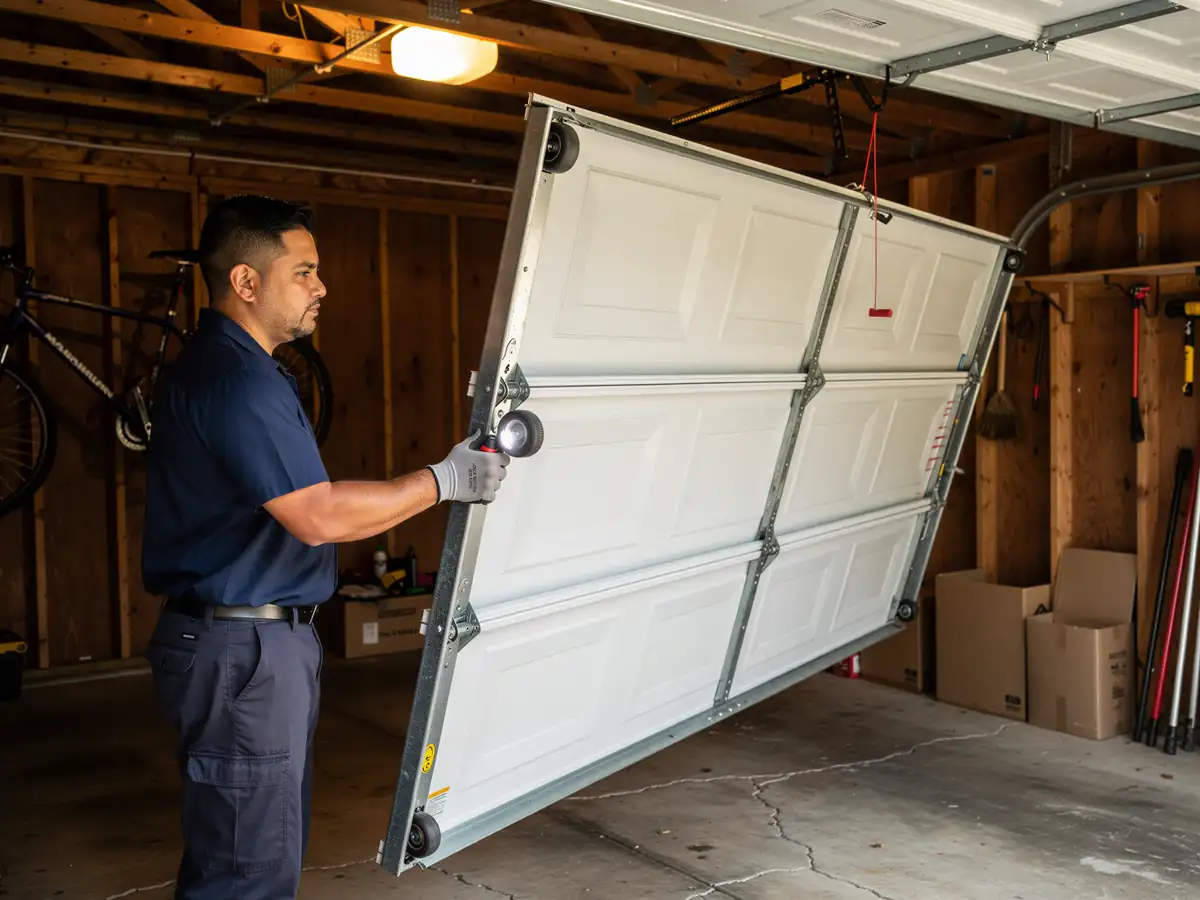
An off-track door almost never means the whole track is ruined. Most Carthage calls come down to one of three things: a roller that's jumped the rail, a bent section of track from the door being forced while it was already off-kilter, or a cable that's slipped its drum. We check all three before we touch anything, because forcing a door back onto a bent track just bends it again in a different spot.
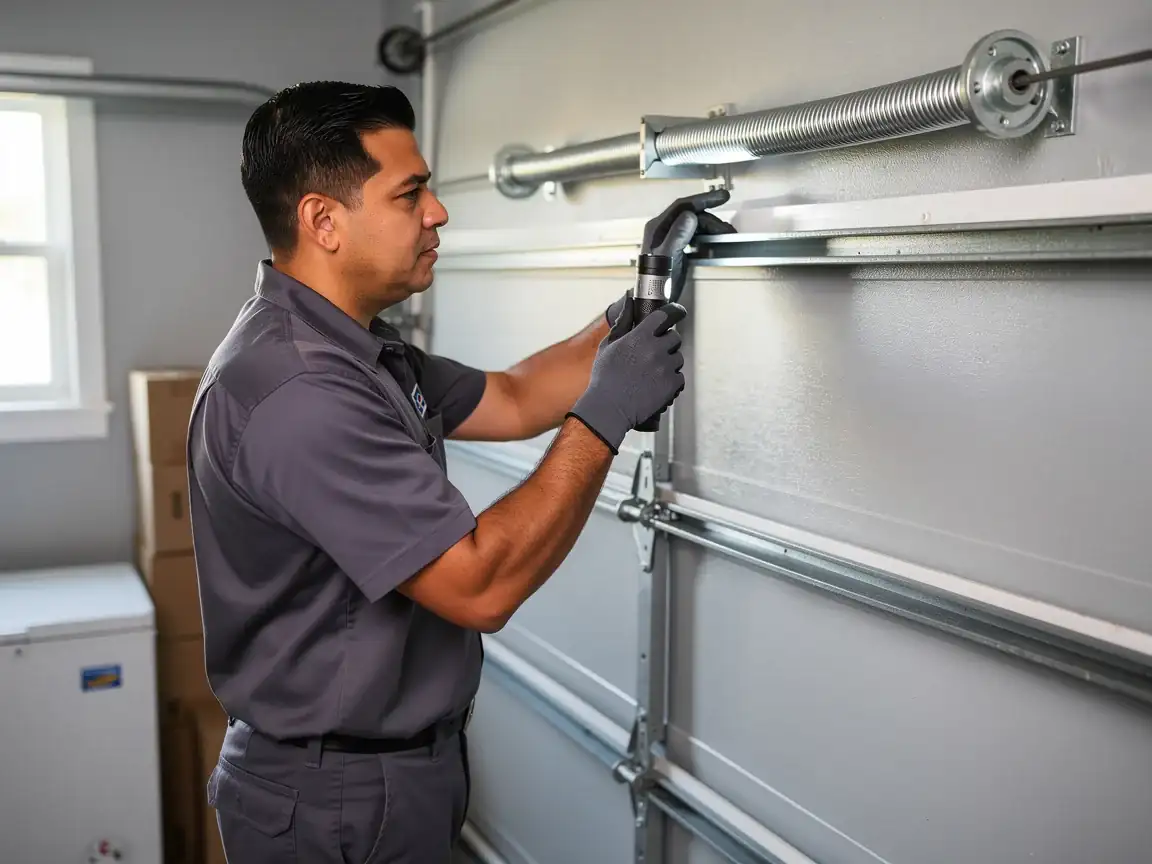
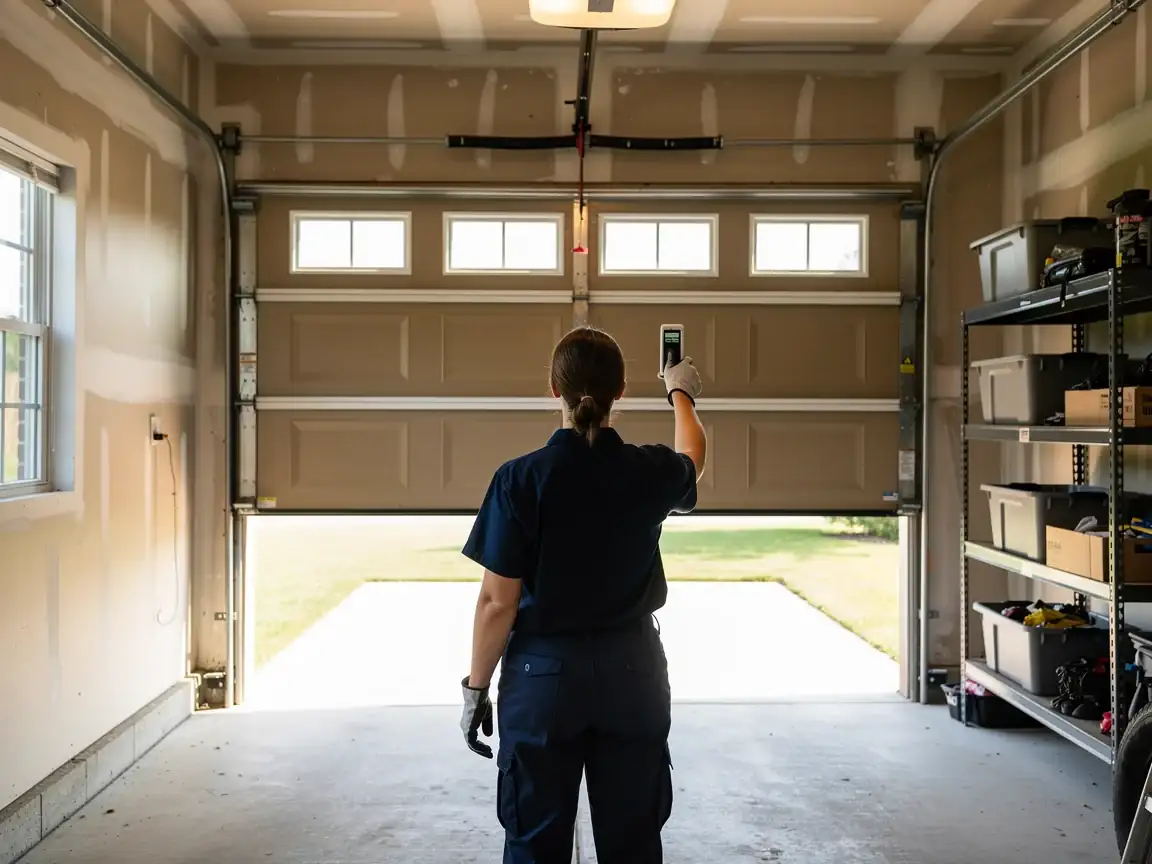
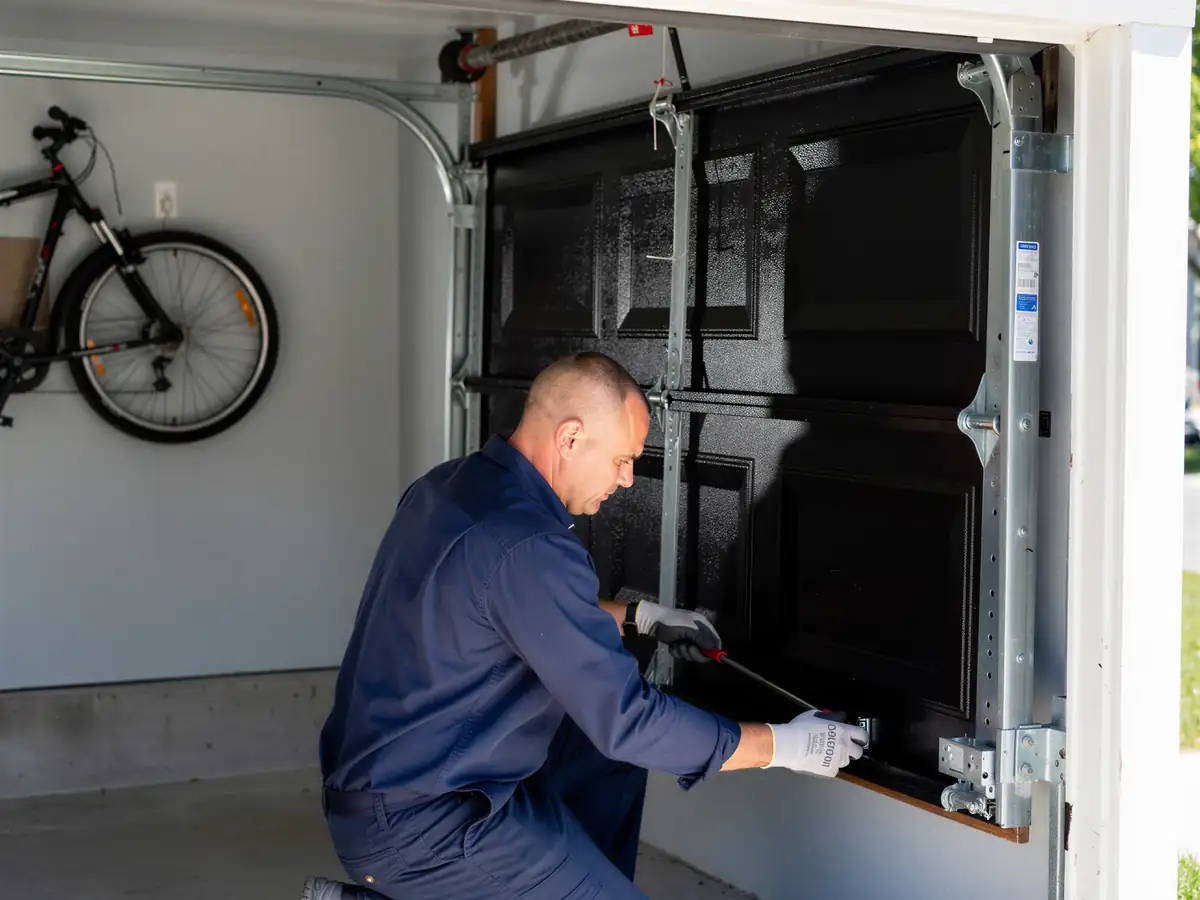
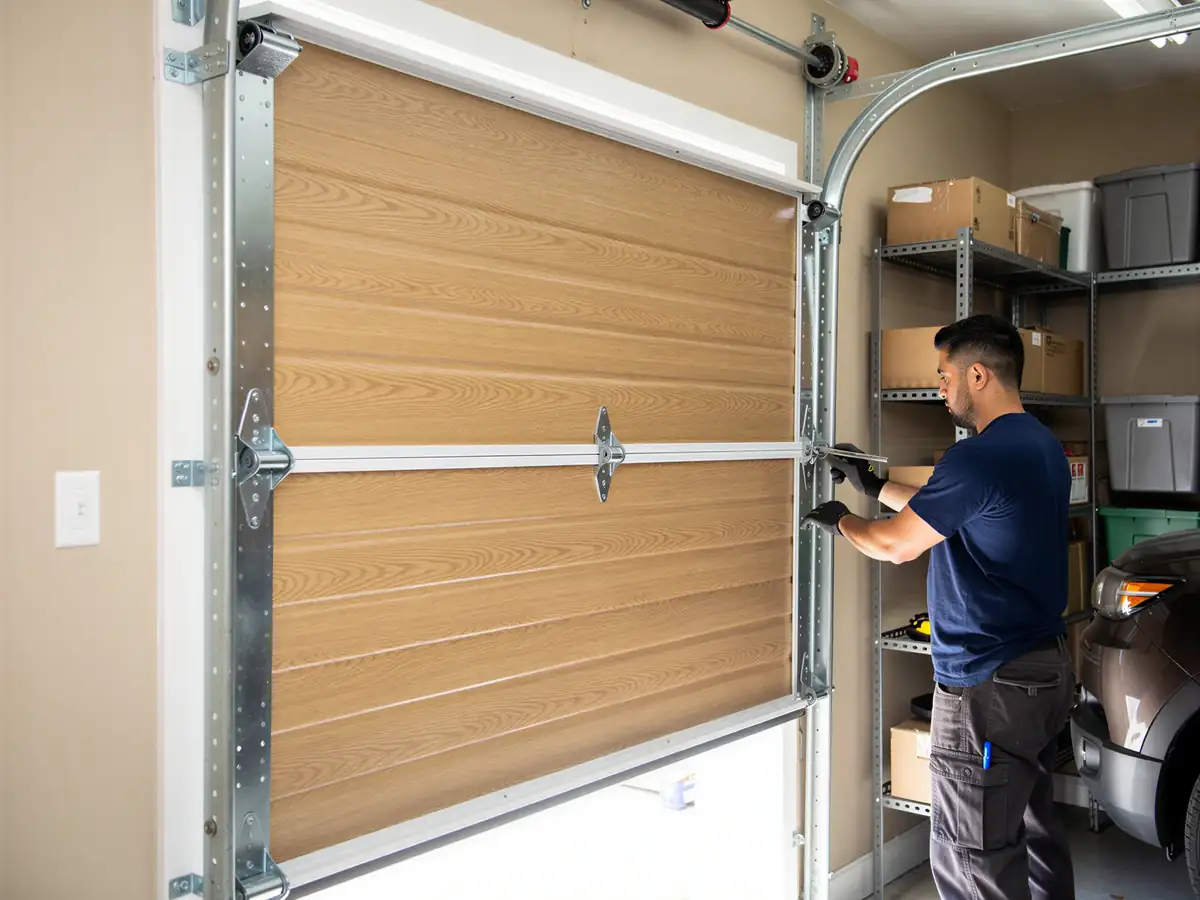
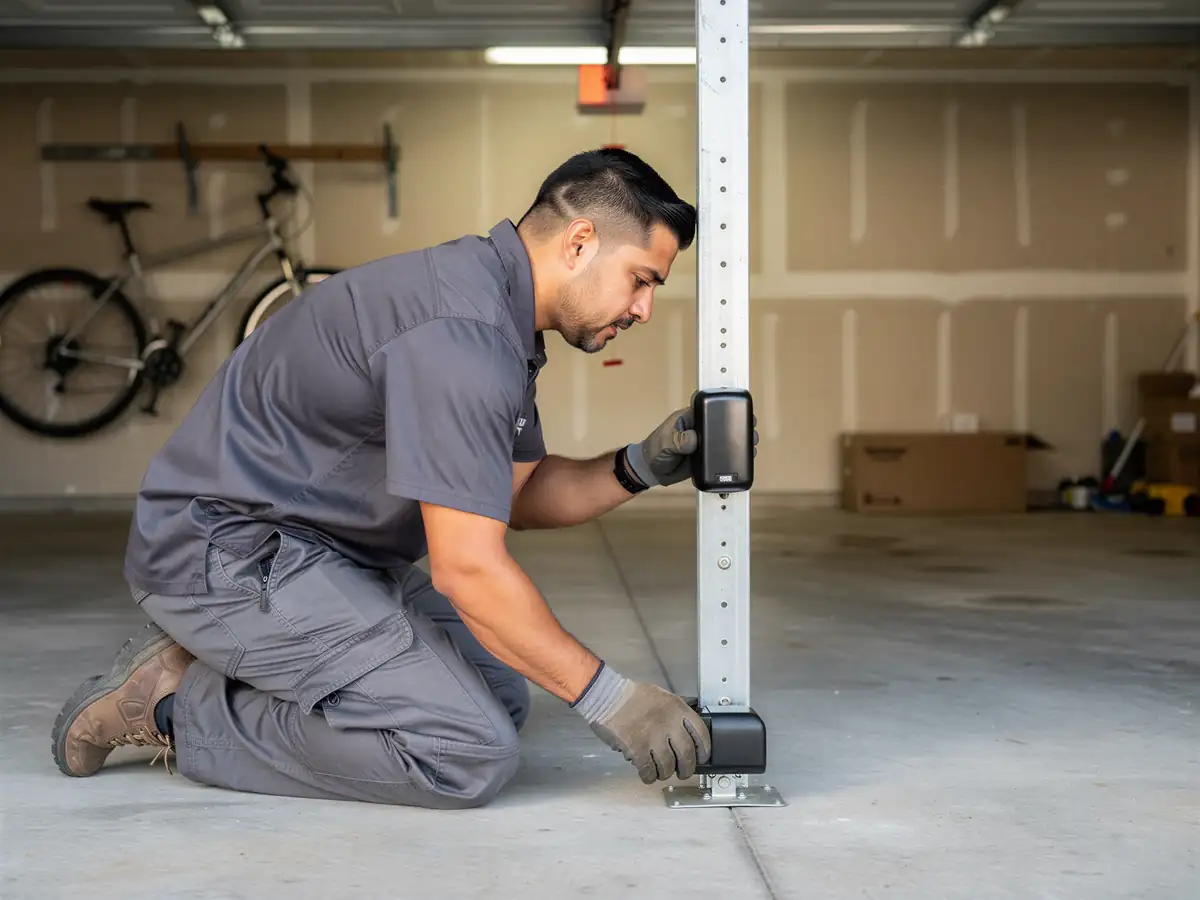
If the track itself is straight, the fix is a roller swap and a realignment - loosen the mounting brackets, square the rails to the opening, snug them back down, and run the door through a full cycle to check it tracks clean. That's a contained job.
If the track is bent, bracing it back into shape rarely holds for long, especially on an opener-driven door that's cycling the same bad geometry every day. At that point we replace the bent section rather than patch it. We'll tell you straight if that's where you're at - we don't stretch a track repair into a bigger job than it needs to be, and we also won't keep re-bending a section just to avoid selling a new one.
The Symptom
The door that's 'off track' in Carthage usually shows itself one of two ways
Either it stops partway and won't go up or down without someone pushing it by hand, or it moves but you can see one side riding higher than the other, with a visible gap between the bottom panel and the floor on one corner. Both point to the same root cause - the rollers have left the rail, or the rail itself has shifted out of plumb.
You'll often hear it before you see it
A grinding or scraping sound as a roller fights the edge of the track instead of riding inside it, or a sharp pop when a cable jumps a groove on the drum. If the opener keeps trying to run the door against that resistance, it can strip the gear or burn out the motor, so don't keep hitting the button hoping it'll work itself loose.
On a double-wide door, off-track trouble tends to show up on one side only
Since the two door halves don't always bind at the same rate - worth mentioning if you're trying to describe what's wrong over the phone before we get there.
Why It Happens Here
Carthage's housing mostly dates to the early 1990s - median build year 1992, in line with the wider 1980s-90s stock across this part of the service area. Doors from that era were commonly installed with light-gauge steel track and stamped roller brackets, both of which were built to a cost target, not a load spec. Thirty-plus years of cycling has left a lot of that original hardware loose at the mounting bolts, and a loose bracket is exactly what lets a roller walk off the rail.
The cold-moderate climate band this area sits in adds a seasonal push. Steel track contracts in winter cold and expands again as temperatures swing back up, and on a track that's already a little loose, that expansion and contraction is enough to walk a roller out of alignment over a season or two. It's not dramatic - nobody's door falls off the wall - but it's a steady mechanical drift that ends with the same call every year: a door hanging crooked on one side.
With 1,130 households in Carthage and a median income of $62,177, most of what we see leans toward maintenance deferred a year or two rather than storm damage or a single bad event - which is good news, because it's almost always fixable without a full door replacement.