Can You Do This Yourself
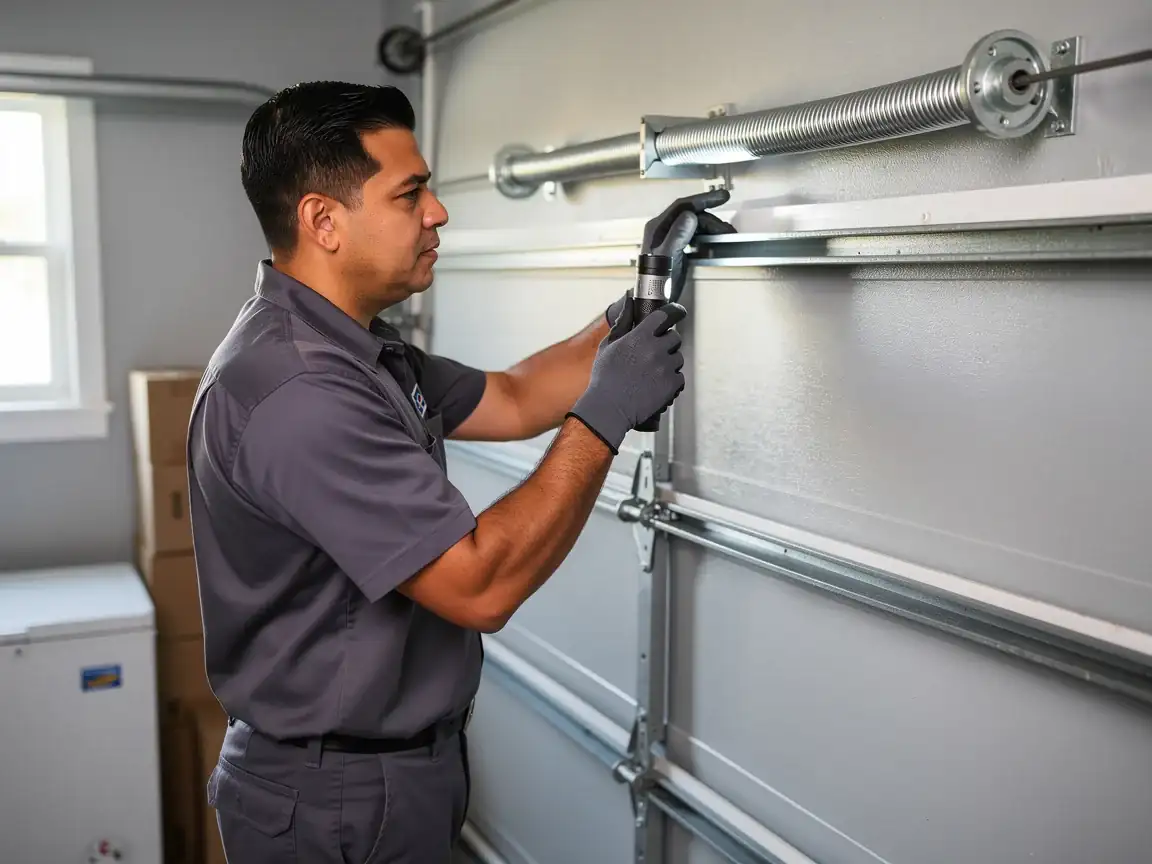
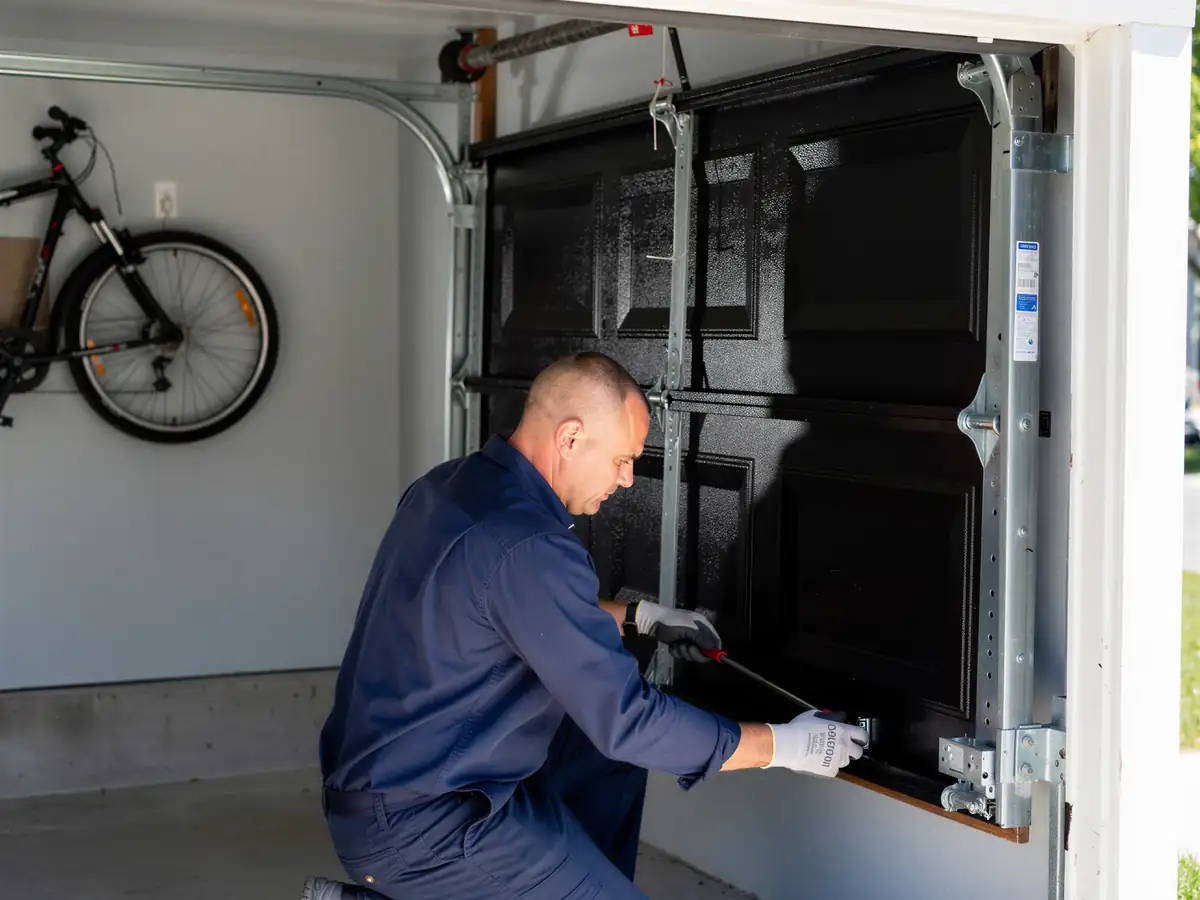
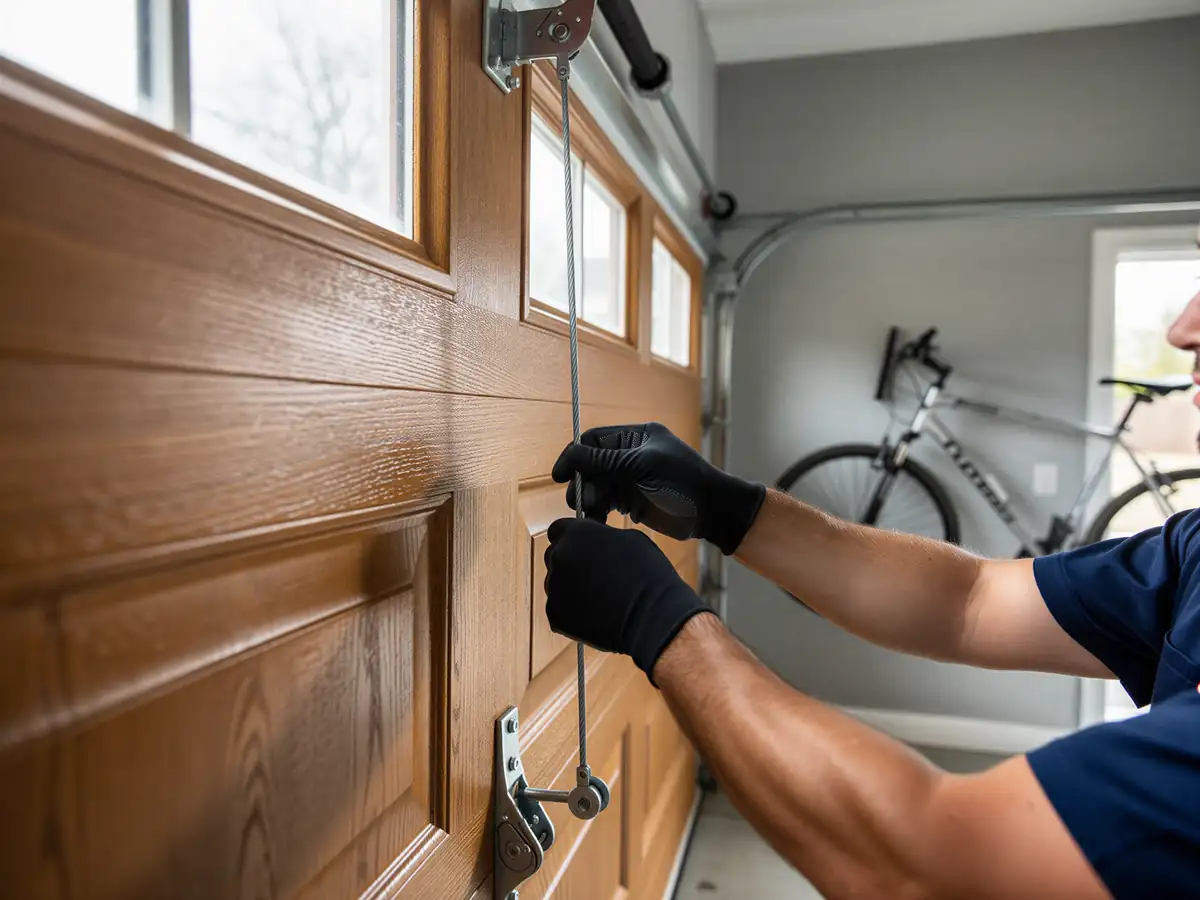
A lot of the doors around Goldston went up when the median home here was built, back around 1964, and that means single-layer steel panels on extension springs with a cable and pulley on each side, not the torsion setup you'll find on anything built in the last 20 years. Those cables run under real tension even with the door down, and on a door this old the pulley brackets have usually rusted or loosened with the wood jamb behind them. We're not going to pretend this is a weekend fix. Winding a torsion spring is the job people usually get warned off, but a cable off a drum or snapped at the bottom bracket on an extension-spring door can whip back just as hard, and the step ladder work next to a loaded spring is where most DIY injuries happen. If the door is still moving, even roughly, leave it alone and call it in. If it's already down and won't budge, don't force it by hand - that's usually a second cable about to go, not one you can baby along.
The Symptom
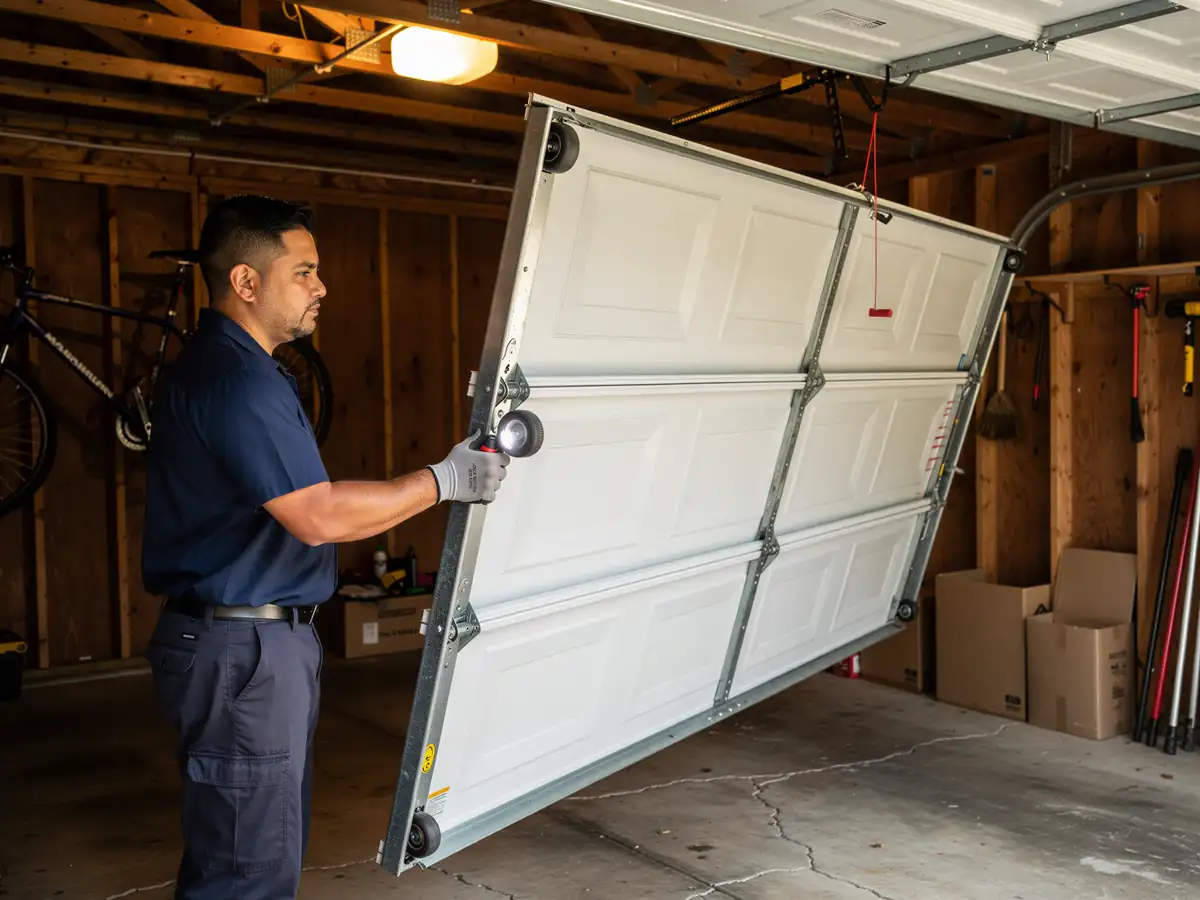
On a door this age the usual story is one side of the door hanging lower than the other, or the door racking sideways in the track as it goes up. Sometimes it's a frayed cable visibly unwinding off the drum at the bottom corner, sometimes it's a cable that's already snapped and the door is sitting crooked on one spring alone. With steel panels from the 1960s-80s stock common in this area, the galvanized coating on the original cable is often long gone, and what's left is bare wire strand that's been rusting quietly for years before it lets go. You'll also hear it before you see it - a popping or snapping sound right as the door reaches the top or bottom of travel is usually the cable fraying through its last few strands.
The Complications
The climate here runs cold winters with real temperature swings, and on an extension-spring door that means the galvanizing on an old cable has had forty-plus years of freeze-thaw to work on it, not just UV. That's part of why cable failure shows up more on the older end of the stock than on newer doors elsewhere in the service area. The other complication is specific to a smaller town like this: with around 140 households in Goldston itself, we're not running a crew through here daily the way we might in Sanford proper, so we schedule the visit rather than drop by on a whim - worth knowing before you call expecting someone in the driveway within the hour. Median income in Goldston runs lower than the wider service area average, and we price the repair itself the same regardless, but it's fair to say a full spring-and-cable rebuild on an original 1960s door sometimes costs more than patching, simply because the parts are older on both sides.
How Long You Are Without the Door
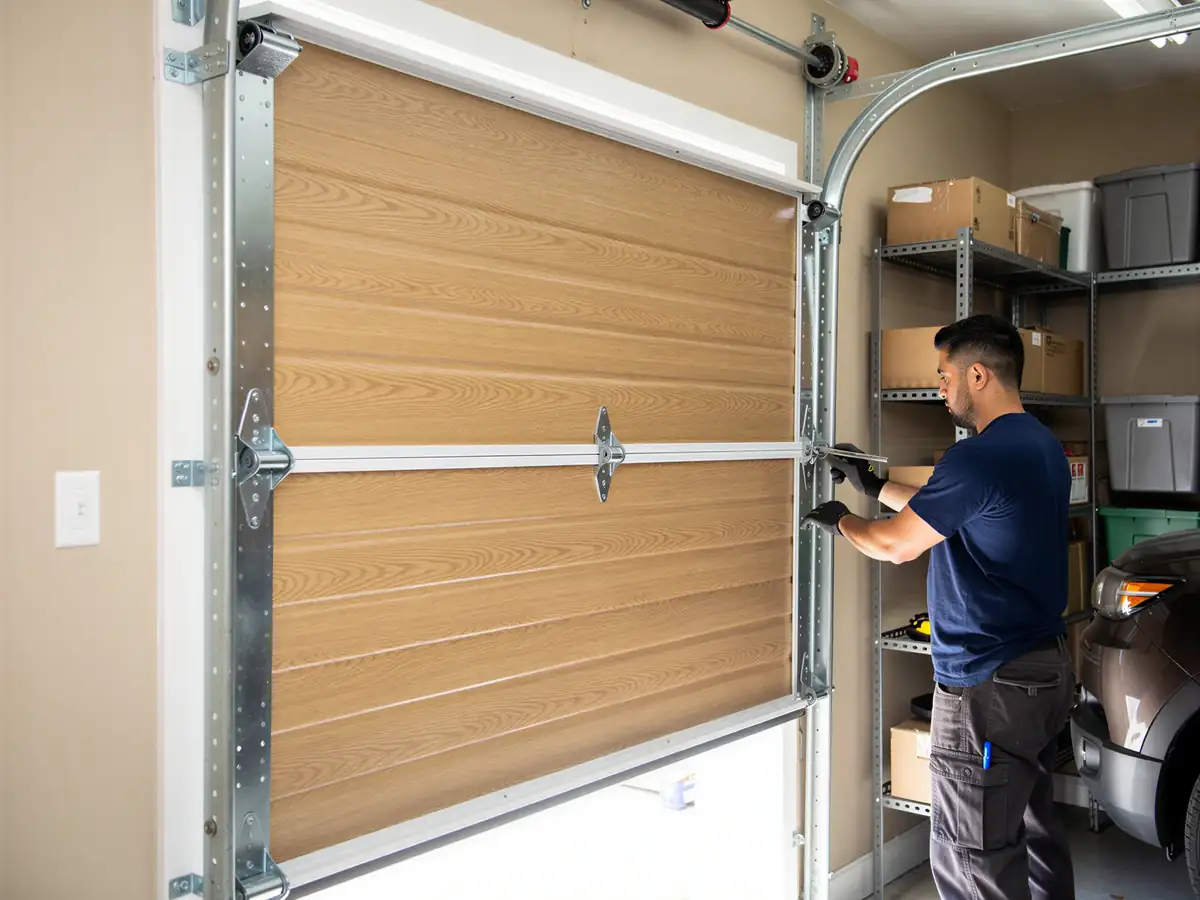
A straightforward cable replacement on one side, done while we're already out this way, usually gets the door back in service the same visit. If both cables are original and one has already gone, we'll generally recommend doing both sides at once rather than coming back out in a few months for the second failure - which adds a little time to that one appointment but saves a second trip. If the bottom bracket or pulley on a door this old is seized or rusted through, that's the part that can stretch the job, since matching old hardware sometimes means a short wait on a part rather than a shelf grab.