The Complications
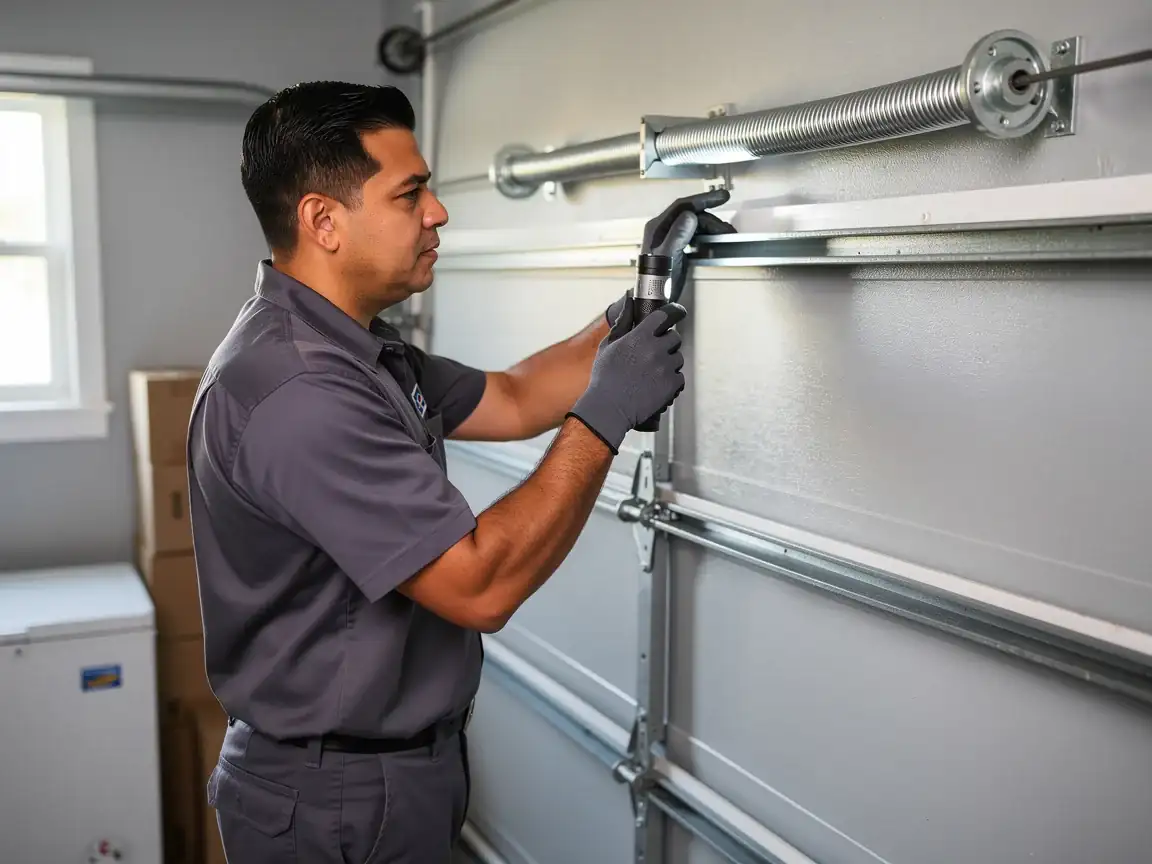
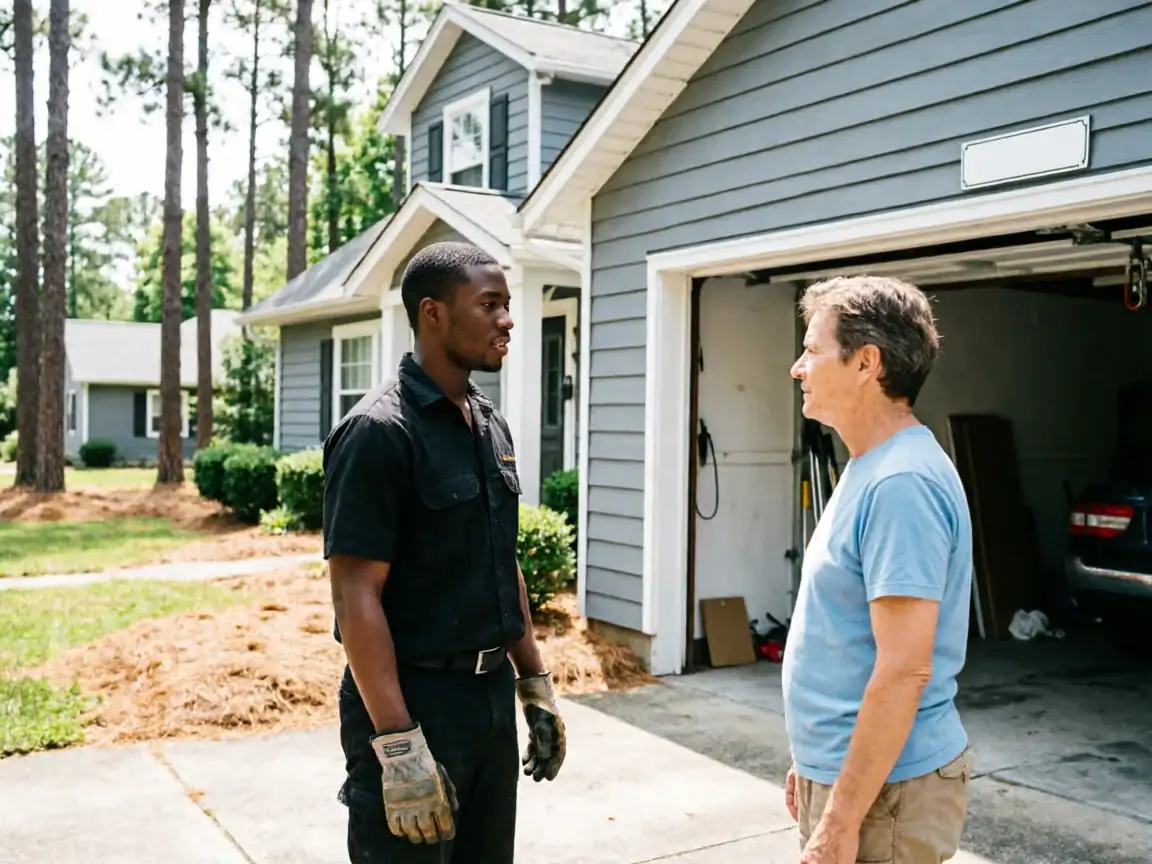
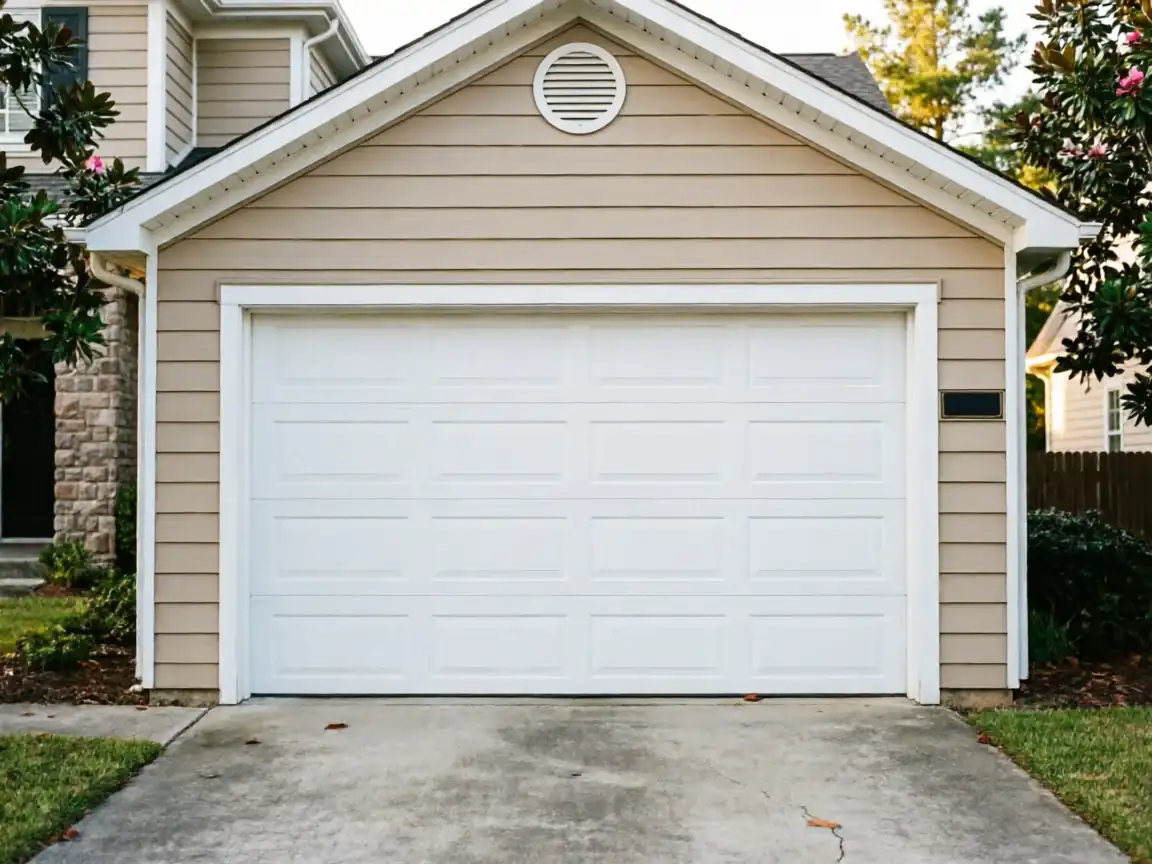
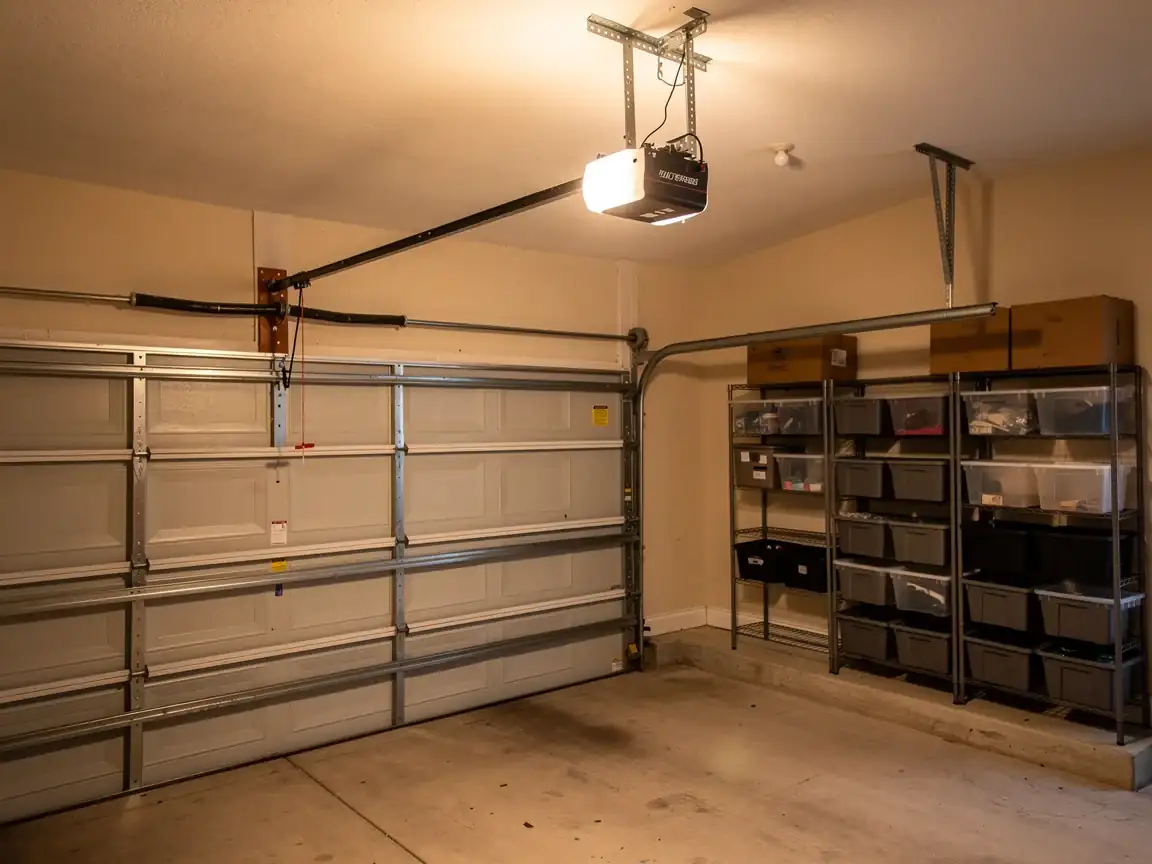
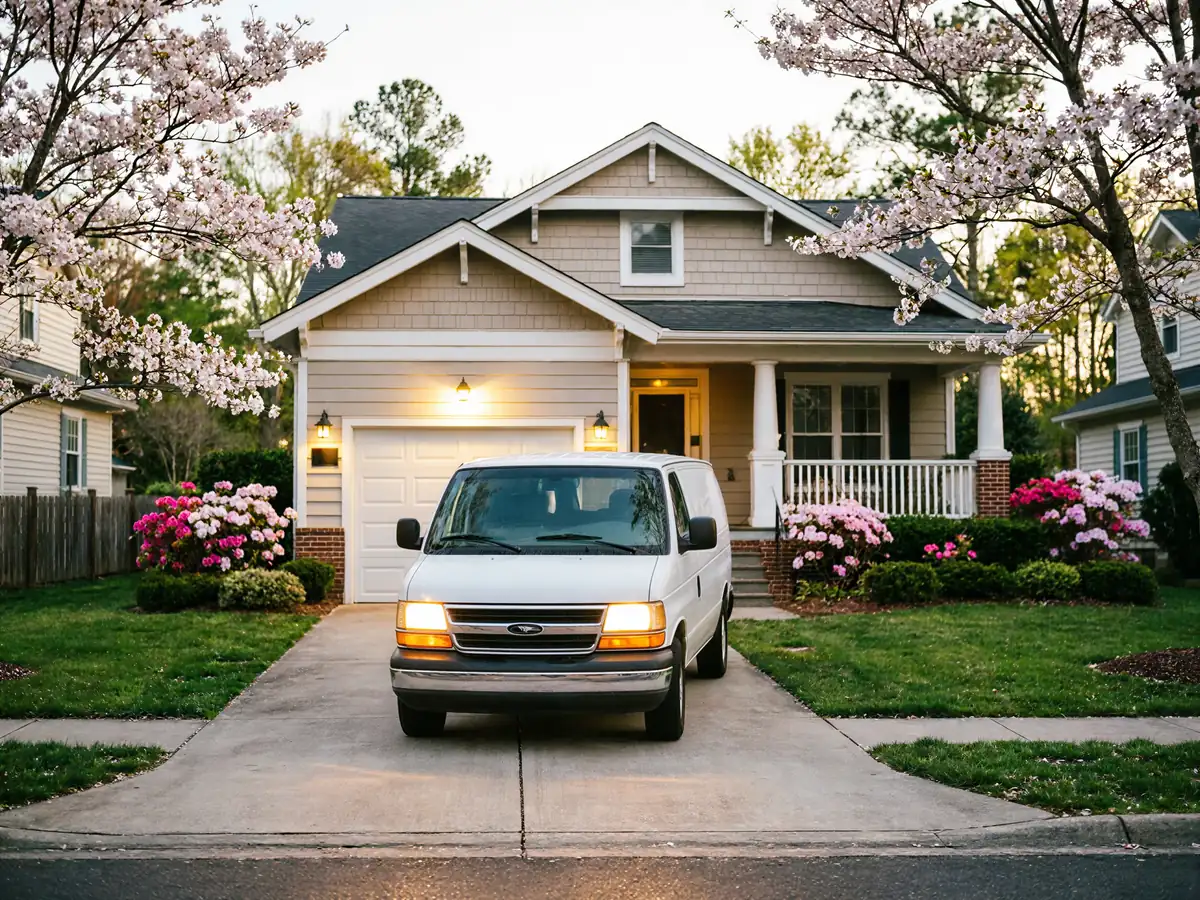
Most houses in Vass went up around 1988, which puts them past the wood-door era and into the first wave of mass-produced steel doors - single-layer, non-insulated panels, usually a 16x7 double on the main bay or an 8x7 single on older ranch builds. These doors came standard with extension springs mounted along the horizontal track rather than torsion springs over the header, and after three and a half decades those springs are near the end of their rated cycle life whether or not anyone's noticed yet. The steel itself has usually held up fine - it's the galvanized coating on hinges and the spring coils that goes first, especially with the cold-moderate winters this part of the state gets. A door that looks fine from the driveway can still have a spring one cycle from snapping, and because we're coming from Sanford, 18 miles out, we'd rather diagnose that over the phone first than roll a truck for something a homeowner can describe to us in two sentences.
Why It Happens Here
The housing stock here clusters tight around that 1988 build date, and extension springs from that generation weren't built with the safety cables that later code required - so when one lets go, the coil can travel. That's the actual mechanism behind most of the emergency calls we get from this kind of house, not a mystery failure. Vass has 426 households, a smaller base than the rest of the service area, and a median income of $56,042, which tends to mean these doors get repaired in stages rather than replaced outright - a new spring this year, new rollers in two more. That's a reasonable way to run it as long as the spring work gets done right, with a cable on the coil.
The Symptom
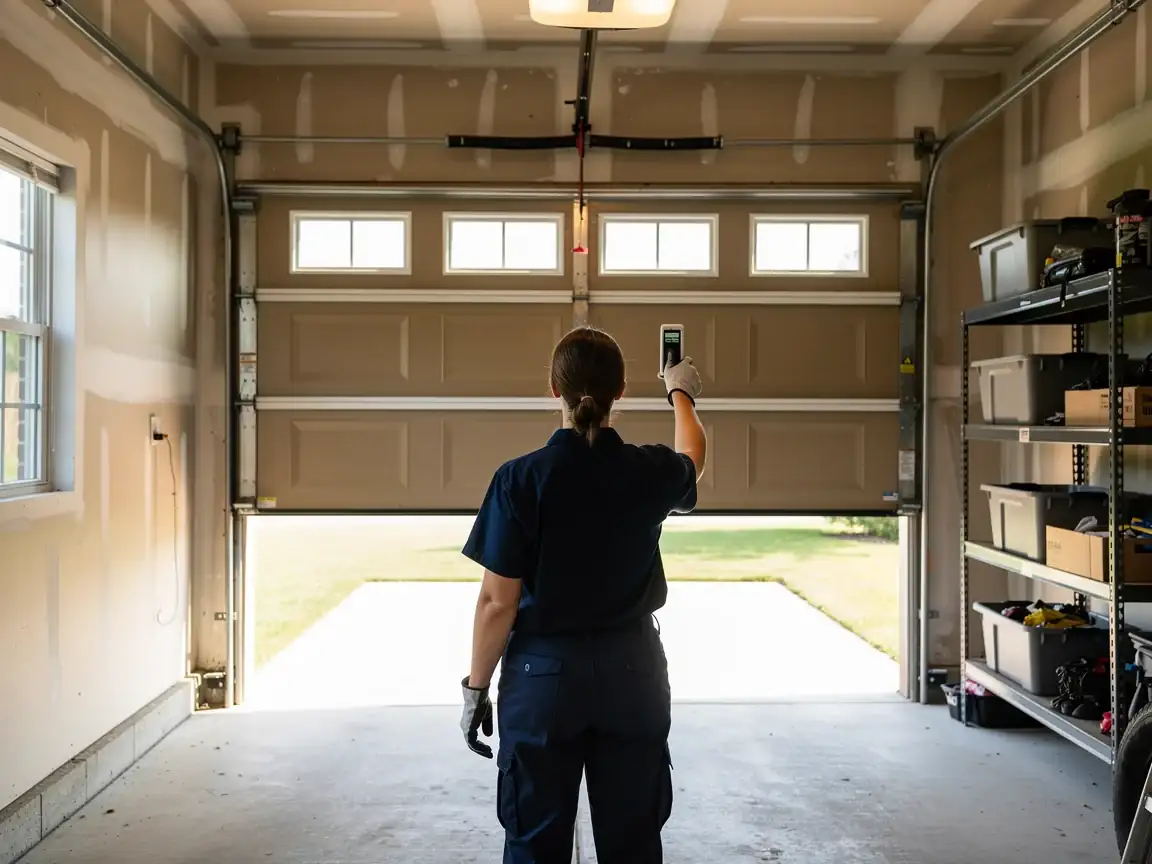
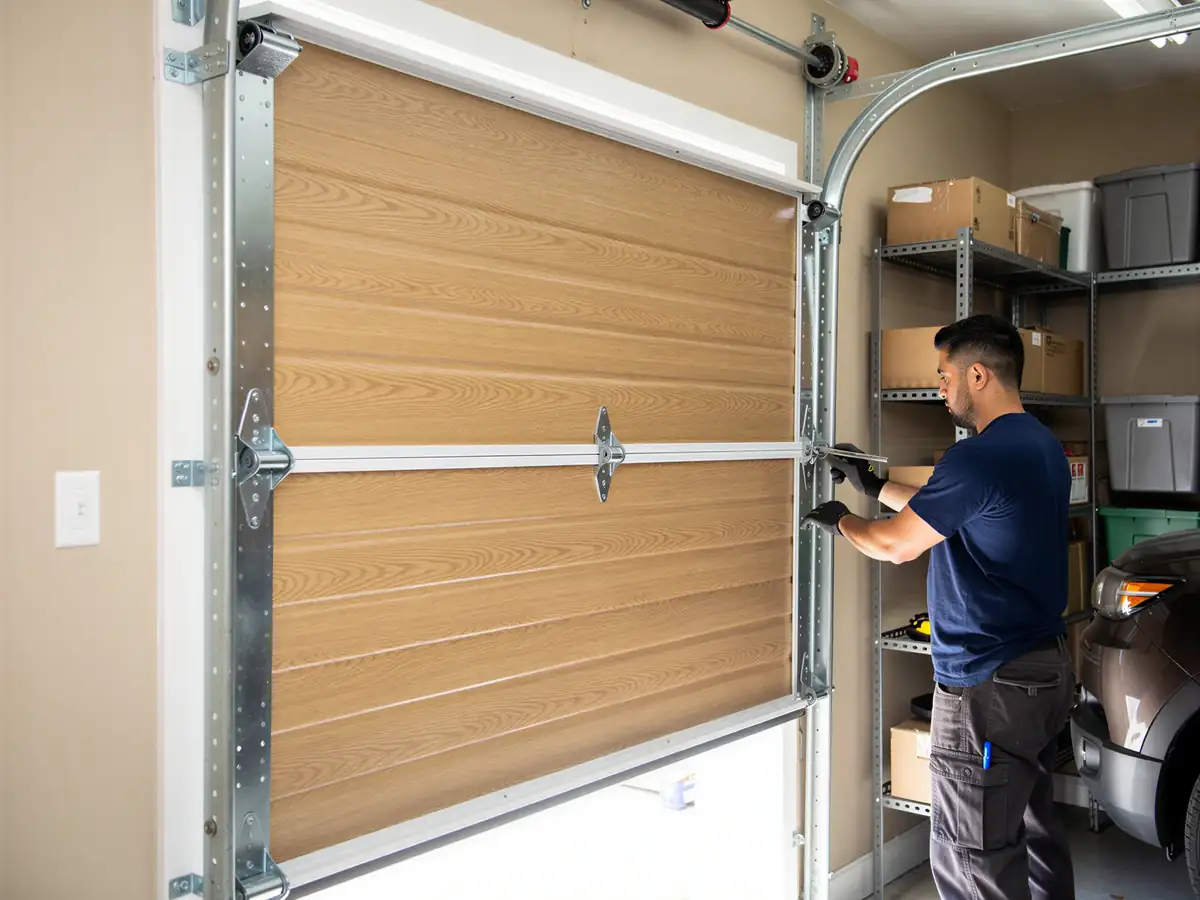
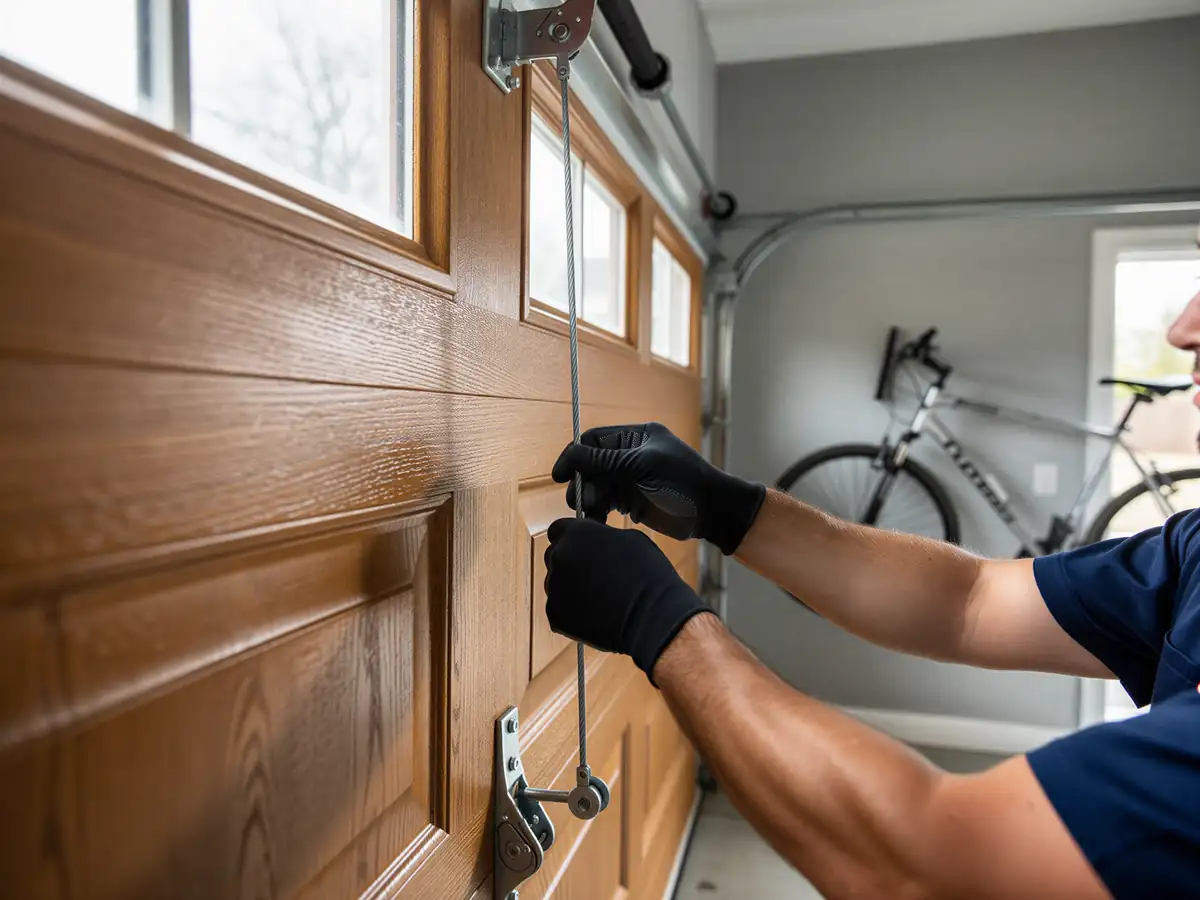
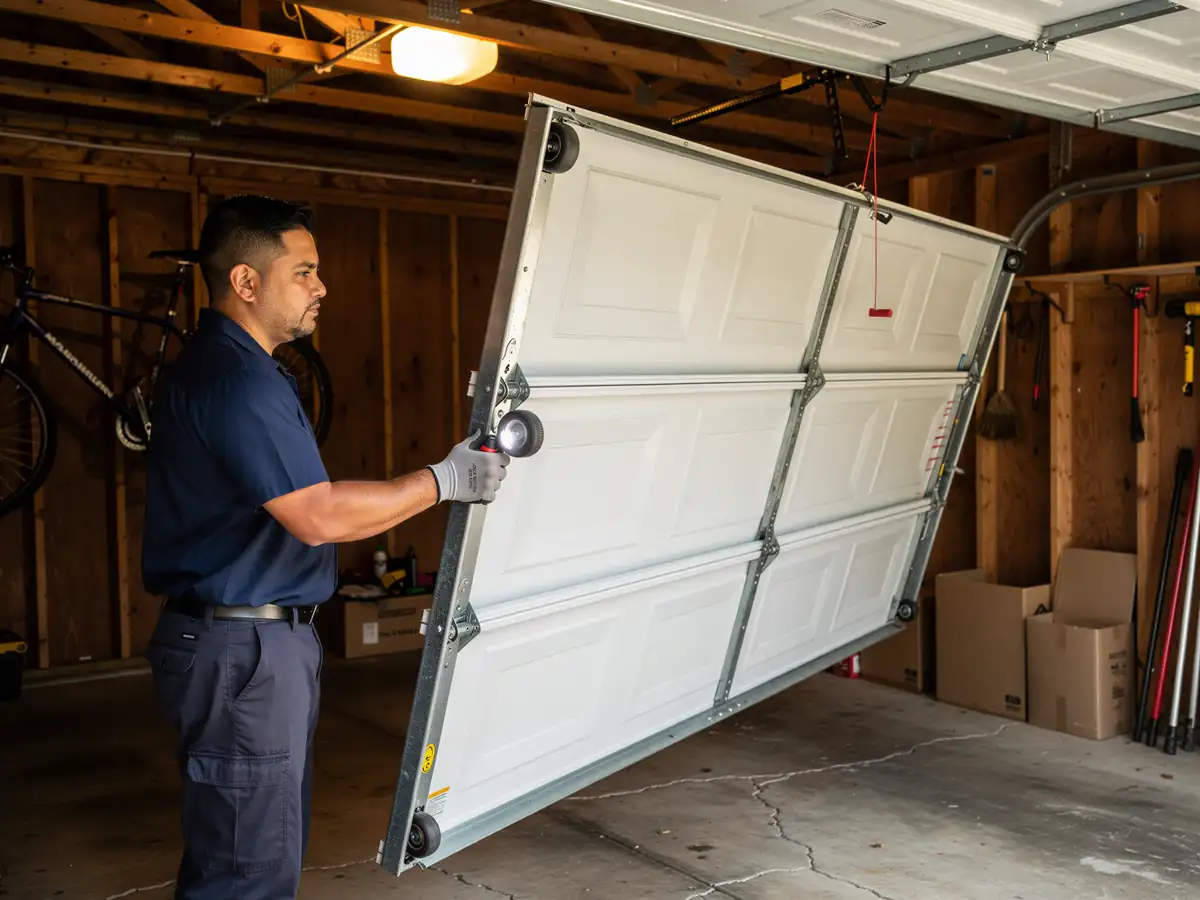
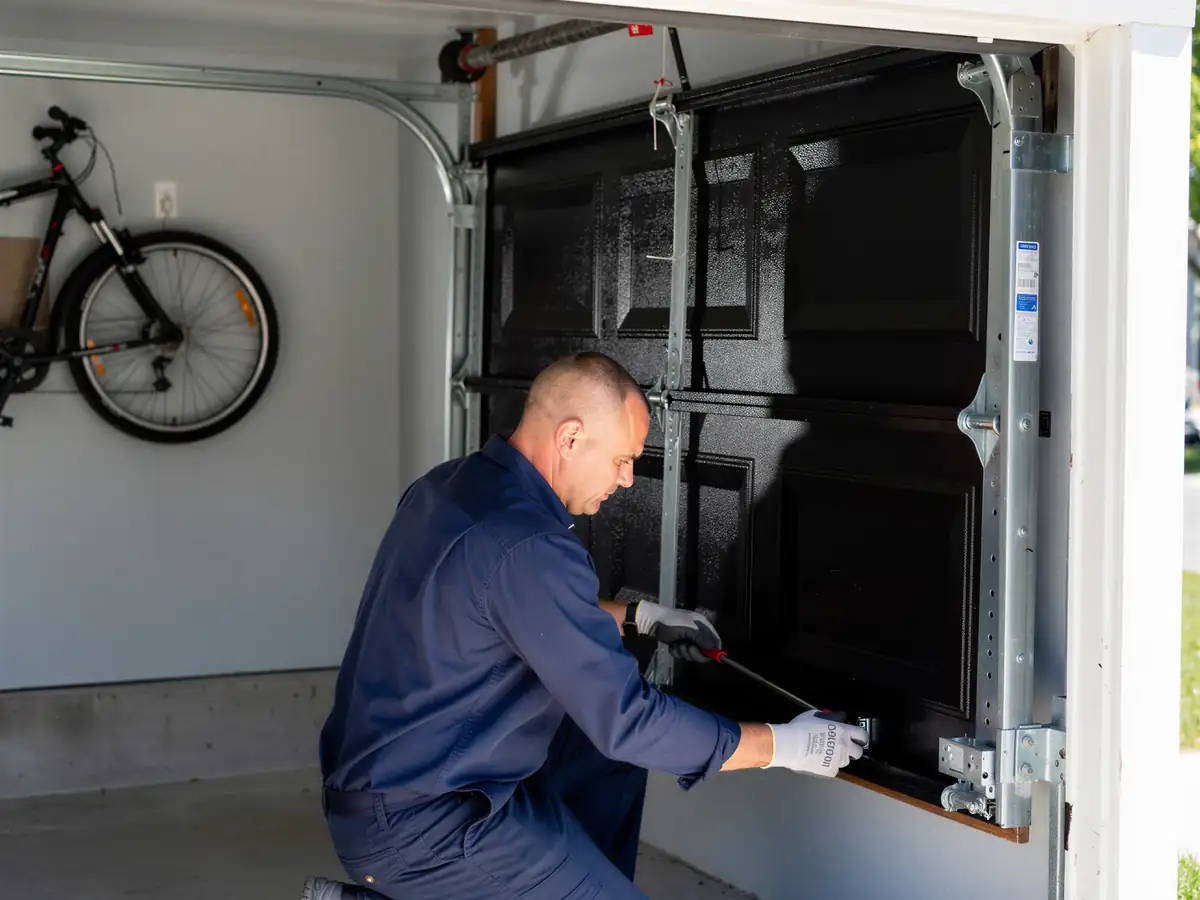
On a 1988-era steel door, the telltale sign is the door going heavy on one side - the opener strains, grinds, or reverses itself partway up. That's an extension spring losing tension unevenly, not a motor problem, even though it sounds like one. A door that slams down the last foot instead of settling is the same issue from the other direction. Rust streaking on the spring coils themselves, visible along the track, is worth a look before either of those happens - once you see flaking rust on an extension spring from a house this age, it's closer to failure than open.
Stocked Parts
We carry the extension spring sizes and roller types that match 1980s steel doors because so much of the stock out here falls in that window - 1988 median build year across Vass and the surrounding area. Hinges and end bearing plates from this generation are also common enough that we keep them on the truck rather than ordering them in. What we don't always have on hand are oddball panel sections for doors that have been patched or replaced piecemeal over the years - if your door is a mismatch of repairs from different decades, that part may need to be special-ordered, and we'll tell you that up front instead of promising same-visit.