What the Fix Involves
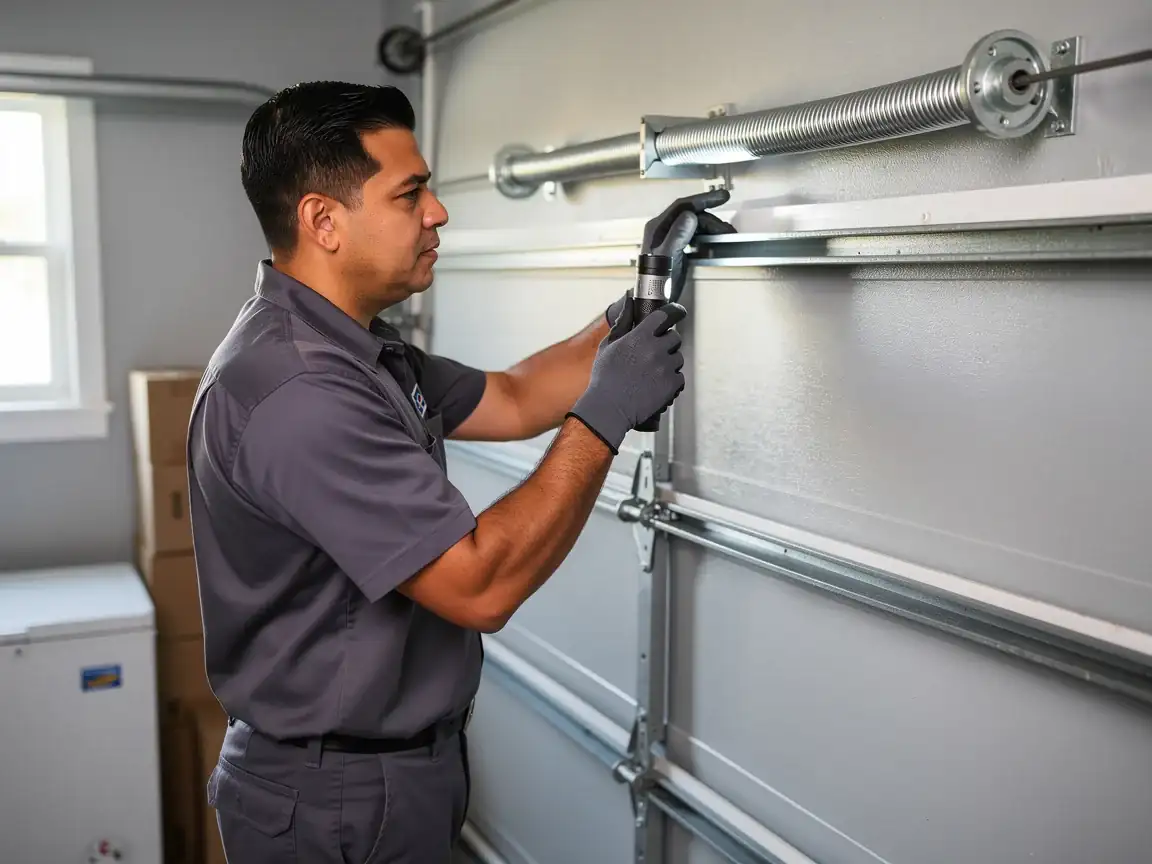
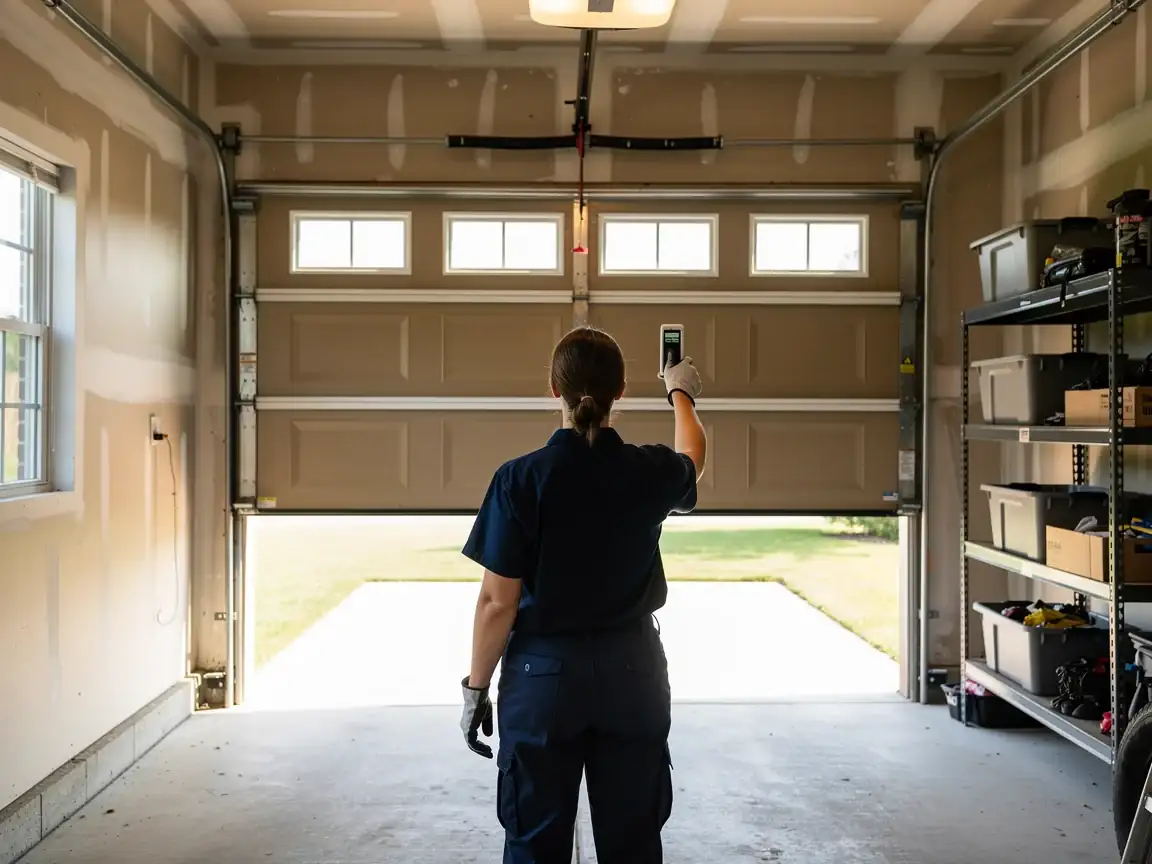
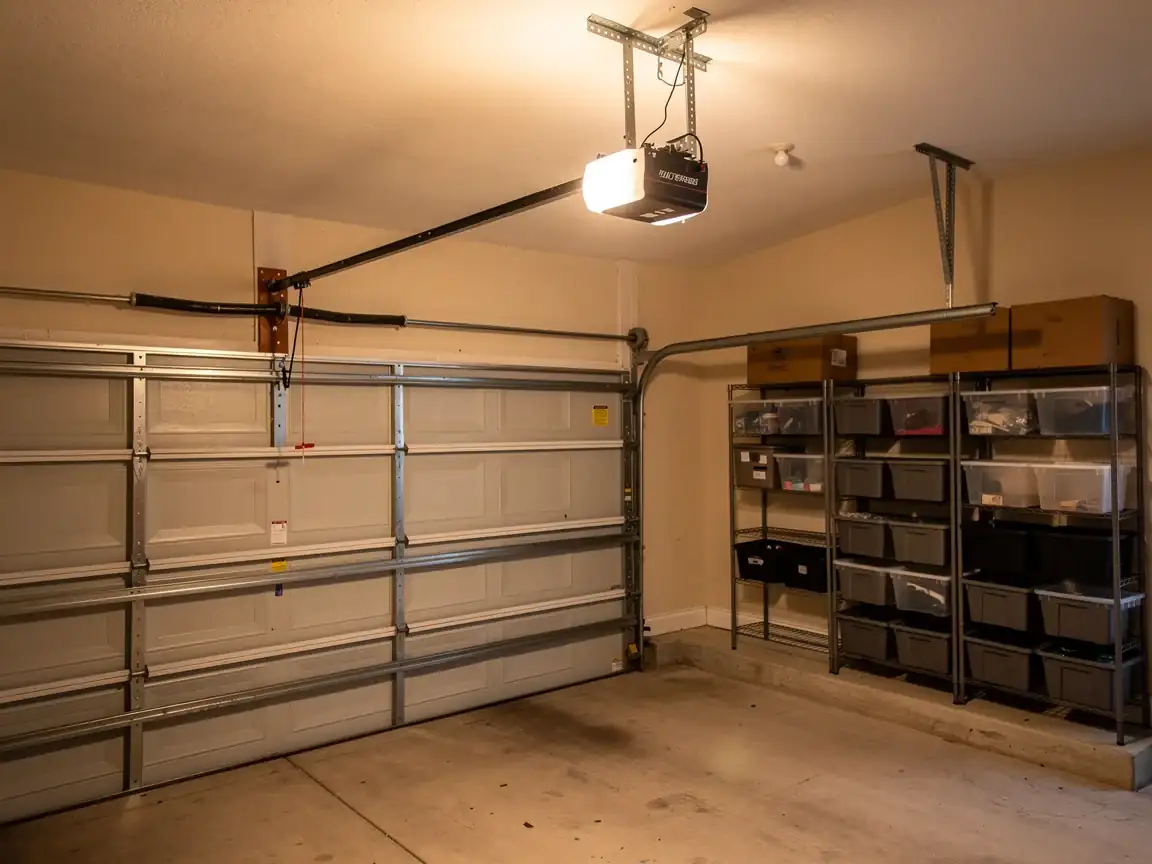
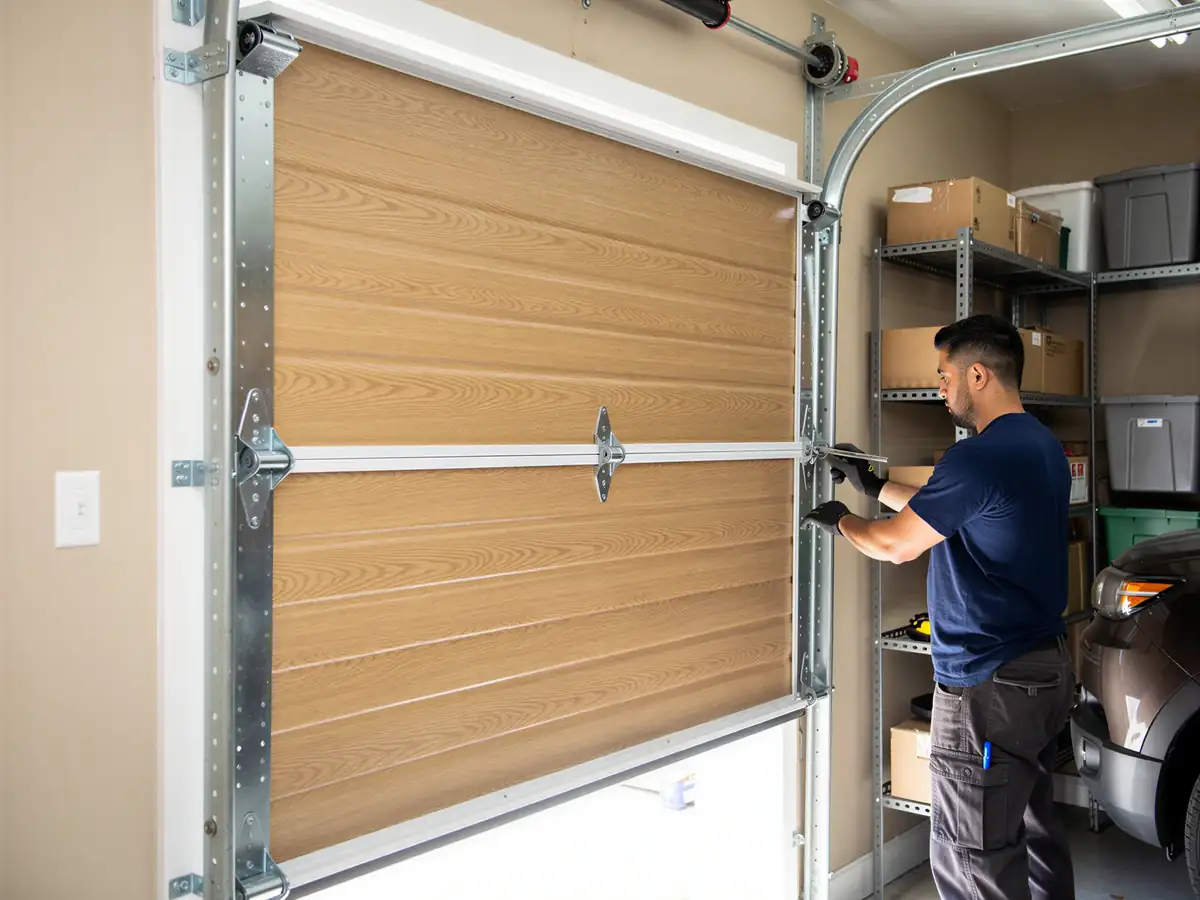
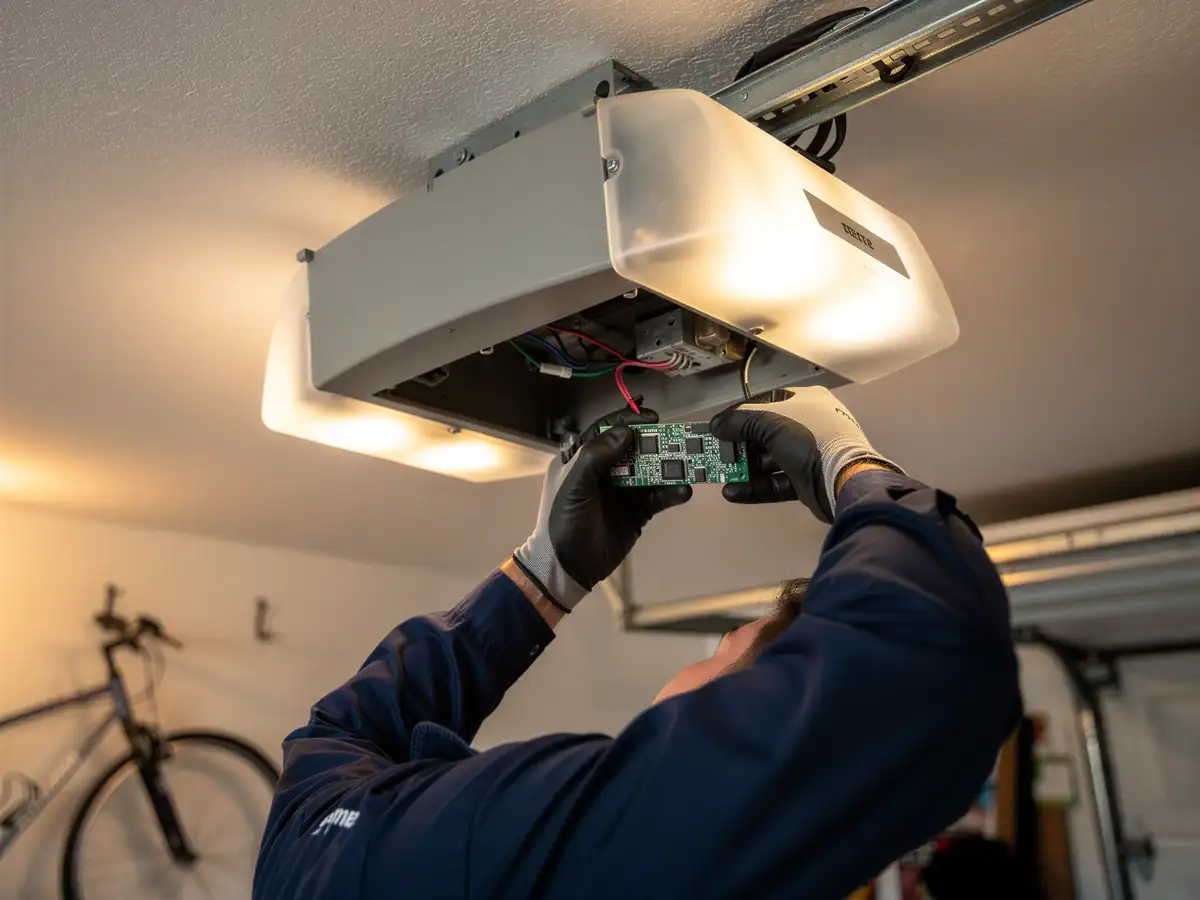
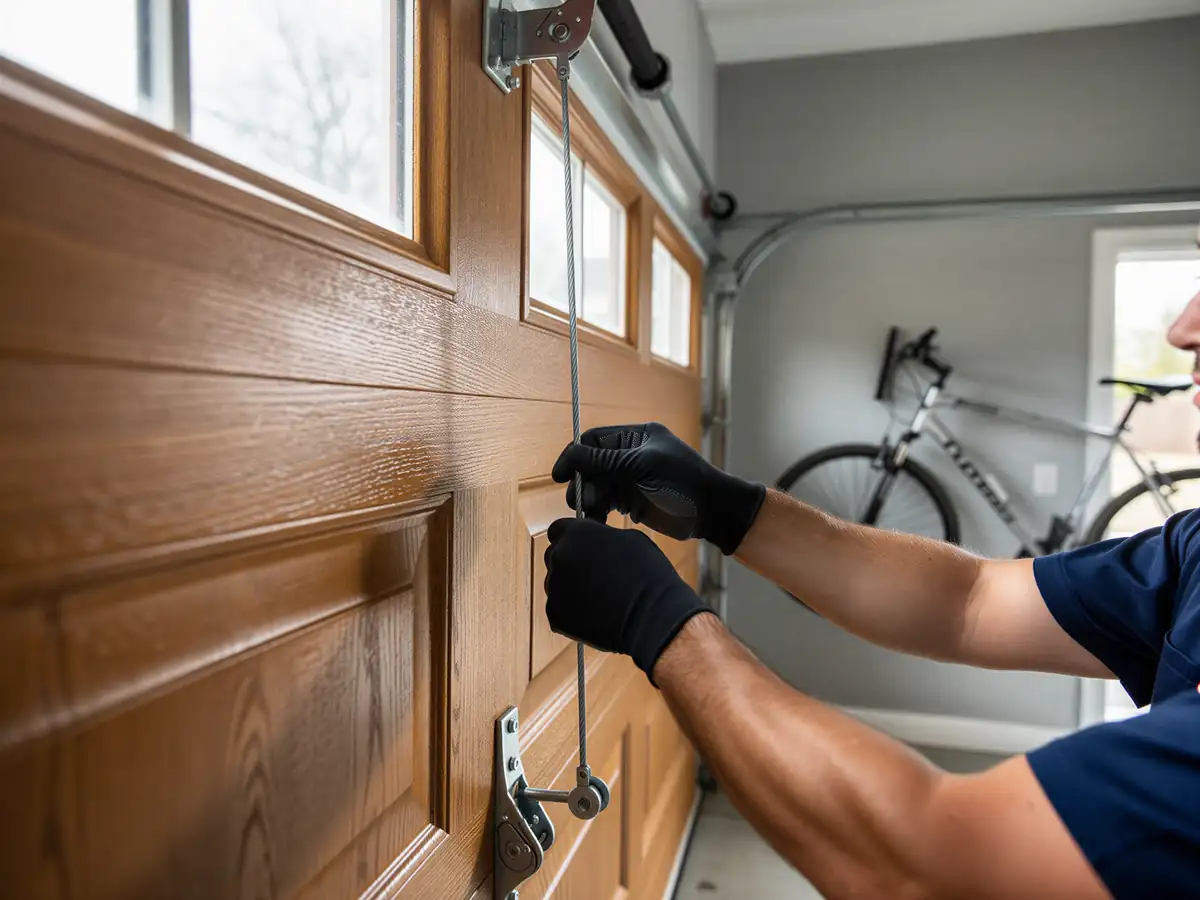
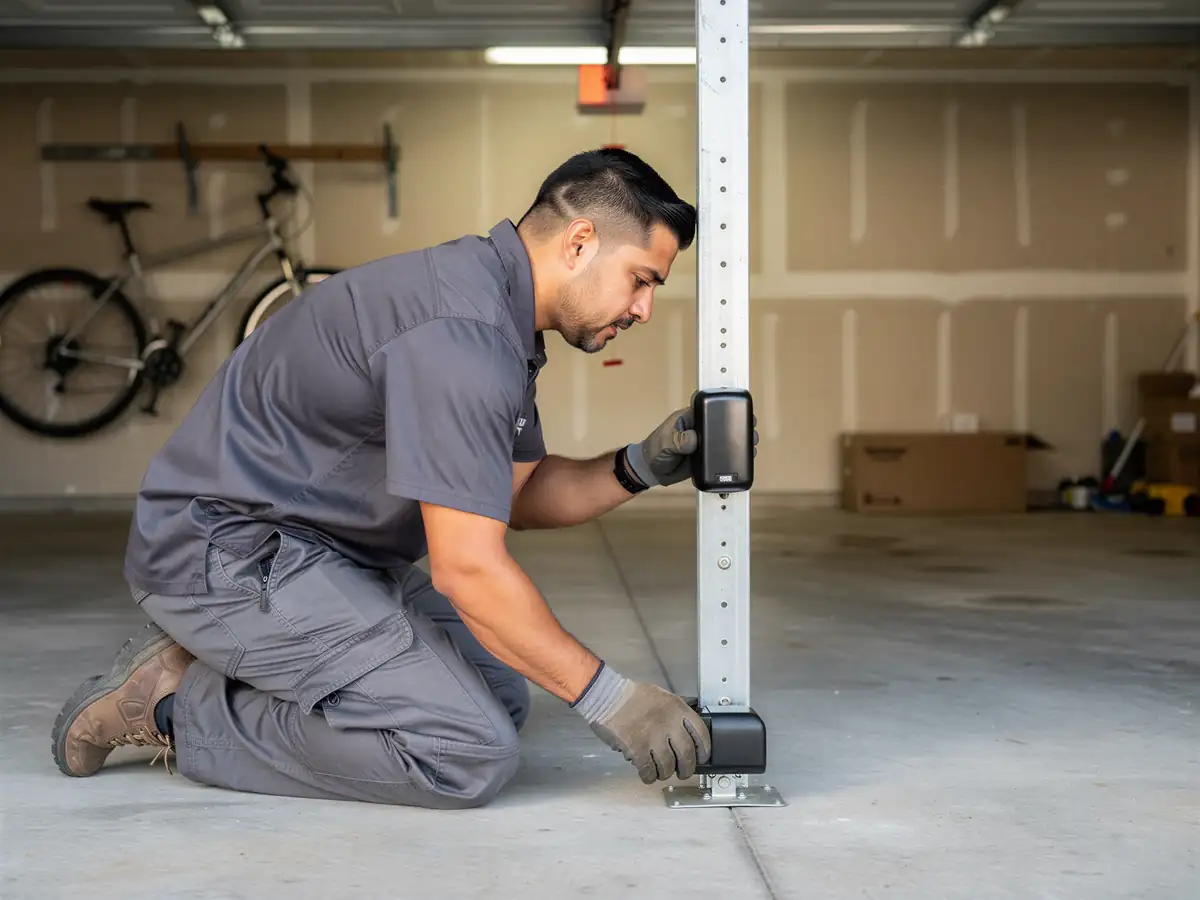
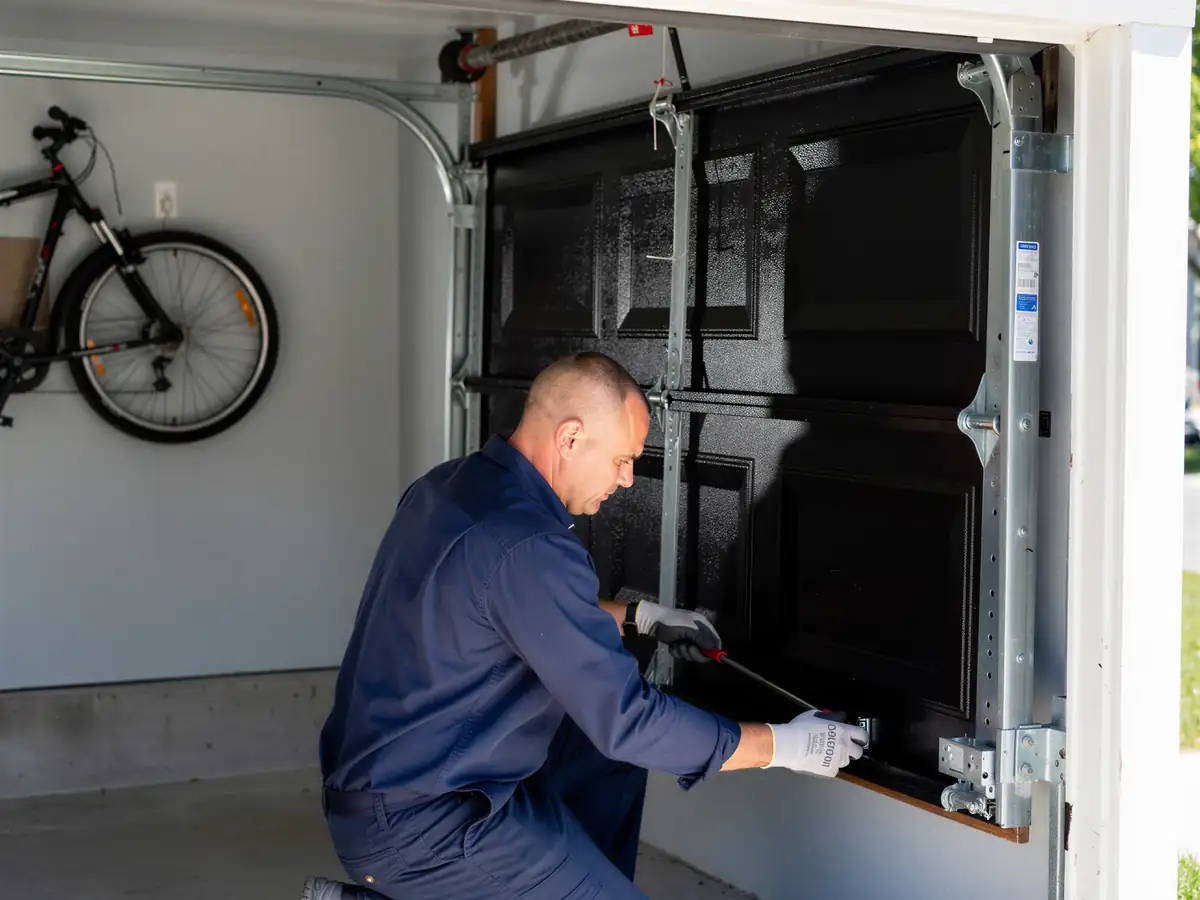
Broadway's median home was built around 1979, which means a lot of these garage doors are still running on the hardware that came with the house. Nobody pulls a torsion spring or a set of rollers unless something breaks, and for most owners here nothing has broken yet - it's just gotten loud, or stiff, or stopped closing all the way. The fix usually starts with figuring out what's original and what, if anything, got swapped out in a prior repair. On a door this age, the spring has outlived its rated cycle count a long time ago, the cable is probably the original galvanized strand, and the rollers are steel, not the sealed nylon kind that came later. That combination is exactly the setup that fails all at once rather than gradually - the spring goes, and the door simply won't lift. We check the spring wind, the cable ends, the track alignment, and the opener's force settings before we touch anything, because on a door this old, two problems often hide behind one symptom.
How Long You Are Without the Door
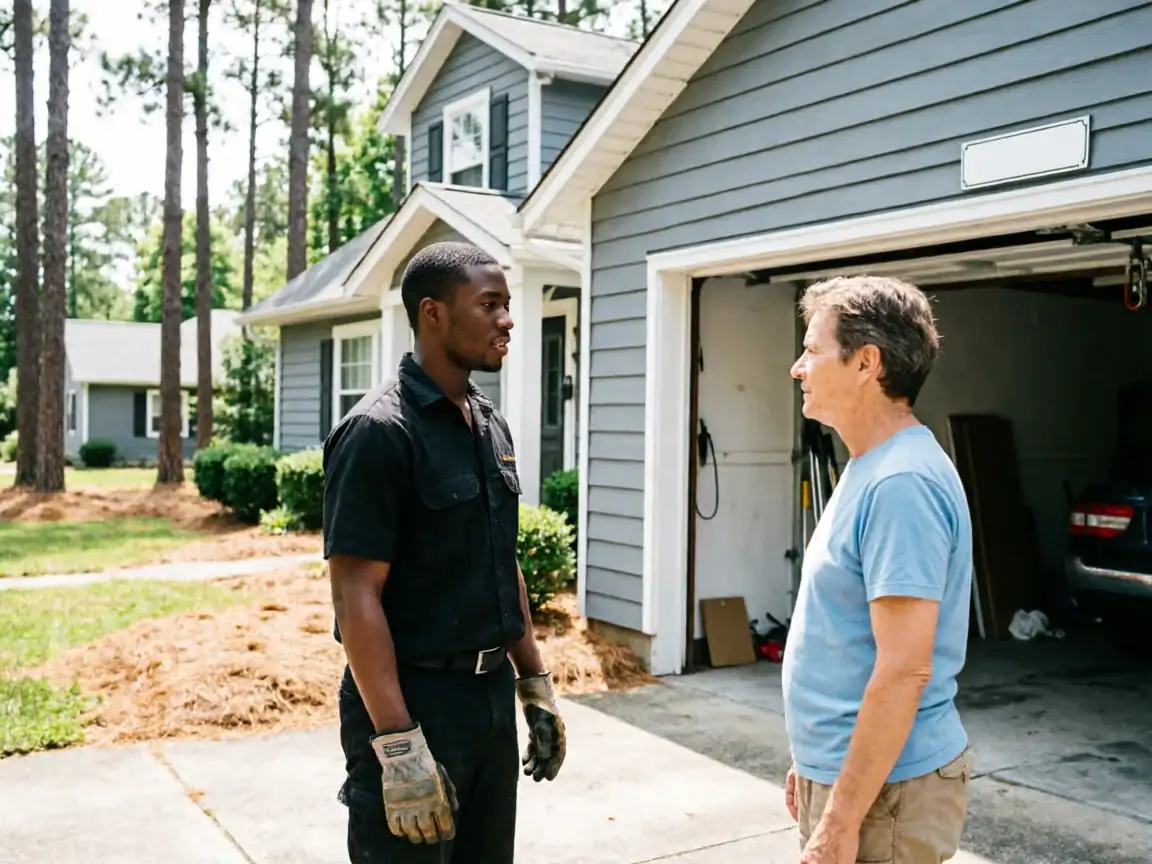
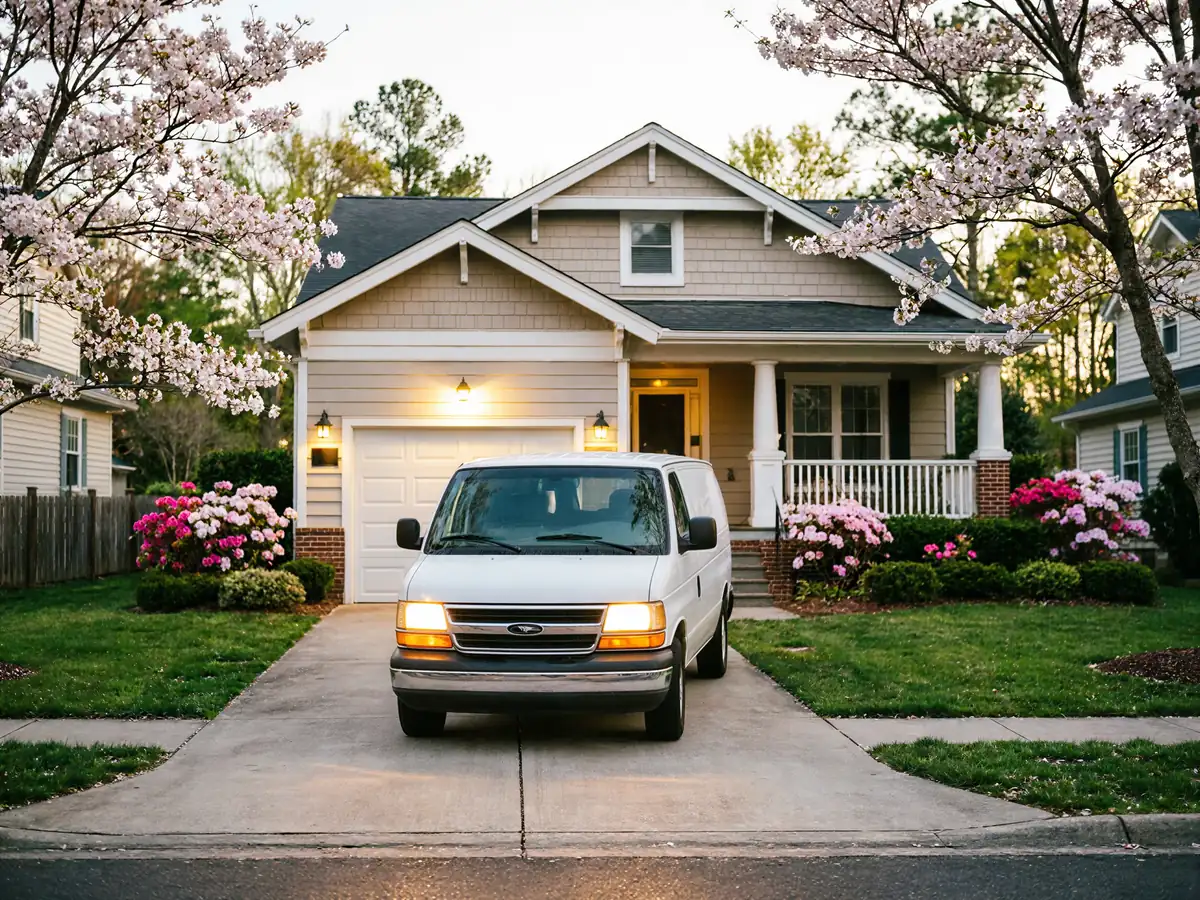
We come from Sanford, about 7 miles out, so there's drive time built into any visit - we won't pretend otherwise. Once the truck's on site, most torsion spring jobs and opener repairs on a door of this era run a single visit, parts depending. The slower cases are the ones where the track or jamb bracket has warped enough that it needs rebuilding, not just adjusting, which is more common on a door that's carried 40-plus years of steel hardware without an upgrade. We'll tell you up front if we think you're looking at more than one trip.
Stocked Parts
For a town where most houses sit in the 1979 build range, the parts that fail most are the parts that were never stocked for long in the first place: wound torsion springs sized for older steel doors, galvanized lift cable, and the steel roller-and-bracket combinations that predate sealed bearings. We carry common spring sizes and standard cable on the truck because original hardware from this era fails in a short list of predictable ways. What we don't always carry is the exact bracket or track profile for a door that's been modified once already - if a prior owner patched something with a mismatched part, that can mean a return trip once we've seen it in person.
The Complications
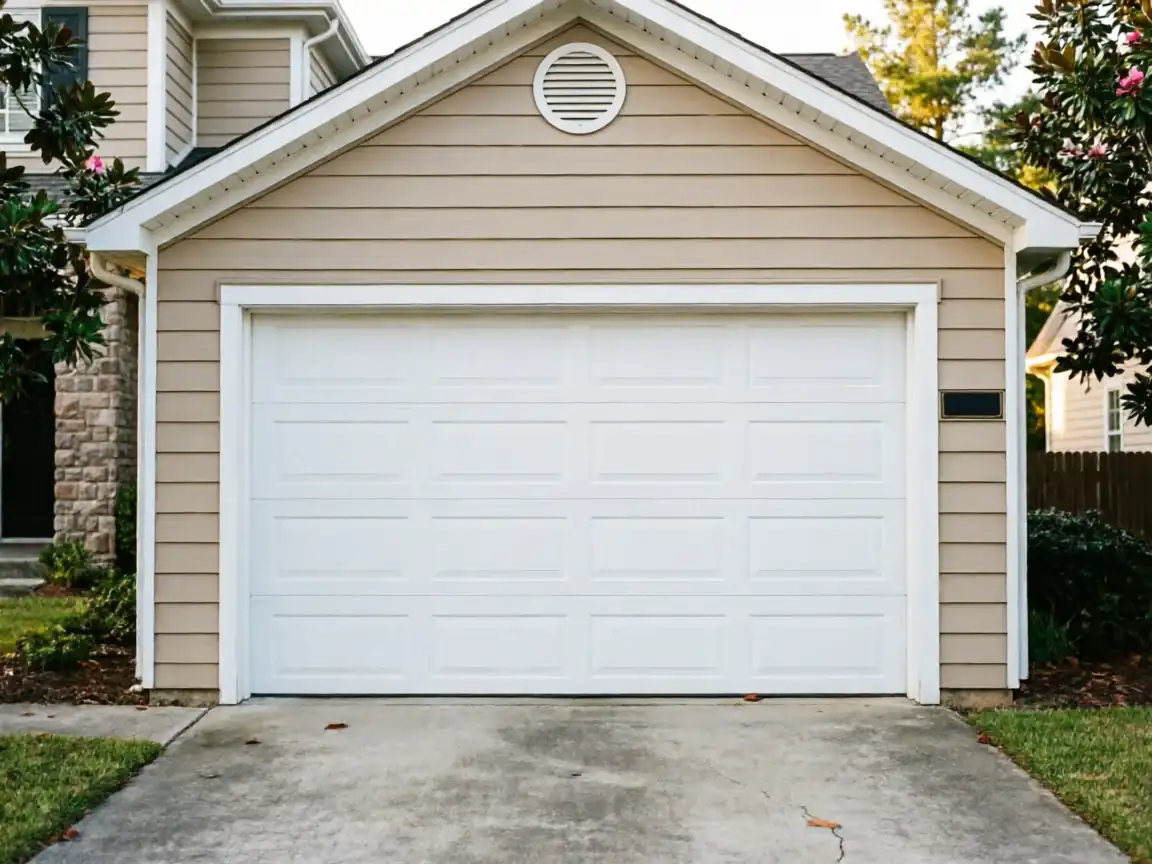
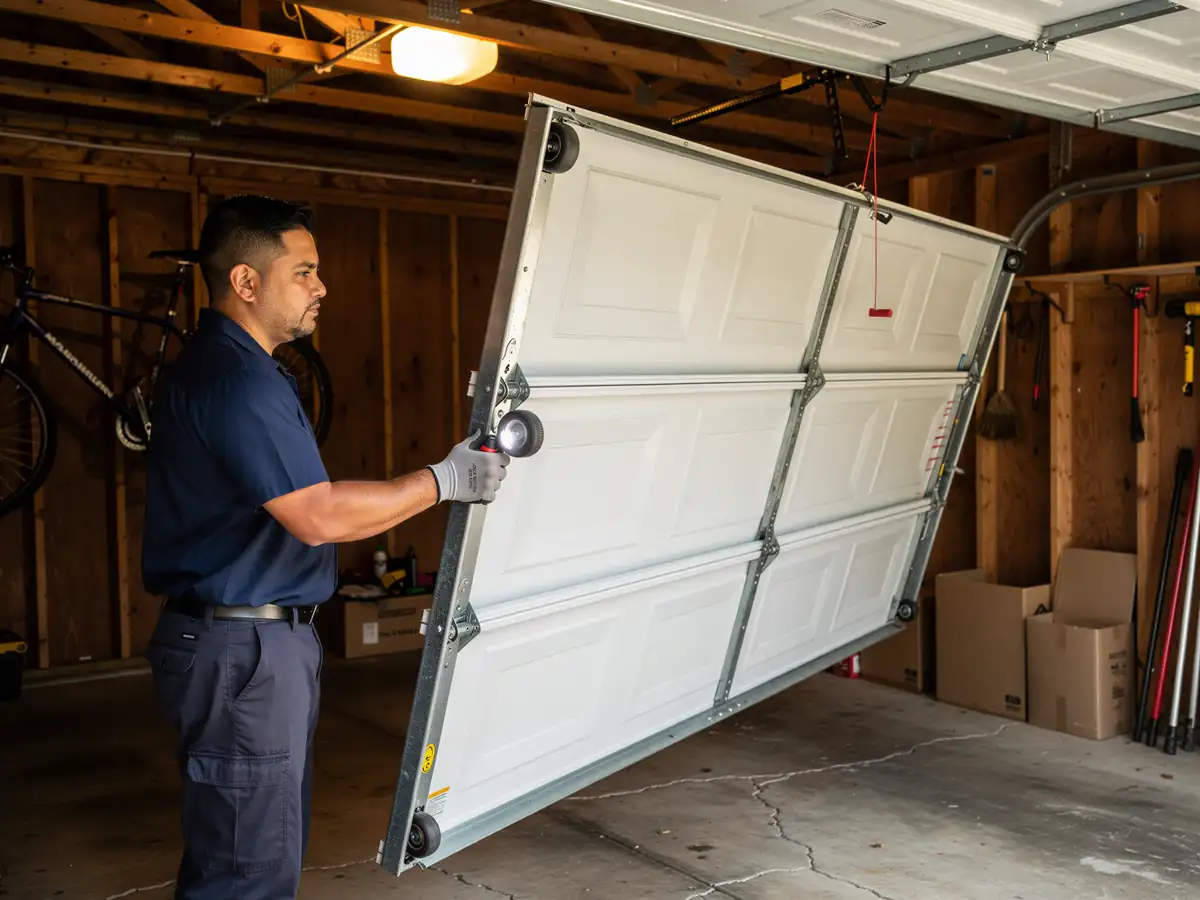
The complication we run into most in older stock like this is layered repairs - a spring replaced in the 1990s, a cable replaced more recently, an opener bolted onto hardware none of it was designed around. Each fix on its own is fine; stacked together they can mean the door is out of adjustment in three places at once, and fixing the symptom you called about exposes the other two. On a door built around 1979, we also check whether the section panels themselves have thinned or rusted at the bottom corners, since replacing a spring on a panel that's about to fail at the hinge is a short-term win. We'll say plainly when a repair isn't worth doing and replacement makes more sense - that's not every call, but it's not rare on hardware this age either.