What the Fix Involves
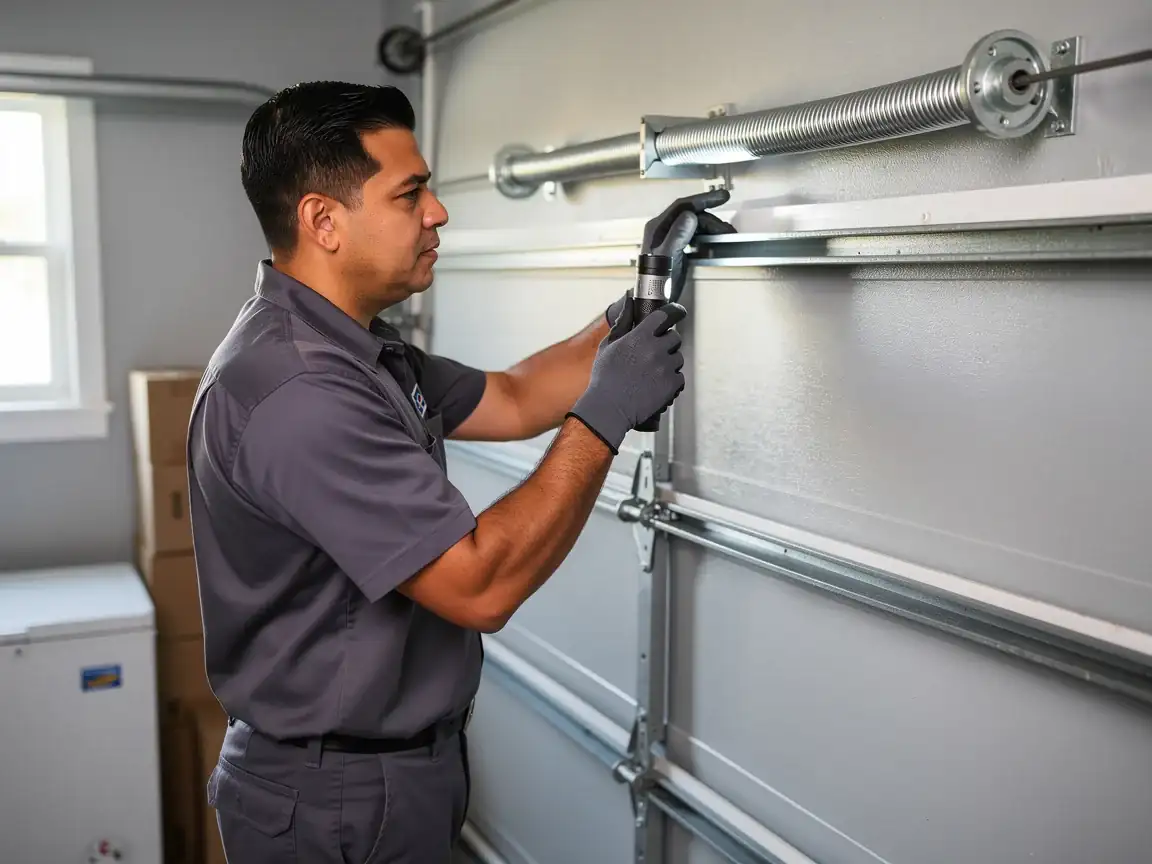
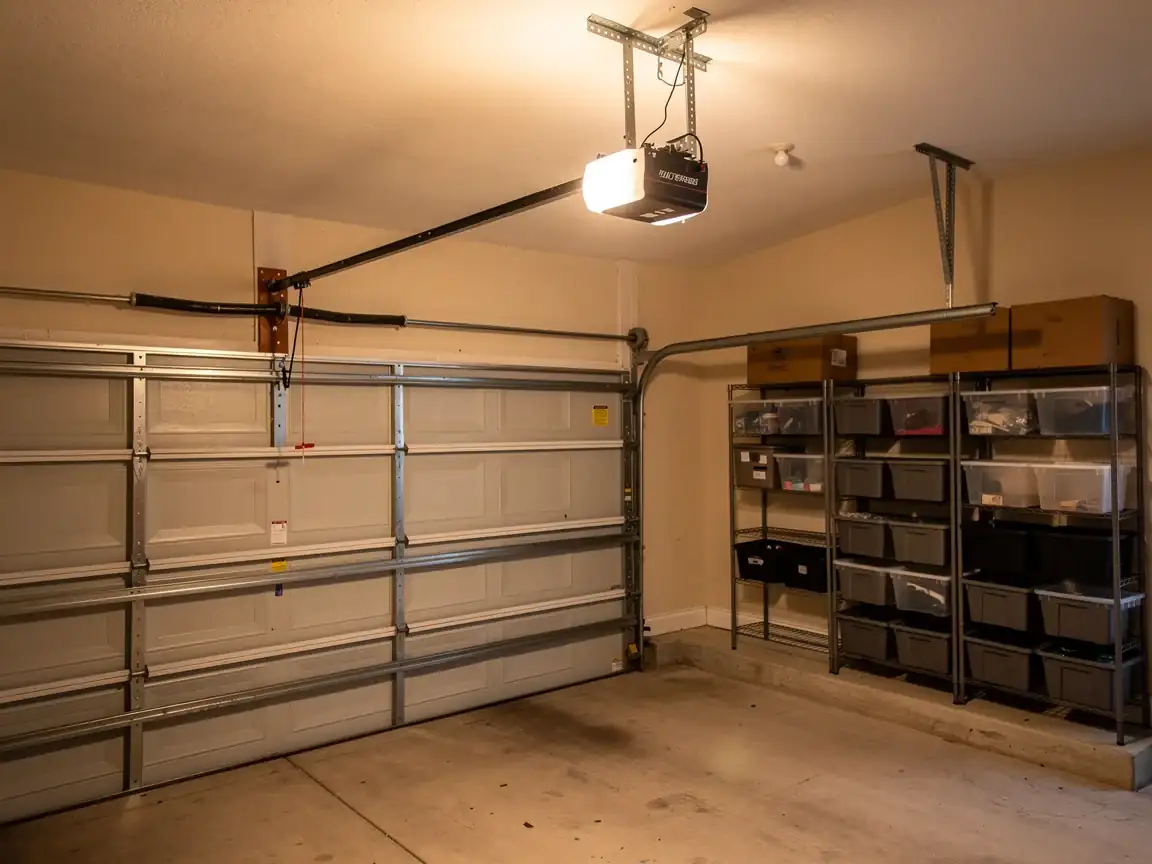
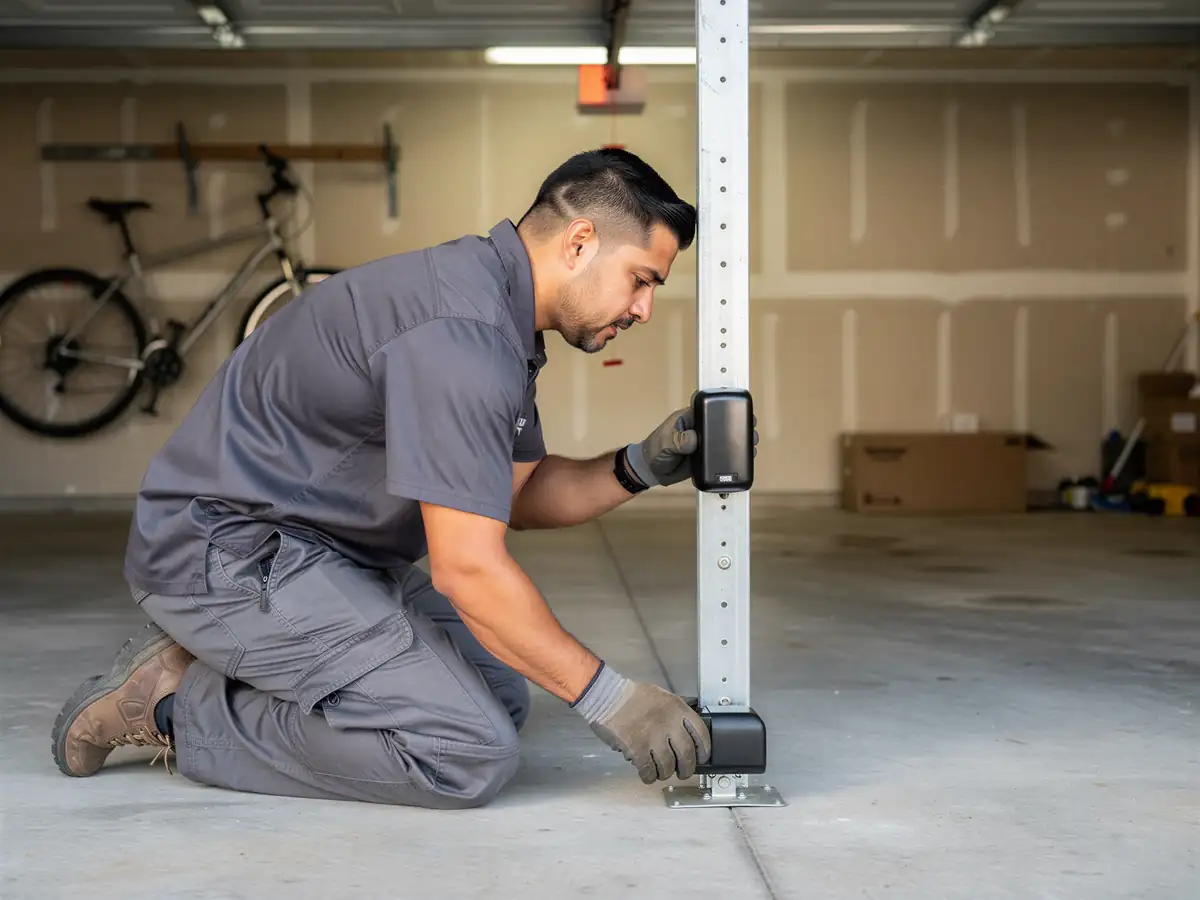
Most of what breaks on a Broadway opener comes down to what was installed when the house went up. The town's housing stock centers on 1979, a few years ahead of the wider service area's 1983 median, which means a lot of these garages got their first opener in the chain-drive era before rolling code and before the 1993 federal law that forced manufacturers to add safety-eye sensors. When a call comes in from Broadway, it's usually one of three things: a stripped plastic drive gear inside the housing, a chain that's stretched and jumped its sprocket, or a pair of safety eyes that were bolted on later as a retrofit and never got aligned right. Each of those reads differently to the homeowner. A stripped gear sounds like the motor is running but the door isn't moving. A jumped chain makes a slapping noise and the door stalls partway. Misaligned eyes make the door reverse right before it touches the floor, or refuse to close at all with the light blinking. The fix for each is different - gear and sprocket kit, chain replacement and retension, or eye realignment and sometimes a new sensor pair - but all three trace straight back to hardware that's been doing its job since the late 1970s.
How Long You Are Without the Door
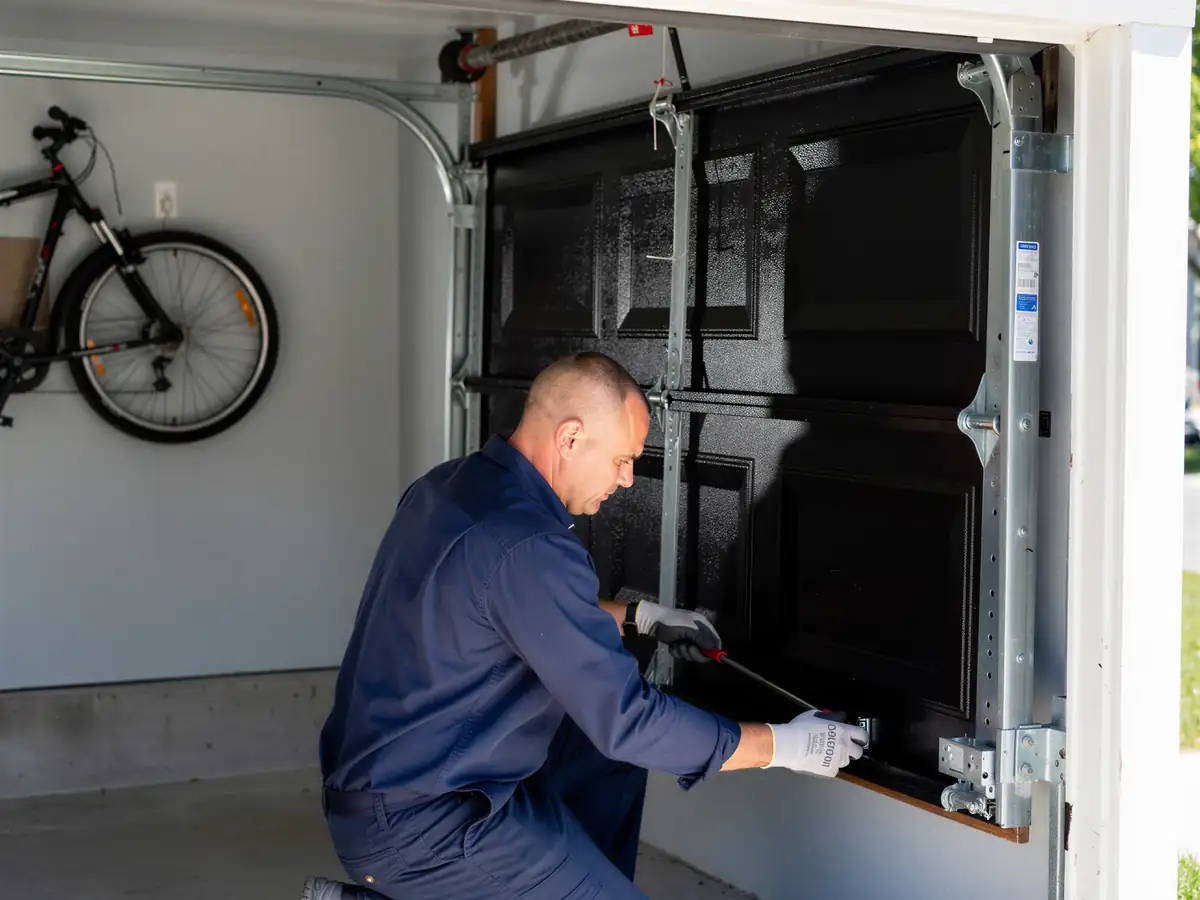
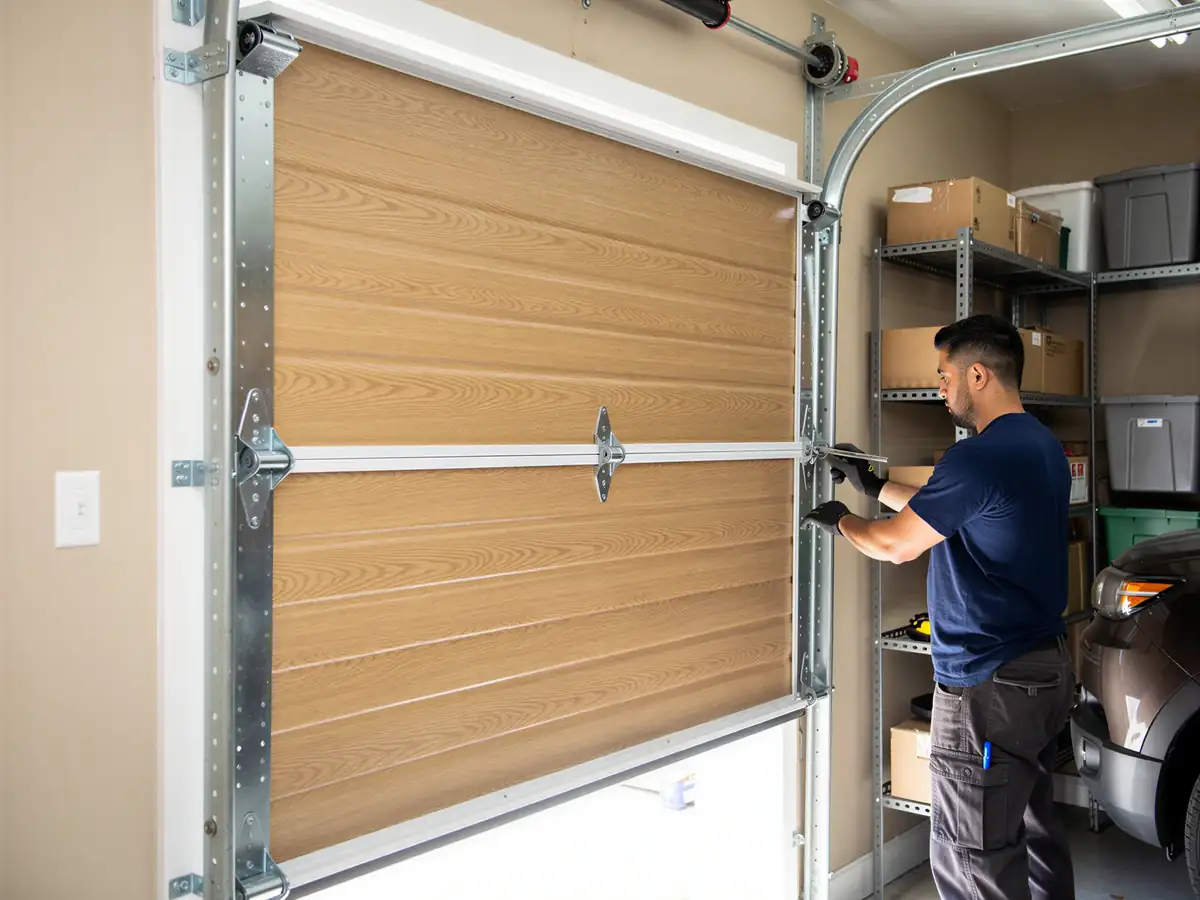
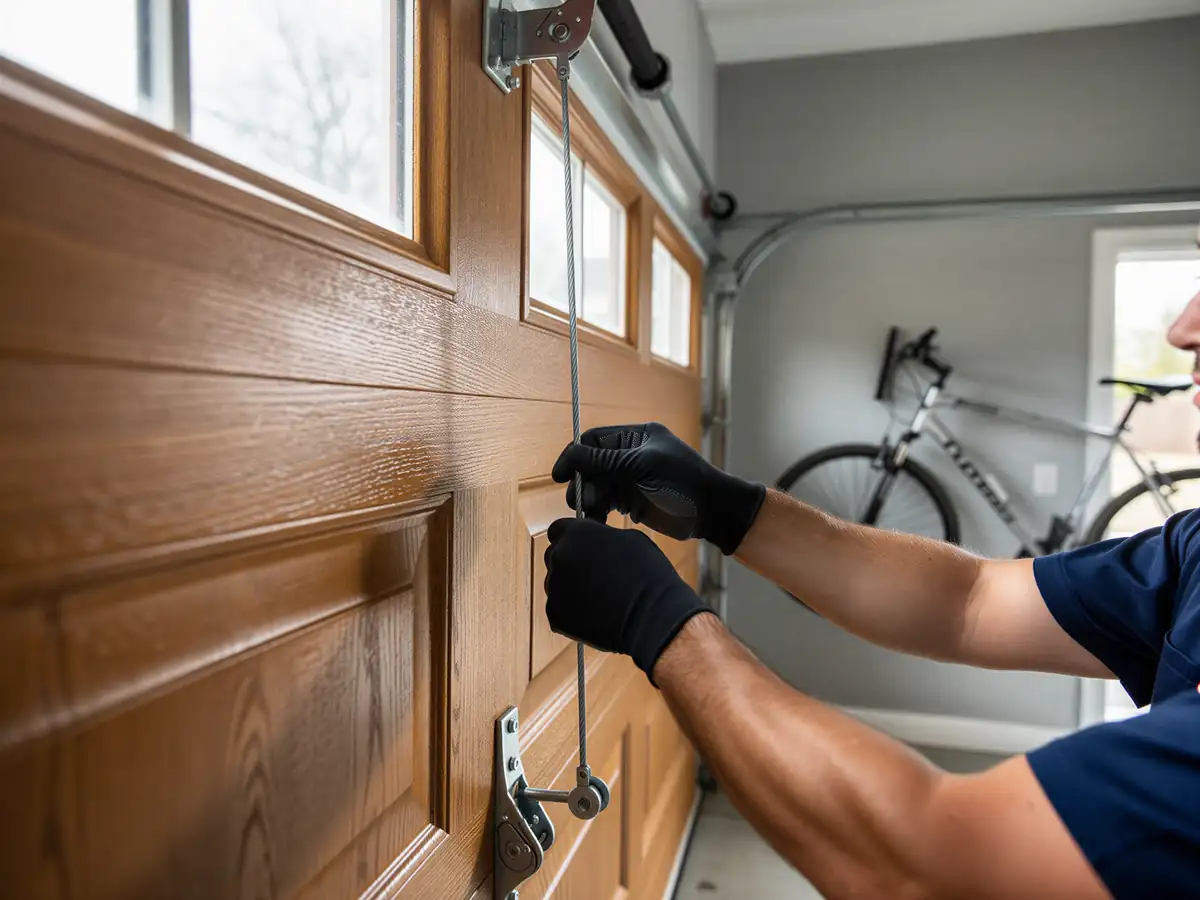
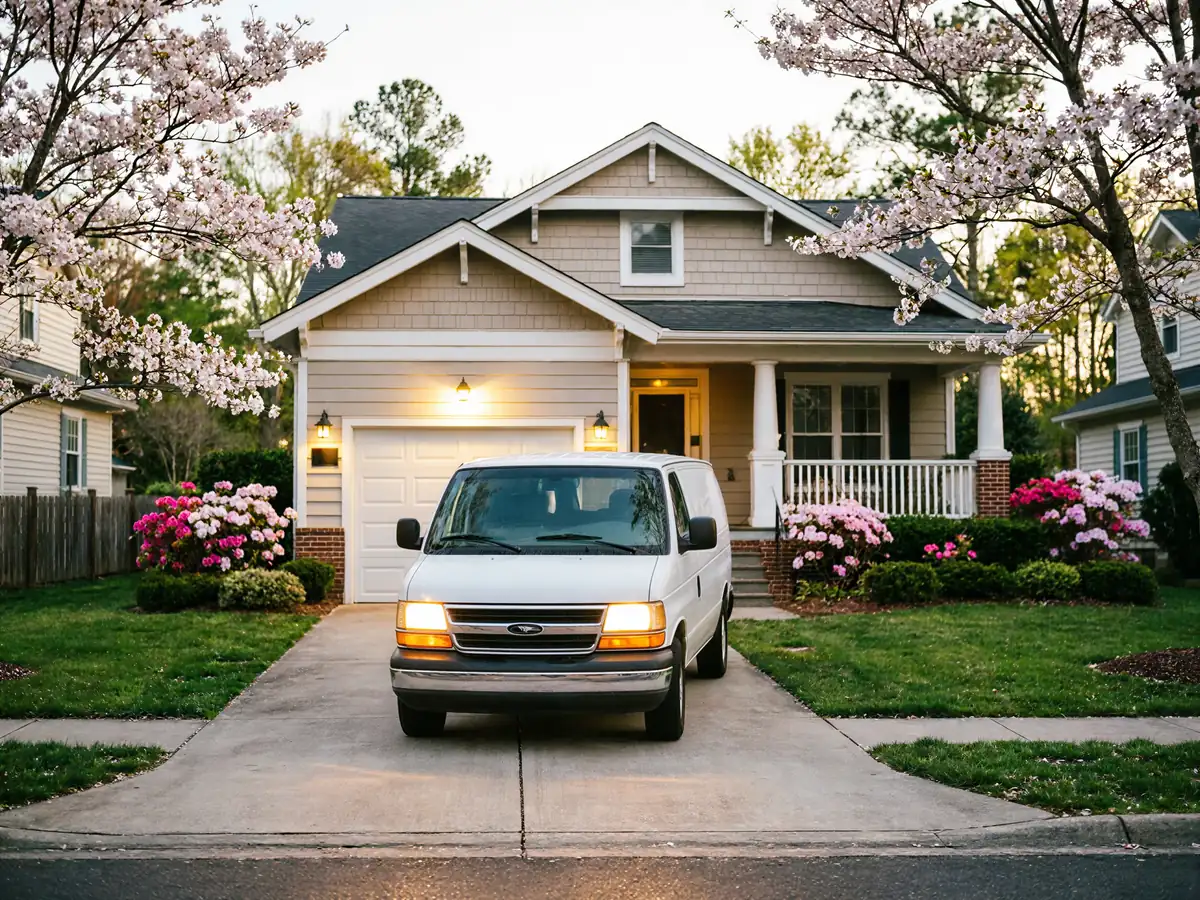
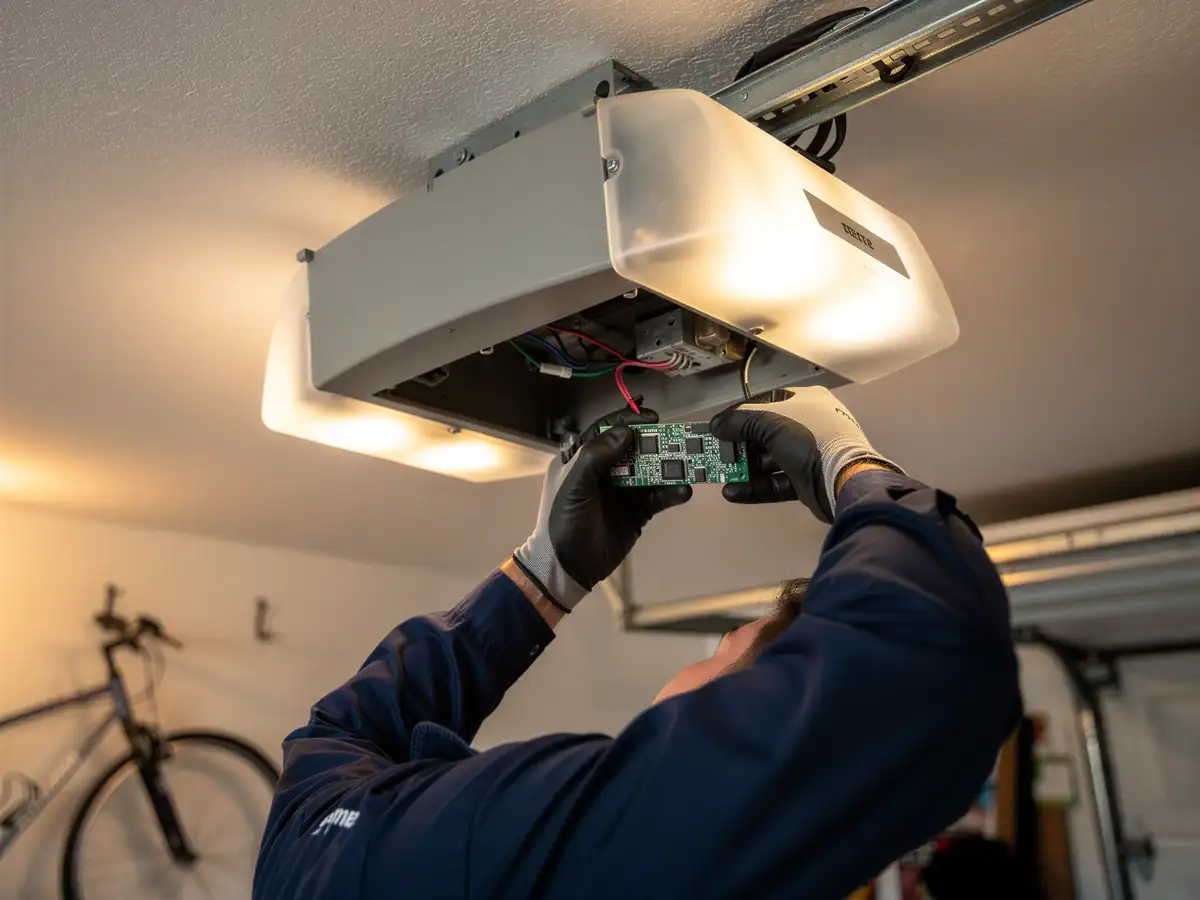
A dead opener doesn't mean a dead door. On almost every Broadway garage we've described above, the door itself still lifts by hand once you pull the manual release cord, so the car can get in or out while the opener itself gets fixed. That's worth knowing before you assume the whole bay is out of service. The repair itself usually runs on the parts needed rather than the drive to Broadway - a gear and sprocket swap is quick once the truck is on site, a chain replacement takes longer because the rail has to come down, and a full logic board failure on an older chain-drive unit sometimes means the board simply isn't made anymore and the opener gets replaced rather than repaired. We don't publish a fixed response window for Broadway specifically, since the truck comes from Sanford seven miles away and scheduling depends on what's ahead of your job that day. What we can tell you straight: if your opener is original to a 1979-era build and the board is the problem, don't expect a same-day board swap. That part of the job is honest about taking longer.
Stocked Parts
Because Broadway's opener stock skews to the chain-drive units that went in during and after the 1979 building push, we carry the parts that era actually fails on: drive gears and sprocket kits, replacement chain, and safety-eye sensor pairs for the retrofits that got added once the 1993 law required them. Those three cover the bulk of what goes wrong on a unit that old. Where we draw a line is logic boards for some of the original belt-drive and early chain-drive models from that period - several of those boards haven't been manufactured in years, and when one fails, the honest answer is a new opener rather than a hunt for a discontinued part. We'd rather tell you that on the phone than have you wait on a part that isn't coming. For households in the 646-home range that make up Broadway, at a median income a touch above the wider area's $62,428, that distinction between repair and replace usually matters to the budget, not just the garage.
The Complications
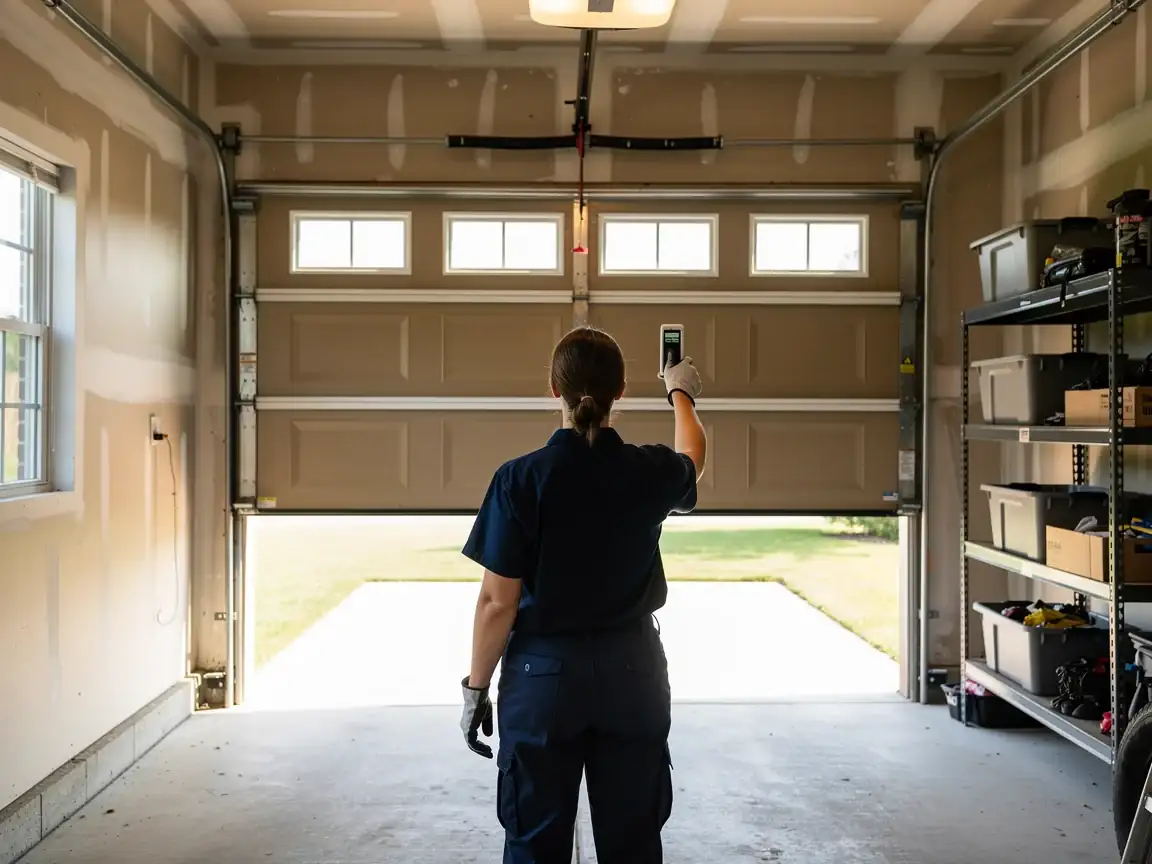
Cold, moderate winters mean the grease in an old chain-drive unit stiffens up by midwinter, and on a Broadway opener that's already forty-some years old, that stiffness is often what turns a sluggish door into a stalled one. It's not dramatic, but it adds friction to hardware that was already working at the edge of its service life. The bigger complication is code-related: garages built in 1979 predate the safety-eye requirement by over a decade, so any eyes you see on an older Broadway door were added after the fact, not part of the original install. Retrofitted eyes get mounted at inconsistent heights and wired into openers that were never designed to expect them, which is exactly why alignment faults show up so often on this housing stock. None of that is unique to one house - it's a pattern tied to when this part of the county got built out.