What the Fix Involves
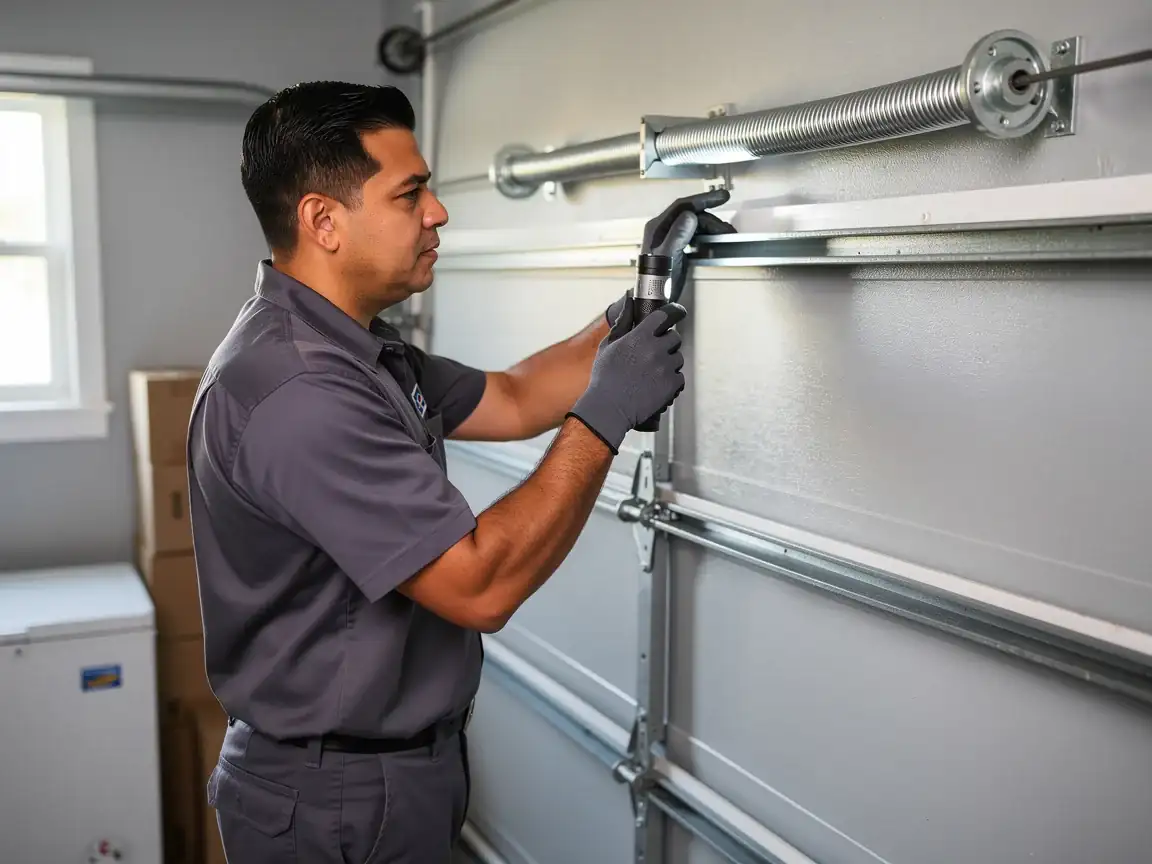
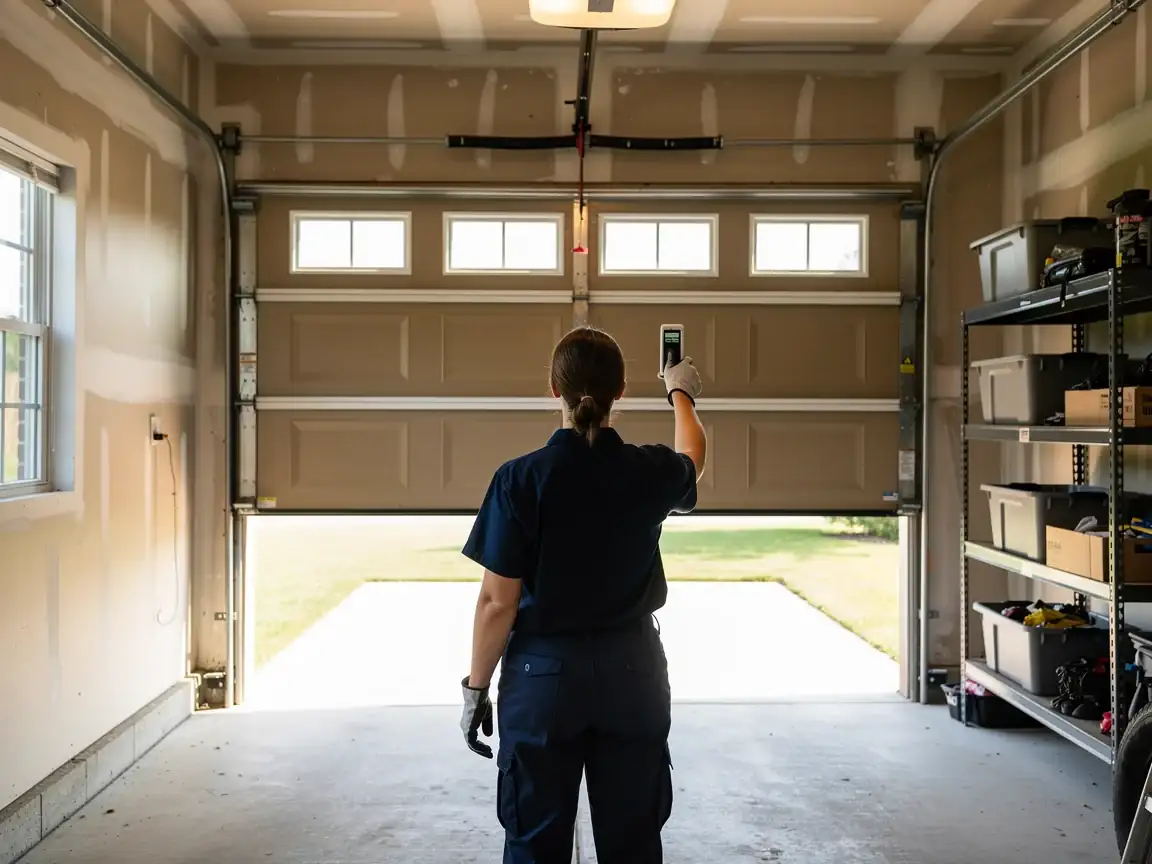
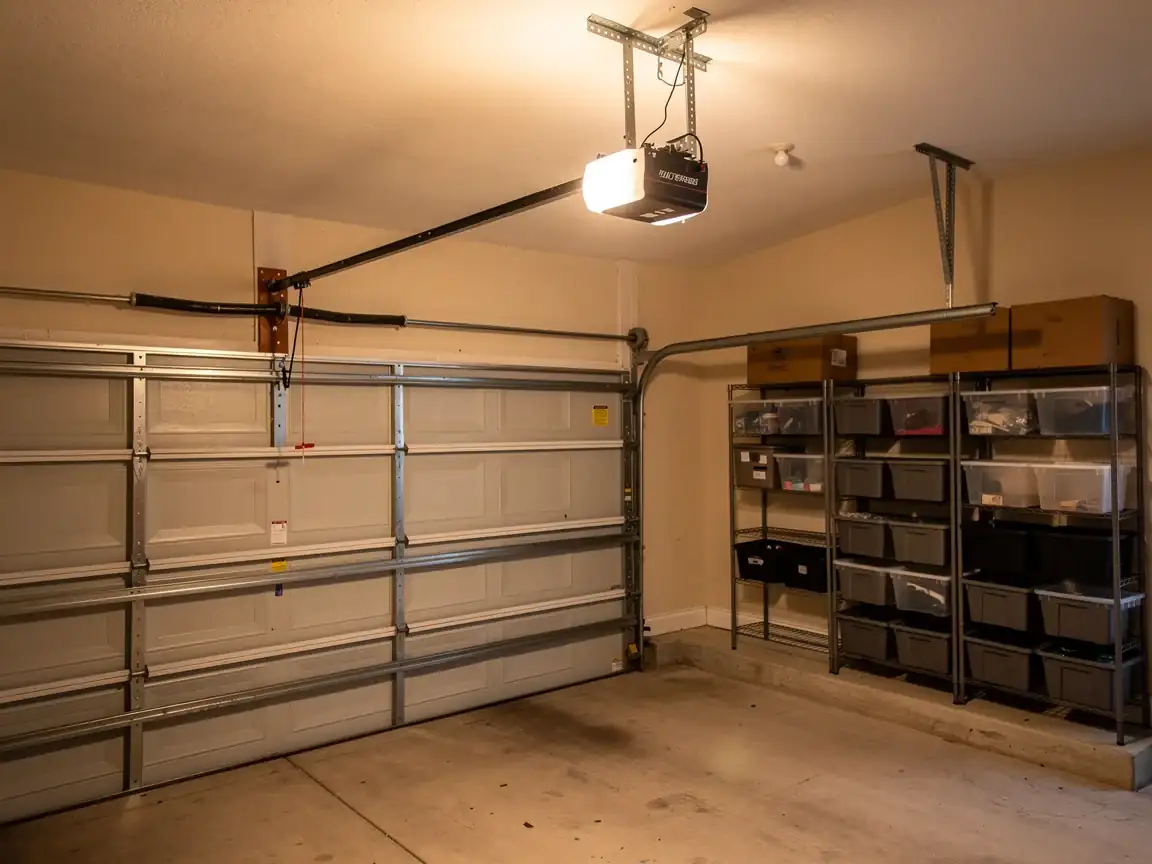
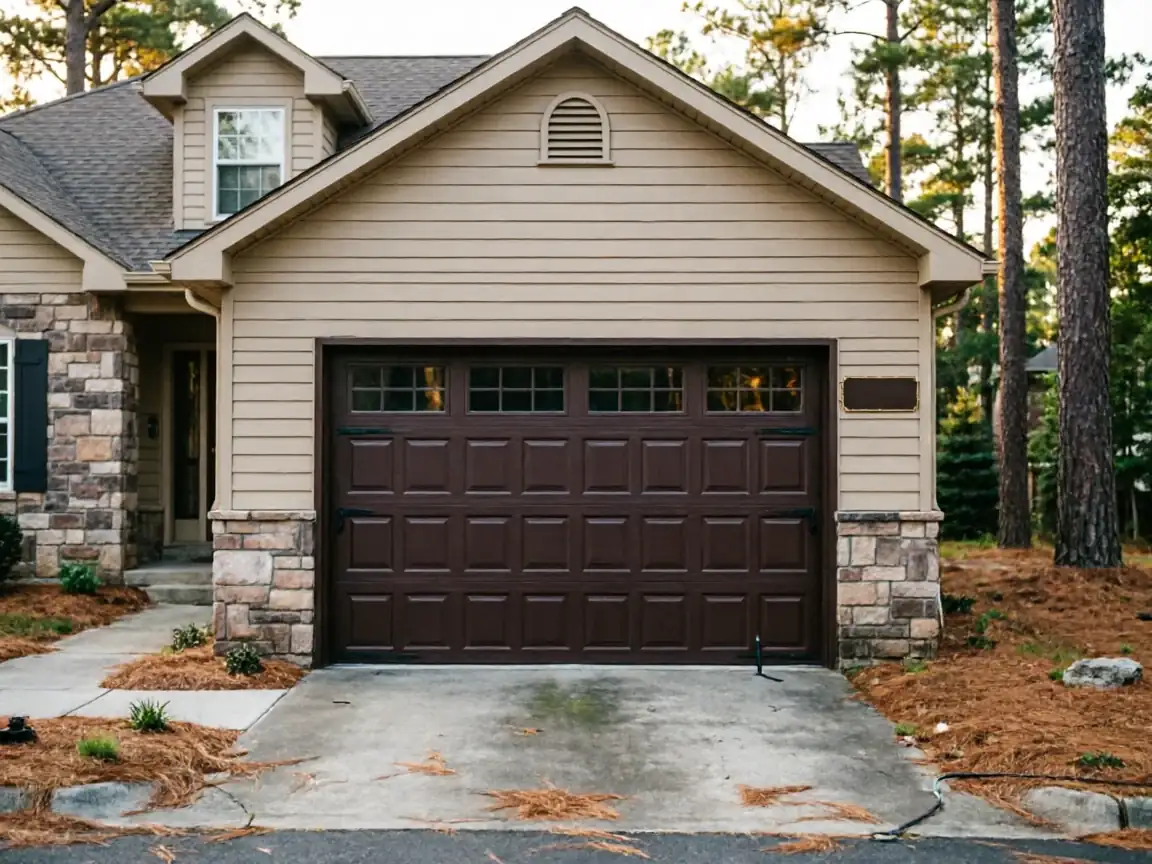
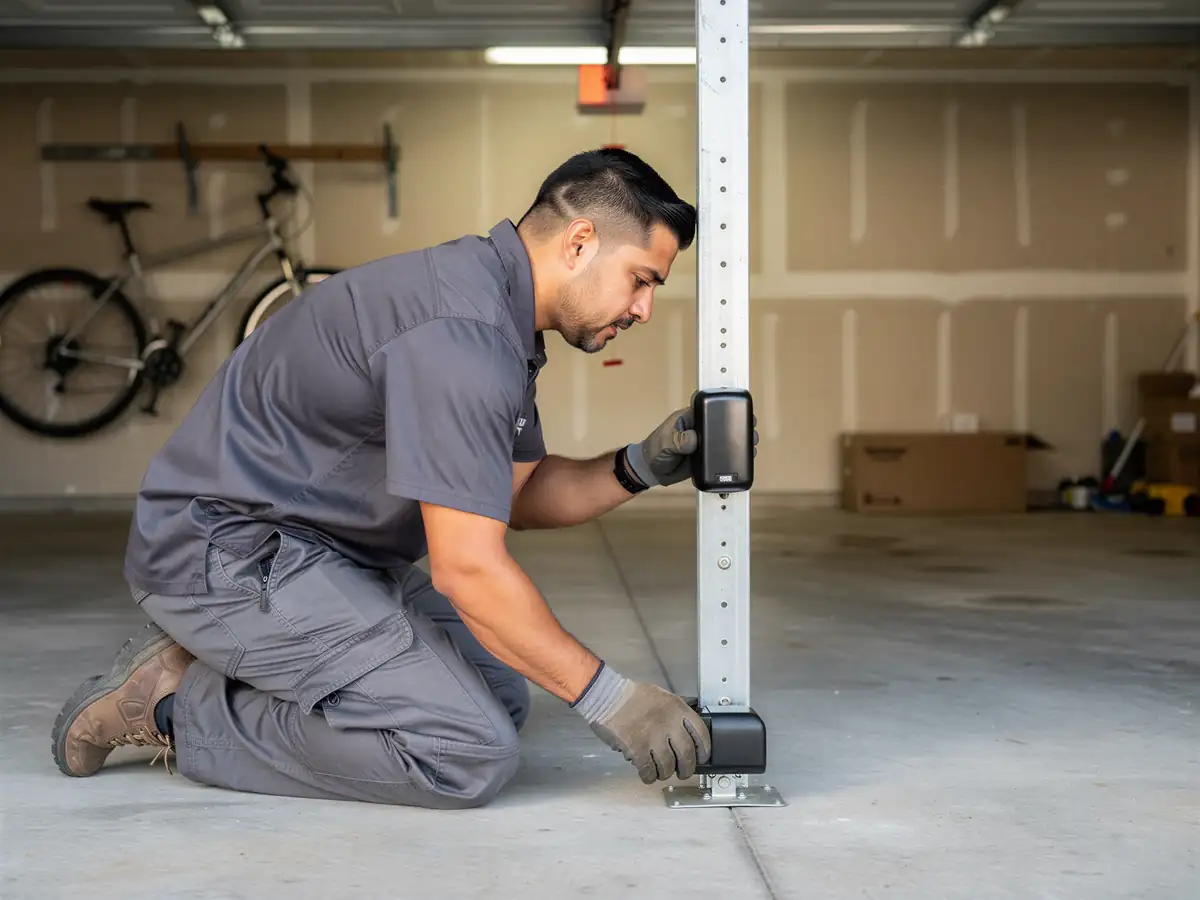
A maintenance visit isn't a repair call pretending to be something smaller. It's a check of the parts that wear slowly and fail suddenly: spring tension, cable condition, roller wear, track alignment, and the opener's force and limit settings. On a door that's never been serviced, we're also looking at the hardware itself, because a lot of Broadway's housing stock dates to around 1979, a few years ahead of the broader service area's 1983 median build year. That gap matters. Doors and openers installed in the late 1970s and early 1980s used lighter-gauge track and simpler drive systems than what's sold today, and those originals are often still in place, just worn.
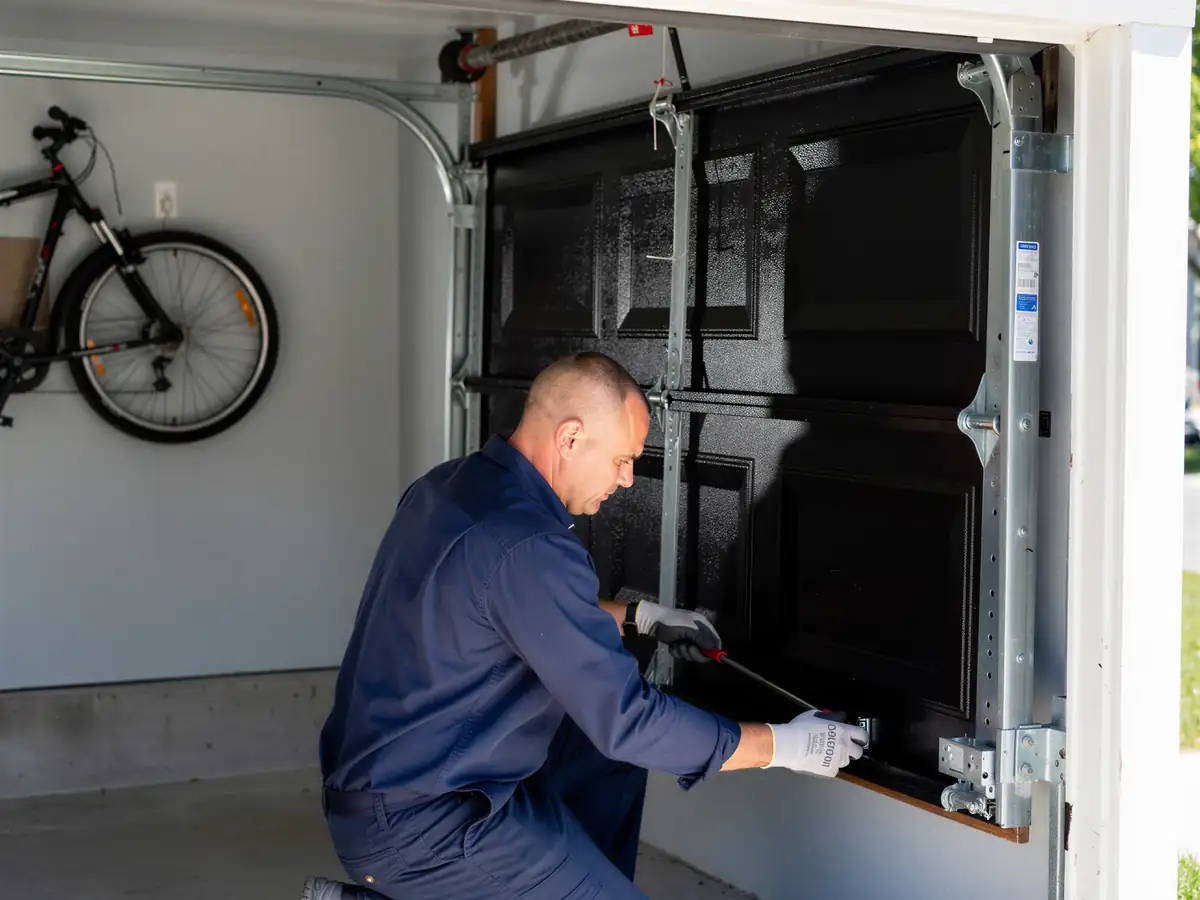
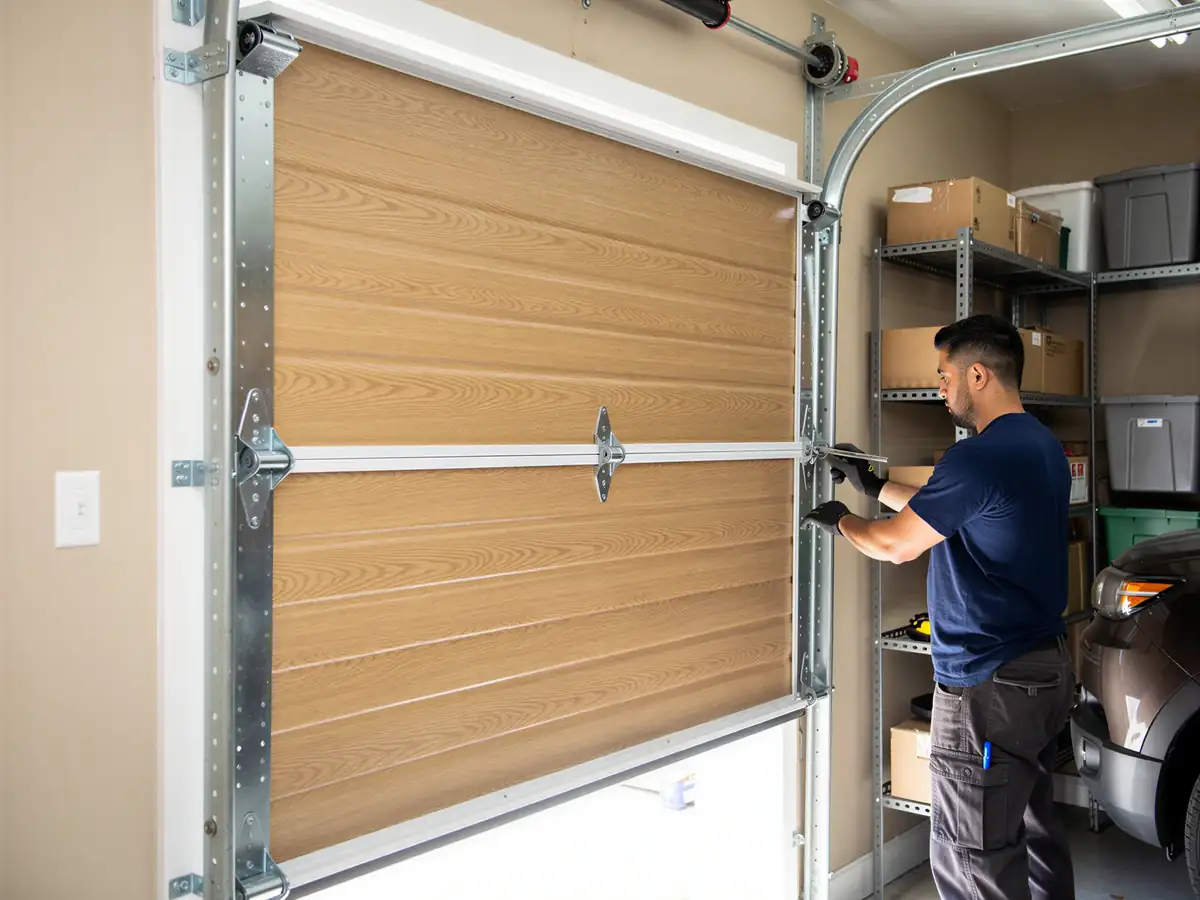
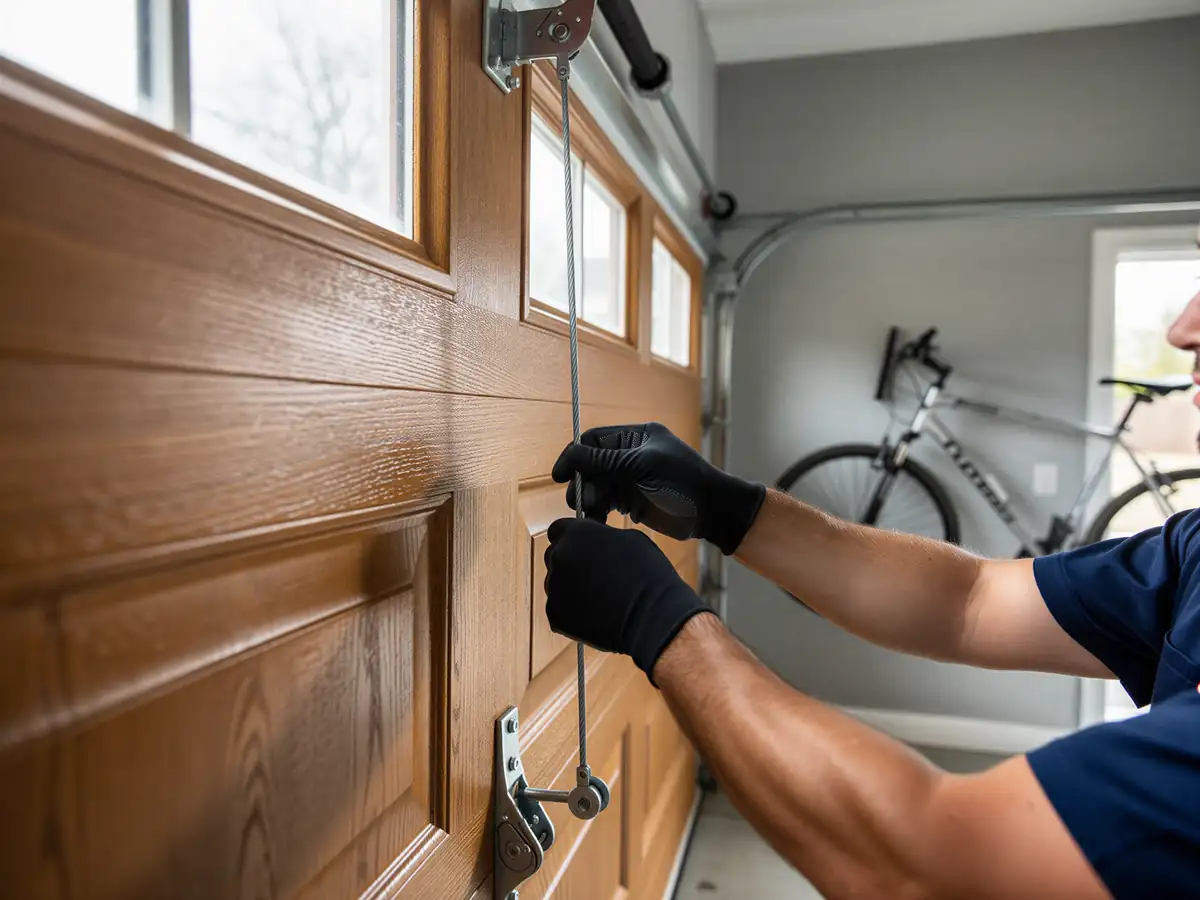
We lubricate hinges and rollers, check cable fraying, test balance by hand, and torque down hardware that's worked loose from years of cycling. If a spring is close to its fatigue life, we'll say so, with the cost of replacing it now against the cost of a snapped spring call later. We don't recommend opener replacement during a maintenance visit unless the unit is actually failing - swapping a working opener for a newer one is a decision for the homeowner, not something we push.
How Long You Are Without the Door
A standard maintenance visit doesn't take the door out of service. We work section by section while the door stays operable between checks, so you're not stuck leaving the garage open or closed for a stretch. If we find something that needs a part we don't carry on the truck - a specific opener circuit board, for instance - the door stays usable in its current state until that part arrives; we won't leave a door half-disassembled over a lead-time issue.
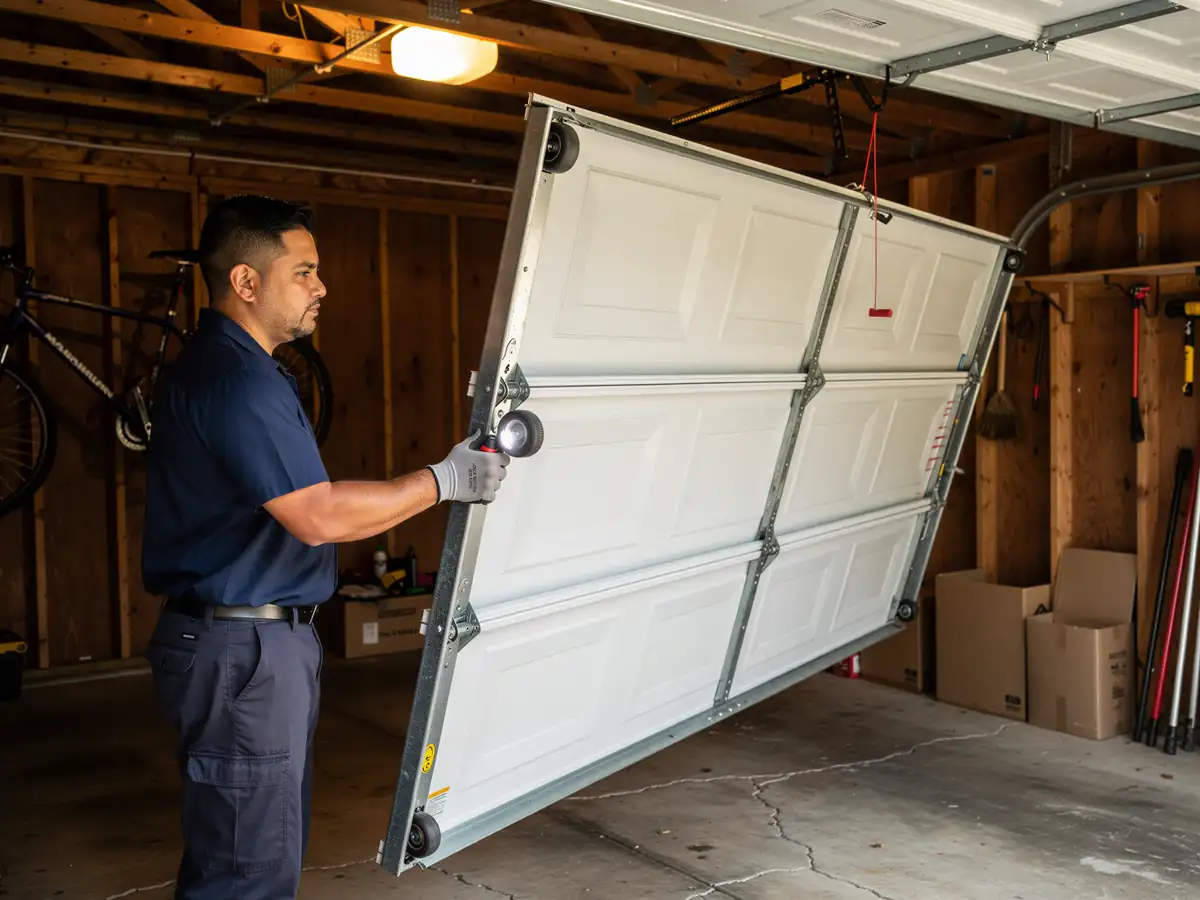
The one exception is balance correction on a door that's badly off, which can take the door out of commission for the length of the visit while we adjust spring tension safely. That's typically under an hour.
How to Book
We cover Broadway from Sanford, about 7 miles out
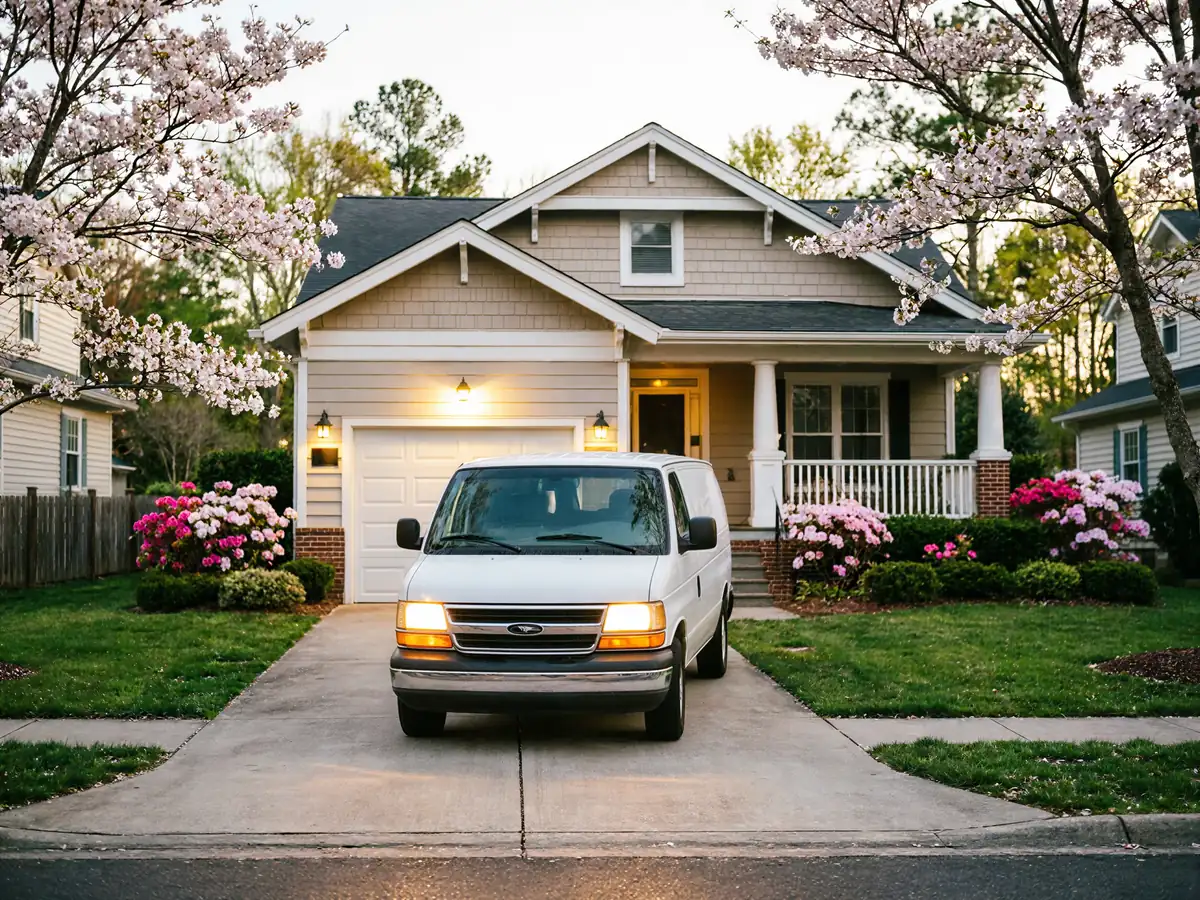
There's no local branch or drop-off point here - every visit is a truck coming from Sanford with the parts and tools loaded for what you've described on the phone. Tell us the door's age if you know it, whether it's making noise, grinding, or just feels heavier than it used to, and we'll bring the right stock for a 1970s-80s door instead of guessing.
- 7 miles
For a look at the full range of work we do out of Sanford
Including repair and replacement, see our main Sanford garage door page.
Stocked Parts
For doors from the 1979-1983 window that's common through this part of the service area, we carry the torsion springs, extension springs, and standard-gauge cable sized for that era's residential doors, along with the rollers and hinges that wear out fastest. Standard 7-foot and 8-foot torsion springs rated for typical single and double doors ride on the truck for same-visit swaps.
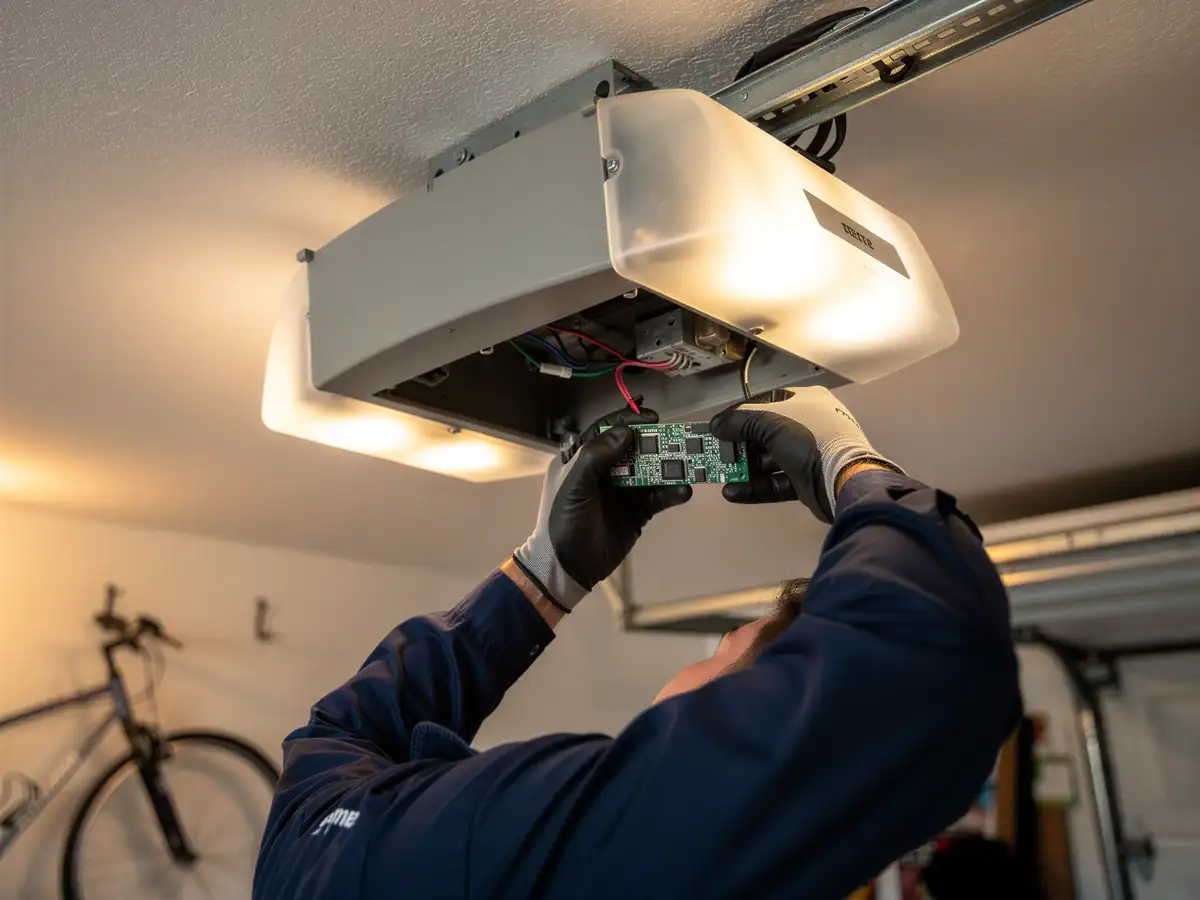
What we don't stock on the truck is anything proprietary to a specific opener brand's control board or a non-standard track width - those get ordered after we've confirmed the exact model on site. We'd rather tell you a part needs a day or two than guess and leave the wrong one on your door.
The Complications
The main complication on older stock is mismatched replacements from past repairs - a spring swapped out at some point that doesn't match the door's current weight, or a roller track that's been bent back into rough alignment rather than replaced. We find this more often on doors that have had one or two prior fixes by different hands over 40-plus years than on newer installs.
The other factor worth naming honestly: at 646 households, Broadway doesn't have the volume of service calls that lets a company justify stocking every possible part locally. That's part of why a visit comes from Sanford rather than a depot in town, and it's why we ask for the opener brand and door age up front - it lets us load the truck right the first time instead of making a second trip.
The Symptom
At a median household income of $62,679, close to the wider service area's $62,428
Most Broadway homeowners land at the point where a single-spring repair or a worn-roller tune-up makes financial sense, but a full door replacement is a bigger decision that needs comparing against the door's actual condition, not just its age. If your door is from around 1979 and it's never had a spring replaced, grinding or shuddering on the way up is usually the spring losing tension, not the opener failing - an opener swap won't fix it.
If the door is sagging on one side when it's halfway open, that's cable or track, not spring, and it's worth a call before it gets worse
We'll tell you straight when a repair is the right call and when the door's age and condition mean replacement is the better use of your money.